
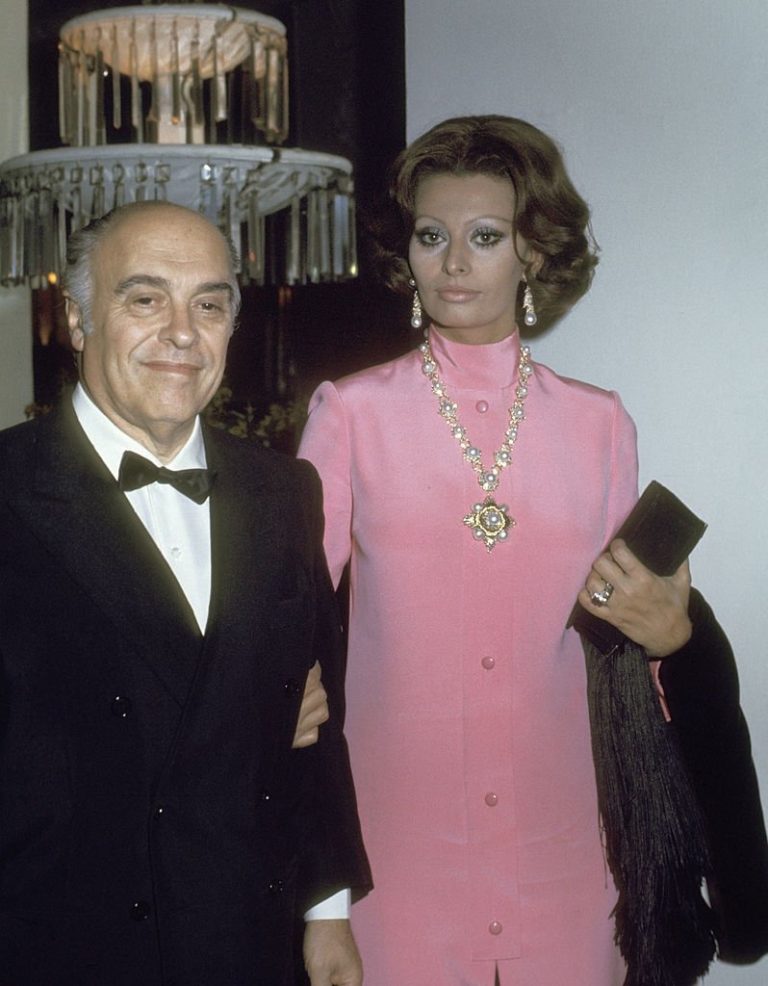
Sophia Loren’s Son Shares Insight Into Her Life, Career, and Marriage to Carlo Ponti
Early hardship shaped Sophia Loren’s path
Sophia Loren’s life story has remained one of the most widely discussed in film history, not only because of her screen success but also because of the difficult circumstances she overcame before reaching international fame.
Now 90, the Italian actress continues to represent a remarkable personal and professional journey that began in poverty near Naples and eventually led to one of cinema’s most recognizable careers.
Her younger son, director Edoardo Ponti, recently spoke about the forces that shaped his mother’s character and the experiences that influenced both her work and her private life.
His reflections offered a closer look at Loren’s early years, the emotional challenges she carried into adulthood, and the long relationship she built with producer Carlo Ponti.
Loren was raised by her mother, Romilda, in difficult financial conditions. The household faced instability from the beginning, and those early struggles left a lasting mark on her outlook.
When she was 16, her mother brought her to Rome in the hope of receiving financial support from Loren’s estranged father. That effort failed when he refused to help.
Romilda then returned home, but Loren remained in Rome. The decision was a defining moment in her youth and marked the beginning of her independent pursuit of a future in the film industry.
Edoardo Ponti described that moment as extraordinary because of Loren’s age and the uncertainty surrounding her circumstances. In his view, that act alone revealed the determination that would later define her career.
“Imagine a 16-year-old today telling her mother, ‘You go, I’m staying,’” he said. “It’s almost unthinkable. Every character my mother has played on screen is laced with her real-life trauma — there’s no doubt. She knew that poverty could be gold for an artist. The uncertainty, the hunger, the struggle — it created a rich inner world. She understood what it meant to serve something bigger — her characters, her directors. She was never a diva. She was a team player.”
A young woman determined to build a future
The picture that emerges from Edoardo Ponti’s comments is one of a young woman who understood hardship early and learned to move forward without guarantees.
Her childhood did not provide security, and that lack of stability became part of the emotional foundation she carried into adulthood. Rather than being separated from her creative life, those experiences became intertwined with it.
Her son’s remarks suggest that Loren’s work as an actress cannot be fully separated from the realities she lived through before fame arrived. The uncertainty she endured became part of the emotional depth she later brought to the screen.
That perspective also helps explain why those who knew her often described her as disciplined and grounded rather than distant or difficult. Edoardo Ponti emphasized that she approached acting as a shared effort rather than a display of status.
He portrayed his mother as someone who remained focused on the work itself and on the people around her. That attitude, he said, came from a life that taught her the value of resilience and purpose.
By the time opportunities began to appear, Loren had already developed the determination needed to stay in Rome and pursue a career on her own terms.
That same determination would soon place her in the path of Carlo Ponti, the producer who would become one of the most important figures in her life.

How Sophia Loren and Carlo Ponti met
Loren met Carlo Ponti at a beauty pageant when she was 16 and he was 37. The age difference between them drew attention, and their relationship would remain a subject of public discussion for many years.
According to Edoardo Ponti, the bond between them was rooted in more than romance. He said his mother found in Carlo Ponti a sense of stability that had been missing from her early life.
“He provided a sense of safety, of protection. Beyond love and attraction, that stability meant everything to her,” he told The Times.
For Loren, that feeling of security appears to have been central. Her childhood had been marked by poverty and emotional instability, and Ponti represented steadiness at a time when her life was moving rapidly in a new direction.
Their relationship formally began in 1954 while they were working on The River Girl. That period marked the start of a partnership that would continue for decades despite a series of legal and personal complications.
Even in its earliest phase, the relationship existed within difficult circumstances. Ponti was still married to his first wife, Giuliana Fiastri, and the legal environment in Italy at the time created serious obstacles.
Legal and personal obstacles surrounded their relationship
At that point, divorce was not legally possible in Italy for a Catholic couple. As a result, the relationship between Loren and Ponti developed under conditions that placed them at legal risk.
The couple married in secret in Mexico, but the union created immediate complications once viewed through Italian law. Bigamy and cohabitation were considered criminal offenses, and the situation exposed them to possible prosecution.
Because of those pressures, the marriage was annulled in 1962. The decision was not the end of their relationship, but it showed the extent to which legal barriers had become impossible to ignore.
The years that followed required major personal changes. Ponti arranged for Giuliana Fiastri, Loren, and himself to move to France and obtain citizenship there.
Under French law, Giuliana agreed to a divorce. That development finally cleared the way for Loren and Ponti to marry legally.
In 1966, Sophia Loren and Carlo Ponti were officially wed. After years of uncertainty, their marriage gained the legal recognition that had long been denied to them in Italy.
The path to that marriage had been complicated and highly unusual, but it ultimately established the framework for a family life that lasted for decades.
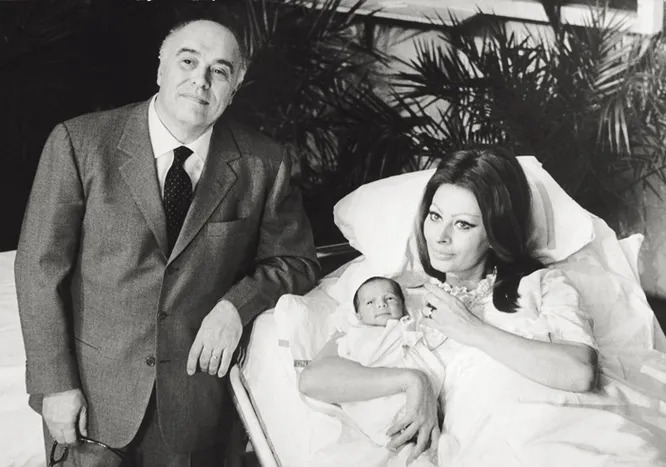
A marriage that lasted through fame and family life
Over time, Carlo Ponti became not only Loren’s husband but also a central figure in the development of her public career. He played a major role in helping shape her rise to international prominence.
As her career expanded, Loren became known around the world as both a major screen talent and a symbol of enduring elegance. Ponti’s influence on the professional side of that rise remained significant throughout those years.
Yet the relationship was also deeply personal. In her memoir, Yesterday, Today, Tomorrow: My Life, Loren described Ponti in terms that reflected both emotional attachment and the support he offered during the most vulnerable phase of her early career.
“I was so happy to have someone beside me who knew how to talk to me, who could give me advice and guide me through my early career decisions,” she wrote. “I tried to move forward without making missteps, and having Carlo by my side gave me that grounding. He had a fatherly presence — something I never experienced as a child. He gave me roots, and that stability kept me grounded while the world around me spun in a whirlwind.”
Those words help explain why Loren remained so devoted to him. The relationship was linked not only to love but also to her sense of grounding and emotional structure during the years when her life was changing most dramatically.
That sense of stability appears repeatedly in how both Loren and her son describe the marriage. For a woman whose earliest years were defined by hardship, consistency carried unusual importance.
The couple remained together until Carlo Ponti’s death in 2007. He was 94 when he died following complications from a lung condition.
Their long marriage came to define a major chapter in Loren’s life, lasting through her rise to stardom, family life, and later years.
Motherhood came after years of struggle
Family life did not arrive easily for Loren. Before becoming a mother, she suffered two miscarriages and spent years undergoing fertility treatments.
Those difficulties made the arrival of her children especially meaningful. In 1968, she welcomed her first son, Carlo Jr.
Four years later, in 1972, her second son, Edoardo, was born. Together, the two children became part of the family life she and Ponti built after years of personal and legal complications.
The fact that motherhood came only after repeated setbacks adds another layer to Loren’s life story. The challenges she faced were not limited to her early poverty or the legal troubles surrounding her marriage.
They also extended into the deeply personal experience of trying to build a family. That long period of waiting and treatment was followed by the births of two sons who would later speak publicly about her life with admiration and respect.
Edoardo Ponti’s recent remarks carry particular weight because they come from someone who observed both his mother’s public legacy and her private strength from close range.
Her son’s words reveal the woman behind the public image
The reflections shared by Edoardo Ponti present Sophia Loren not as a distant star but as a woman whose achievements were shaped by survival, discipline, and emotional endurance.
He described a mother who carried real-life trauma into her artistic work while remaining cooperative, humble, and focused on the larger purpose of the films she made.
That image stands in contrast to the stereotype often attached to famous performers. Rather than portraying Loren as untouchable, he emphasized her work ethic and her ability to stay connected to the people and projects around her.
His comments also suggest that the deepest forces in Loren’s life were formed long before she became globally famous. Poverty, uncertainty, and the absence of security became experiences she transformed into strength.
In that context, her attachment to Carlo Ponti becomes easier to understand. He entered her life during a period when she was building herself from almost nothing, and he provided a sense of steadiness she had never known.
That does not erase the unusual aspects of their age difference or the legal challenges they faced. But it does show why Loren herself understood the relationship as something foundational.
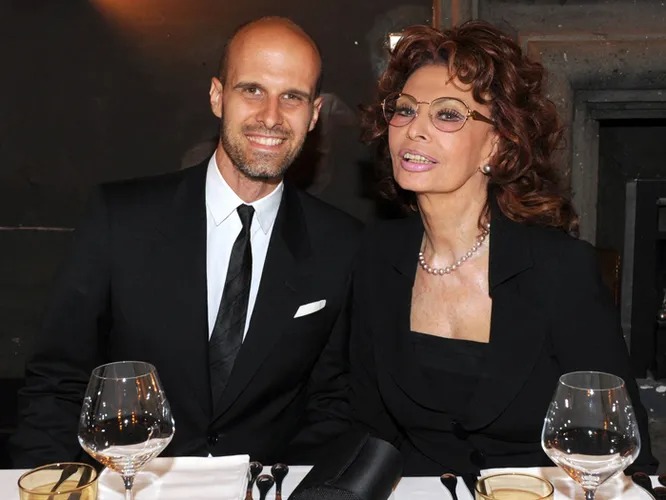
Sophia Loren’s life today remains centered on family
Today, Loren lives in Geneva, Switzerland, where she and Carlo Ponti settled and raised their sons. Even after decades in the public eye, her life remains closely connected to family.
Although her four grandchildren live in California, she stays in regular contact with them through daily video calls. That routine reflects the importance family continues to hold in her later years.
Her own words show that she continues to focus on the happiness that comes from those close relationships. “My outlook on life is simple,” Loren shared. “I celebrate every joyful update my children share with me. The beauty of my grandchildren brings me so much happiness — even from afar.”
That sentiment fits naturally with the broader story of her life. After growing up without stability, she built a home, a family, and a lasting legacy that continue to define her beyond fame.
The story told by her son is therefore not only about a well-known marriage. It is also about how early hardship, personal determination, and emotional loyalty shaped one of the most enduring figures in film history.
For many people, Sophia Loren remains a symbol of talent and grace. But behind that image is a life marked by struggle, persistence, and a search for security that influenced her choices from youth to old age.
Those close to her describe a woman who never forgot where she came from, who worked with purpose, and who remained committed to the people she loved. That combination of resilience and loyalty continues to define the legacy her family sees most clearly today.