
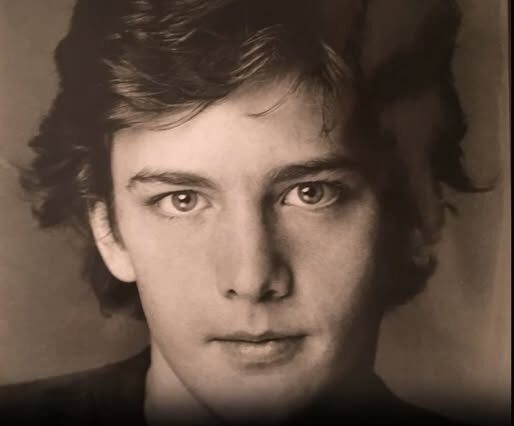
Andrew McCarthy’s Rise to Fame, Private Struggles, and Life Beyond the Brat Pack
During the 1980s, Andrew McCarthy became one of the most recognizable young actors in Hollywood. With his quiet screen presence, expressive features, and natural charm, he stood out in a decade filled with teen stars and coming-of-age films.
To many fans, he was more than an actor. He became the face of a certain kind of movie stardom, appearing in films that defined an era and helped shape pop culture for a generation.
Yet the path that led him there was not as polished as it may have seemed from the outside. Behind the growing fame was a young man who often felt uncomfortable with attention and unsure of where he fit in.
From New Jersey to the Big Screen
Andrew McCarthy was born in 1962 in Westfield, New Jersey. He grew up as the third of four boys in a family far removed from the glamour of the entertainment world.
His mother worked at a newspaper, and his father was involved in investments and stocks. It was a stable, hardworking household, with little connection to the kind of celebrity life that would later arrive so suddenly.
As a teenager, McCarthy developed a strong interest in acting. Even then, though, his school years were marked by a sense of distance from the people around him.
He once reflected on that period by saying, “I just felt really lonely at school. I didn’t feel like I fit in there.”
That feeling of not quite belonging would remain part of his personal story even as his public profile rose. Long before he became a star, he was already dealing with an inner uncertainty that fame could not erase.

An Unexpected Break
After high school, McCarthy enrolled at New York University to study acting. His time there was brief.
He later admitted that he was not focused on attending classes, and after two years he was expelled. At that point, there was little indication that his film career was about to begin.
Then everything changed very quickly. He answered an open casting call listed in the newspaper for the film Class, a project that also featured Jacqueline Bisset.
What happened next felt almost surreal. Out of hundreds of hopefuls, he was called back, and within a remarkably short time he had landed a major role.
Looking back on the experience, he said, “I waited for hours alongside 500 other kids, and they called me back. It was so unexpected. One week I was in school, and the next week I’m in bed with Jacqueline Bisset. I thought, ‘I must be doing something right here,’”
That role in Class immediately put him on the industry’s radar. In the film, he played Jonathan, a prep school student caught in a storyline involving his roommate’s mother, played by Bisset.
Not long after, NYU suggested he return, pay tuition, and count the film as independent study. His response became part of his personal legend: “Then [NYU] suggested that I return, pay the tuition, and I could use [the movie] as independent study. I told them to go f*** themselves.”
Becoming an ’80s Icon
McCarthy’s career accelerated in the years that followed. He appeared in a series of films that became deeply associated with 1980s youth culture.
St. Elmo’s Fire in 1985 helped make him a household name. Although the movie received negative reviews, it connected strongly with audiences and became a commercial success.
The cast included several young actors who were rapidly becoming famous, among them Rob Lowe, Judd Nelson, Emilio Estevez, and Demi Moore. The group would soon be labeled the “Brat Pack,” a nickname that followed many of them for years.
That label brought visibility, but it also carried a certain image. Some of the actors associated with it were viewed as talented but also as symbols of youthful excess, arrogance, and Hollywood partying.
McCarthy’s own screen persona was different. He often came across as thoughtful, restrained, and emotionally grounded, which made him especially memorable in Pretty in Pink in 1986.
Opposite Molly Ringwald, he gave a performance that reinforced his status as a teen heartthrob. Fans responded to the softness and understated confidence he brought to the role, and his popularity surged.
By that point, his face was familiar to millions. He seemed to embody a quieter style of stardom, one based less on swagger and more on subtle appeal.

The Pressure Behind the Image
While his acting career was thriving, McCarthy was privately dealing with problems that few people around him fully understood. The success came fast, and he has said he was not equipped for it emotionally.
“I was completely unprepared for any form of success when I was younger. I didn’t know anyone who was successful in that way in show business, or famous,” he once said. “I also wasn’t temperamentally suited for it. Attention made me pull back.”
That discomfort with visibility did not disappear as his fame grew. Instead, it existed alongside the public image of a rising movie star.
In time, alcohol began to take on a much larger role in his life. He had used marijuana in high school and drank socially, but the situation became more serious as the years went on.
During a 2004 appearance on ABC’s 20/20, he looked back on that period with striking honesty. “For instance, in Pretty in Pink, people remarked, ”Oh, he’s so sensitive and lovely in that film. I was so hungover throughout that entire movie… I kept thinking, ’God, I have a headache. I am just dying here. I need to go lay down’. But on screen, I appeared a certain way,” Andrew shared with ABC’s 20/20 in 2004.
His description revealed the sharp divide between appearance and reality. To audiences, he seemed composed and magnetic. Off camera, he was already struggling.
He later explained what alcohol gave him at the time. “When I was scared, it provided me with a good dose of Dutch courage,” McCarthy confessed. “I felt confident, attractive, in control, and powerful — feelings I didn’t experience in my everyday life.”
A Difficult Turning Point
In 1989, he stopped drinking just before filming Weekend at Bernie’s. To protect that decision, he pulled away from much of his social life.
For someone who describes himself as an introvert, that distance from the party scene was not entirely unnatural. He has spoken openly about being comfortable on his own.
In 2020, he said, “I’m very at ease being by myself and have always felt that way. I notice that people go to great lengths to avoid solitude, which often leads them into trouble. I believe a lot of unhappiness stems from the effort to escape being alone.”
Still, sobriety did not come in a straight line. During the filming of Jours tranquilles à Clichy, a co-star casually offered him a beer, and that moment became a warning sign.
As he lifted the can, his hands began to shake. It was a visible reminder of how fragile the situation had become and how close he remained to losing control again.
The years that followed were, in his own words, “lost and painful.” At one of his lowest moments, he described waking with a severe hangover, suffering convulsions, and ending up on the bathroom floor in tears.
He also acknowledged having some contact with cocaine during the 1980s. “If you had it, I did it,” he said, while also noting that it mainly intensified his drinking.
Even then, he said he rarely used drugs while working. “I was anxious enough — I didn’t need to be adding cocaine.”

Rehab and a New Direction
By 1991, McCarthy was no longer the fresh-faced young star audiences had first embraced. His appearance had changed, and so had his life.
At 29, he made a decisive choice. He entered rehab, completed detox, and committed himself to living without alcohol and drugs.
That step marked the beginning of a more stable chapter. He began moving away from the nonstop social environment that had once surrounded him and started rebuilding his life around sobriety, reflection, and purpose.
His professional life also evolved. Instead of relying only on the image that had made him famous in the 1980s, he expanded into directing and built a respected second act behind the camera.
He went on to direct episodes of major television series, including Orange Is the New Black and Gossip Girl. Over time, he established himself as a steady and accomplished television director.
That transition allowed him to redefine his career on his own terms. He was no longer just a former teen idol from a famous film era. He had become a working creative figure with range and staying power.
A Life Beyond Acting
McCarthy also developed another identity outside Hollywood. In addition to acting and directing, he earned recognition as a writer and travel journalist.
He was named Travel Journalist of the Year in 2010 and contributed to publications such as National Geographic Traveler and Men’s Journal.
For him, writing and acting were not separate worlds. They were both forms of storytelling, and both gave him a way to interpret experience.
He explained it this way: “People often ask, ‘How does an actor become a travel writer? That’s intriguing. They seem so different.’ But to me, they are fundamentally the same. They both involve storytelling, which is how I express myself. They are both forms of expression.”
Travel also offered him something more personal. “I become a better version of myself when I travel,” he mentioned in another interview with NJ Monthly. “You feel more vulnerable, you are present in the world, and your ‘Spidey sense’ is heightened.”

Family and the Present Day
McCarthy’s personal life changed significantly over the years as well. On October 9, 1999, he married his college sweetheart, Carol Schneider, nearly two decades after their first relationship.
He later explained what led him to reconnect with her. “I bumped into someone who mentioned they had seen Carol and her boyfriend, and they looked really happy, which for some reason troubled me for a week. I called her to ask if she was truly with this guy and invited her for coffee.”
The couple had a son, Sam, in 2002. Their marriage later ended in divorce in 2005.
On August 28, 2011, he married Irish writer and director Dolores Rice. Together they have two children, Willow and Rowan.
Now, decades after the films that first made him famous, McCarthy leads a more grounded life. He has spoken warmly about fatherhood and the quieter rhythm of family life.
He has also remained modest about his place in 1980s pop culture. Even though many fans still associate him with formative movie memories, he has said that nostalgia is not something he strongly embraces.
“It’s nice,” he says of the affection people still feel for those films. “It’s their experience, but it doesn’t particularly relate to me at this point. I don’t feel much nostalgia for my past.”
A Legacy That Lasted
McCarthy’s journey stands out not only because of the fame he reached at a young age, but because of the life he built afterward. He survived the pressures that overwhelmed many young stars and found a way to create a future beyond the image that first made him famous.
He is still remembered for St. Elmo’s Fire, Pretty in Pink, Mannequin, and Weekend at Bernie’s. But his story now includes much more than the films that defined his early career.
It is also a story about discomfort with fame, private struggle, recovery, reinvention, and endurance. What began as a rapid rise in the 1980s became a much longer journey shaped by hard lessons and personal rebuilding.

For many fans, Andrew McCarthy remains a symbol of a specific movie era. For others, he represents something deeper: the possibility of stepping away from chaos, starting again, and building a meaningful life beyond the spotlight.