
Why Public Restroom Stall Doors Don’t Extend to the Floor
A Common Design Detail Many Rarely Question
Public restrooms are designed with efficiency, durability, and safety in mind. While most people use these facilities without giving much thought to their construction, certain features stand out upon closer observation.
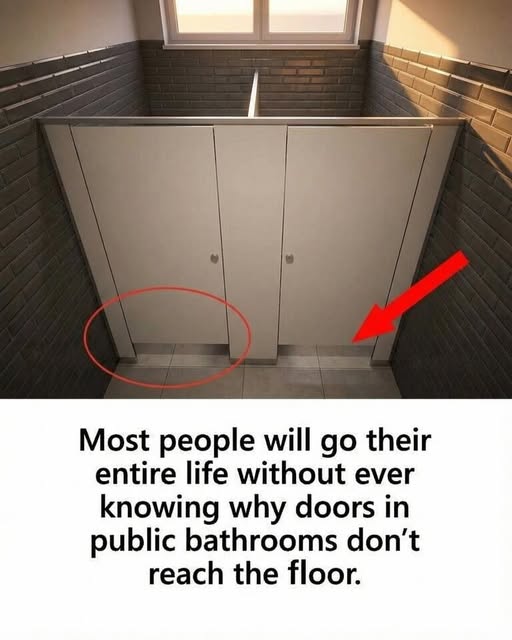
One of the most noticeable elements is the gap beneath stall doors. Unlike residential bathroom doors, public restroom stall doors typically stop several inches above the floor.
At first glance, this design may appear to compromise privacy or seem unnecessary. However, the open space serves multiple important purposes that contribute to safety, accessibility, hygiene, and cost efficiency.
Enhancing Safety in Public Spaces
Safety is one of the primary reasons stall doors are elevated above the ground. Public restrooms are shared spaces used by people of all ages and health conditions.
If an individual were to experience a medical emergency inside a stall, the open gap beneath the door allows others to detect that something may be wrong. Whether someone has fainted, become ill, or is otherwise unresponsive, the visibility provided by the gap can be critical.
Without that open space, identifying an emergency could take longer. A fully enclosed stall reaching the floor might conceal a situation where immediate assistance is necessary.
The gap also allows first responders or staff to assess conditions more quickly. In urgent circumstances, even small design features can play a meaningful role in preventing more serious outcomes.
In busy public settings such as shopping centers, airports, schools, or office buildings, ensuring that help can be offered swiftly is an essential part of responsible facility planning.
Supporting Accessibility and Assistance
Another important factor behind the design is accessibility. Public facilities are intended to accommodate individuals with varying physical abilities and needs.
The open space beneath the door allows service animals to accompany their handlers into restroom stalls without obstruction. Since service animals are trained to remain close to their owners, the additional clearance supports their presence without requiring complex structural adjustments.
The gap also provides a visual cue that can help caregivers or companions determine whether a stall is occupied. For individuals who may require assistance, such as children, elderly users, or people with disabilities, this visibility can simplify coordination and support.
In certain cases, a caregiver may need to monitor or communicate with someone inside the stall. The open design facilitates this without the need for intrusive measures.
By incorporating this simple architectural choice, public restrooms become more adaptable to a wide range of user needs.
Promoting Hygiene and Efficient Cleaning
Cleanliness is a top priority in high-traffic restrooms. These environments must be maintained regularly to prevent the buildup of dirt, moisture, and bacteria.
The space beneath stall doors allows custodial staff to clean floors more efficiently. Mops and cleaning equipment can pass easily under partitions without requiring staff to open each stall individually.
This streamlined cleaning process saves time and ensures a more thorough result. In facilities where hundreds or even thousands of people use the restroom daily, speed and efficiency are essential.
Moisture management is another consideration. Public restroom floors are often exposed to water from sinks, handwashing, and routine cleaning. The gap beneath doors improves air circulation, helping floors dry more quickly.
Faster drying times reduce the risk of slipping hazards and limit the growth of mold or unpleasant odors. Improved airflow contributes to a fresher and more sanitary environment overall.
Additionally, open-bottom partitions make it easier to detect spills or maintenance issues. Staff can quickly identify areas requiring attention without having to inspect each stall individually.
Encouraging Responsible Use
The design of public restroom stalls can also influence behavior. While privacy remains important, complete enclosure may sometimes create opportunities for misuse.
The visible gap beneath the door introduces a subtle level of accountability. It discourages prolonged occupancy unrelated to restroom use and helps maintain orderly conditions.
Facility managers aim to ensure that restrooms remain accessible and safe for all users. The open-bottom structure supports this goal without sacrificing basic privacy.
Although the gap may appear minor, it functions as a practical balance between personal space and shared responsibility.
Reducing Construction and Material Costs
Economic considerations also play a role in the design of public restroom stalls. Constructing doors and partitions that extend fully to the floor would require additional materials.
Shorter panels use less material, making them more cost-effective to manufacture and install. In large buildings with multiple restrooms and numerous stalls, these savings become significant.
Lower material usage also reduces overall weight, simplifying installation and minimizing strain on hinges and hardware. This can contribute to longer-lasting components and fewer maintenance issues.
Public facilities often operate within strict budgets. Designing restroom partitions that are durable yet economical supports responsible resource management.
While the cost difference per stall may seem modest, multiplied across entire buildings or facilities, it becomes a meaningful financial consideration.
Simplifying Maintenance and Repairs
In addition to reducing initial construction costs, open-bottom stall doors simplify maintenance and repairs over time.
If a partition becomes damaged, it can be removed or replaced more easily when it does not extend to the floor. Access to hardware and structural components is more straightforward.
The open space also reduces the likelihood of water damage at the base of the door. Continuous exposure to moisture can cause materials to deteriorate more quickly if they rest directly on the floor.
By keeping the door elevated, designers help prolong its lifespan. This minimizes the need for frequent replacements and lowers long-term operational expenses.
Durability and practicality are central priorities in the design of high-use public environments.
Balancing Privacy and Practicality
Privacy is a fundamental expectation in any restroom setting. While the gap beneath the door does not fully enclose the stall, it still maintains a reasonable level of separation.
The elevation is typically positioned at a height that preserves modesty while allowing visibility only at floor level. This compromise reflects a balance between personal comfort and functional necessity.
Designers must consider diverse user expectations. Complete enclosure could enhance privacy but would also limit visibility, airflow, and ease of maintenance.
The open-bottom structure addresses multiple operational needs without significantly compromising the user experience.
In shared public spaces, practical efficiency often guides design choices.
Improving Air Circulation
Airflow is another practical benefit of the gap beneath restroom doors. Public restrooms can become humid environments due to frequent handwashing and plumbing use.
Allowing air to circulate beneath stall doors supports ventilation systems. This helps disperse odors and maintain a more comfortable atmosphere.
Better air circulation also contributes to overall cleanliness by reducing lingering moisture. Dry environments are less likely to support bacterial growth.
While ventilation systems perform the primary function of airflow management, the structural design of stalls complements these systems.
Every detail in a public facility contributes to its overall functionality.
A Thoughtful Design Choice
Although the gap beneath public restroom stall doors may appear insignificant, it reflects careful planning.
From safety considerations to maintenance efficiency, each aspect serves a purpose rooted in practicality.
Design decisions in public infrastructure often prioritize collective benefit over individual preference. What may seem unusual at first glance is typically grounded in experience and long-term operational insight.
The elevated stall door design has been widely adopted because it addresses multiple challenges at once. It enhances safety, supports accessibility, simplifies cleaning, reduces costs, and improves durability.
Public spaces require thoughtful solutions that accommodate large numbers of people while remaining manageable to maintain.
Conclusion
The next time you notice the space beneath a restroom stall door, it may seem less like an oversight and more like a deliberate feature.
That small gap contributes to emergency response readiness, supports individuals who require assistance, and ensures efficient cleaning and maintenance.
It also reflects economic practicality and long-term durability considerations.
Far from being accidental, the design represents a balance between privacy and shared functionality.
In public environments where safety, accessibility, hygiene, and cost-effectiveness must coexist, even the smallest architectural choices carry meaningful impact.