
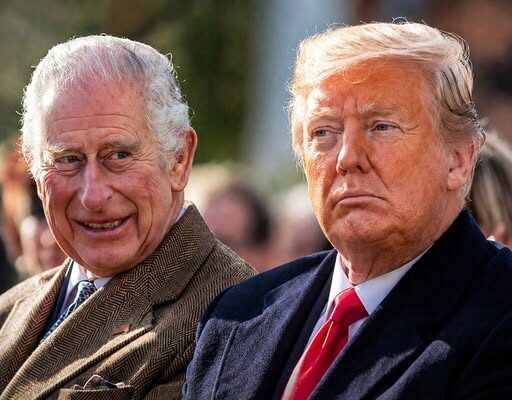
A Royal Gesture Sparks Global Debate at White House State Dinner
A Moment Charged With Symbolism
In the formal setting of a White House state dinner, even the smallest actions can carry significant meaning. When King Charles III presented a carefully chosen gift to Donald Trump, the atmosphere reflected more than ceremony. It revealed the delicate balance between tradition, diplomacy, and modern political perception.
The occasion brought together two prominent figures on a stage where every gesture is examined. As the monarch stepped forward, attention shifted to the object in his hands—a brass bell with a history tied to wartime legacy.
A Gift Rooted in History
The bell was not an ordinary token. It had been recovered from a World War II submarine, giving it a sense of historical depth and significance. Its connection to a vessel known as the HMS Trump added another layer of intrigue to the moment.
At first glance, the gift appeared to represent shared heritage. The naval connection symbolized cooperation and longstanding ties between two nations that have often worked together in times of conflict and peace.
Layers of Meaning in a Simple Object
Despite its straightforward appearance, the bell quickly became the focus of speculation. Objects presented during diplomatic exchanges are rarely random, and this one seemed carefully selected.
A bell, by design, serves as a signal or a call. This functional purpose invited interpretation, especially in a setting where every detail is scrutinized. Observers began to question whether the gift carried a deeper message beyond its historical value.
A Lighthearted Remark With Lasting Impact
The moment gained further attention when King Charles delivered a brief remark. Maintaining a composed demeanor, he suggested that if the President ever needed to contact Britain, he could simply “give us a ring.”
The comment prompted polite laughter among attendees. It appeared to be a harmless expression of humor, fitting within the tone of the evening. Yet outside the room, the reaction unfolded very differently.
From Formal Event to Viral Discussion
Within hours, the exchange moved beyond the confines of the dinner. Online discussions began to amplify the moment, transforming it into a subject of widespread interpretation.
Social media platforms became a space where viewers analyzed every aspect of the gesture. The bell and the accompanying remark were examined from multiple angles, each offering a different perspective on what it might represent.
Interpretations Divide Public Opinion
Some observers viewed the gesture as an example of refined humor. They saw it as a subtle demonstration of wit, blending politeness with a hint of cleverness. In this view, the moment reflected a style of communication that conveys meaning without direct statements.
Others interpreted the event more literally. To them, the gift was simply a thoughtful acknowledgment of a shared name and a historical connection. They considered the broader interpretations unnecessary and driven by a tendency to overanalyze.
The Role of Perception in Modern Diplomacy
The varied reactions highlight how public perception shapes the meaning of diplomatic actions. In an era of constant connectivity, events are no longer limited to those present in the room.
Every gesture can be replayed, discussed, and reinterpreted by audiences around the world. This creates a dynamic where intention and interpretation may diverge significantly.
Symbolism in a Highly Scrutinized Environment
Diplomatic exchanges have long relied on symbolism to communicate ideas. Gifts, remarks, and gestures often carry meanings that extend beyond their immediate purpose.
In this case, the brass bell became more than a historical artifact. It evolved into a symbol shaped by the perspectives of those observing it. Its meaning was no longer fixed but influenced by the context in which it was viewed.
The Power of Subtle Communication
The moment also demonstrated how subtle communication can resonate widely. A brief remark, delivered in a formal setting, can take on new significance when shared with a global audience.
Such interactions reflect a form of influence that does not rely on direct statements. Instead, it operates through nuance, tone, and timing.
Tradition Meets Modern Interpretation
The exchange highlighted the contrast between traditional diplomacy and contemporary analysis. While the event followed established protocols, its reception was shaped by modern communication channels.
This intersection creates a unique environment where historical practices are continuously reinterpreted through current perspectives.
A Reflection of Broader Sentiments
The reactions to the gift revealed more than opinions about a single moment. They reflected broader attitudes and expectations within a divided public landscape.
For some, the search for hidden meaning mirrored a desire to uncover deeper truths. For others, it demonstrated how easily simple actions can become subjects of controversy.
The Enduring Impact of a Single Gesture
Regardless of differing interpretations, the event achieved a notable outcome. It captured attention and sparked conversation on a global scale.
The brass bell, once part of a wartime vessel, became a focal point in a modern dialogue. Its journey from historical artifact to symbolic centerpiece underscores the evolving nature of public discourse.
Diplomacy in an Age of Constant Attention
The incident illustrates how diplomacy operates under continuous observation. Leaders must navigate not only the immediate setting but also the broader audience that engages with each moment.
This reality adds complexity to even the most routine exchanges. It requires awareness of how actions may be perceived across different contexts.
A Moment That Resonates Beyond the Room
What began as a formal exchange at a state dinner extended far beyond its original setting. The interaction became a subject of analysis, debate, and reflection.
It demonstrated how a single gesture, when placed in a high-profile environment, can take on a life of its own.
The Lasting Significance of the Bell
In the end, the brass bell served multiple roles. It was a historical object, a diplomatic gift, and a symbol shaped by interpretation.
Its meaning continues to vary depending on perspective. For some, it represents unity and shared history. For others, it remains a reminder of how easily meaning can be constructed in the public eye.
Conclusion
The exchange between King Charles III and Donald Trump stands as an example of how diplomacy extends beyond formal actions. It highlights the importance of context, perception, and communication in shaping how moments are understood.
Whether viewed as a simple gesture or a layered symbol, the presentation of the brass bell underscores the enduring influence of even the smallest actions in global affairs.
In a world where every detail is observed and interpreted, the significance of a single moment can reach far beyond its original intent. The bell’s story serves as a reminder of the complex interplay between tradition, symbolism, and modern perception.