
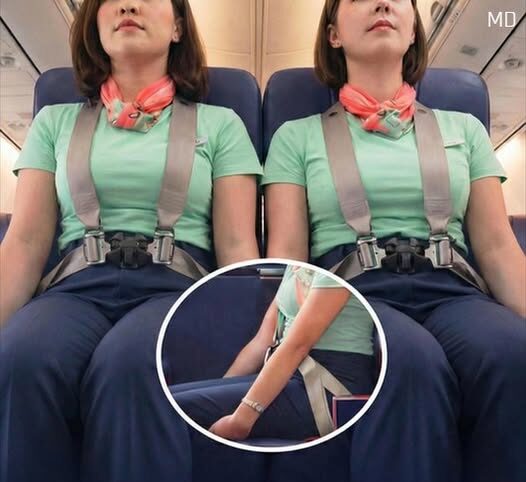
Why Flight Attendants Sit With Their Hands Under Their Thighs During Takeoff and Landing
A Posture With a Purpose
If you have ever glanced toward the cabin crew during takeoff or landing, you may have noticed a distinctive posture. Flight attendants often sit upright with their hands placed palms-up beneath their thighs.
At first glance, the position may appear unusual or even uncomfortable. However, it is neither random nor casual.
This posture is a deliberate safety technique taught during professional training. In aviation, every detail serves a clear function, especially during critical phases of flight.
The Most Sensitive Phases of Flight
Takeoff and landing are widely recognized as the most sensitive stages of any journey by air. During these moments, the aircraft operates at lower altitudes and changing speeds.
Pilots manage complex procedures as the plane ascends into the sky or descends toward the runway. Because of the increased workload and proximity to the ground, heightened awareness is essential.
Cabin crew members follow structured safety protocols during these periods. One of those procedures includes adopting a specific brace position while seated.
This involves sitting upright with the back straight, shoulders aligned, and feet flat on the floor. Hands are placed palms-up beneath the thighs.
The body remains positioned in a controlled and stable manner, limiting unnecessary movement.
Designed for Injury Prevention
The primary purpose of this posture is protection. In the unlikely event of sudden turbulence or an abrupt landing, unsecured arms could move unexpectedly.
By placing their hands beneath their thighs, flight attendants reduce the risk of flailing or impact-related injuries.
Keeping the arms secured also helps maintain overall body stability. The position minimizes sudden reactions that might otherwise lead to strain or harm.
In high-stress scenarios, small preventative measures can make a meaningful difference. This posture increases the likelihood that crew members remain physically capable of performing their duties immediately after an incident.
Maintaining Readiness and Awareness
Beyond physical safety, the position reflects a heightened state of alertness. During takeoff and landing, flight attendants remain fully focused.
These moments are not passive. Crew members scan the cabin, observe passenger behavior, and remain attentive to any communication from the flight deck.
The upright posture supports mental preparedness. It reinforces attentiveness and discourages relaxation during critical minutes.
Remaining mentally engaged is as important as physical positioning. Cabin crew must be prepared to respond quickly if instructions are issued.
Different Roles, Different Brace Positions
Passengers are sometimes instructed to adopt a forward-leaning brace position if directed. This differs from the stance used by crew members.
The reason for the distinction lies in responsibility.
Passengers focus primarily on self-protection. Their brace position is designed to shield the head and upper body.
Flight attendants, on the other hand, must be ready to move swiftly and assist others. Their posture keeps them balanced and prepared for immediate action.
By securing their hands and stabilizing their bodies, they can stand and guide passengers efficiently if required.
A Reflection of Professional Training
Aviation safety depends on preparation, discipline, and consistency. Crew members undergo extensive training to ensure they respond effectively under pressure.
The hands-under-thighs posture is one of many structured practices embedded in that training. It is performed consistently because repetition builds readiness.
Even when flights proceed smoothly, these procedures remain in place. Safety standards are maintained regardless of circumstances.
Such practices demonstrate how aviation prioritizes risk management. Small, deliberate actions contribute to overall passenger protection.
Confidence Through Preparation
For travelers, seeing cabin crew seated in this position may go unnoticed or raise quiet curiosity. In reality, it represents preparation rather than concern.
The posture signifies that the crew is alert, focused, and ready to respond if needed.
Takeoff and landing may last only minutes, but those minutes matter. Maintaining stability and awareness during these periods supports the broader safety system that governs air travel.
Every movement inside an aircraft cabin has intent behind it. The hands-under-thighs brace position reflects a commitment to readiness.
A Simple Practice With Significant Impact
The next time you observe a flight attendant seated upright with hands placed beneath their thighs, you will understand the reasoning behind it.
It is not about comfort or routine. It is a carefully designed safety measure rooted in training and preparation.
Through posture, awareness, and discipline, cabin crew members remain positioned to protect themselves and assist passengers during the most critical phases of flight.
In aviation, even the smallest details are purposeful. This simple seated stance is one more example of how safety remains the highest priority from departure to arrival.