
The Quiet Beginnings of a Notorious Criminal Case
An Unassuming Childhood That Raised No Alarm
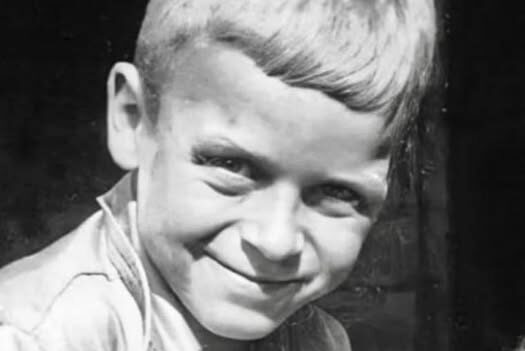
He appeared to be an ordinary child, the kind people would rarely question or suspect.
Polite in conversation and reserved in nature, he blended easily into the routines of a quiet community.
Neighbors saw a boy who followed rules, wore his uniform with pride, and carried out everyday responsibilities without drawing attention.
At first glance, nothing about his early life suggested the darkness that would later define his name.
Birth Surrounded by Uncertainty
Born in 1946 in Burlington, Vermont, Theodore Robert Bundy entered the world under complicated circumstances.
His father’s identity remained unknown, creating a cloud of uncertainty that lingered from the beginning of his life.
He was born in a facility intended for mothers without partners, a setting that shaped the early narrative of his childhood.
Within weeks, he was separated from that environment and sent to live with relatives, beginning a life marked by secrecy.

A young Ted Bundy standing beside a christmas tree, Photo Credit: DAN/X
A Family Secret That Shaped His Identity
During his formative years, Bundy was raised under a carefully maintained deception.
He was led to believe that his mother, Louise, was actually his sister, while his grandparents were presented as his parents.
This arrangement was designed to avoid social stigma, but it created a complicated emotional reality.
The moment when he discovered the truth remains unclear, with different accounts offering varying timelines.
Some suggest he uncovered his birth certificate as a teenager, while others believe he learned earlier through family interactions.
Regardless of when it occurred, the revelation had a lasting psychological impact.
A Childhood That Seemed Stable on the Surface
To those outside his immediate circle, his upbringing appeared relatively normal.
He attended school, participated in activities, and maintained friendships that gave the impression of stability.
People who knew him during this time described him as courteous and well-behaved.
He was not seen as disruptive or difficult, allowing him to remain largely unnoticed.
This outward normalcy made it difficult for anyone to recognize deeper issues.
Early Signs That Went Unnoticed
Despite the calm exterior, there were moments that later drew attention when revisited.
Relatives recalled incidents that hinted at troubling behavior beneath the surface.
One particularly unsettling memory involved him standing silently over a sleeping family member while placing knives nearby.
At the time, the behavior was dismissed and not treated as a warning sign.
Such moments, though rare, would later be viewed differently in hindsight.

Ted Bundy photographed with his then-girlfriend, Elizabeth Kloepfer, in Utah in 1975, Photo Credit: Archaeo – Histories/X
Struggles During Adolescence
As he grew older, social challenges began to emerge more clearly.
He faced teasing from peers, including comments about a speech difficulty.
Attempts to participate in sports were unsuccessful, adding to a sense of exclusion.
Over time, these experiences contributed to increasing isolation.
By high school, he spent much of his time alone, separated from the social circles around him.
Changes Within the Family Environment
Family dynamics shifted when his mother remarried, introducing new tensions into the household.
This change created friction that further complicated his emotional development.
He began to develop a strong focus on outward success, including status and appearance.
These concerns appeared to grow alongside his sense of dissatisfaction with his personal circumstances.
The combination of internal conflict and external pressure shaped his worldview during these critical years.
Moving Forward While Hiding Inner Struggles
Despite personal challenges, he managed to continue his education and pursue opportunities.
He attended college, presenting himself as someone capable and motivated.
During this time, he even volunteered at a suicide prevention hotline.
This role required empathy and communication, qualities that seemed to contradict later revelations.
To those around him, he continued to appear composed and functional.

Ted Bundy with his wife, Carole Ann Boone, and her daughter, Photo Credit: Manifest_Lord/X
The Emergence of a Dark Pattern
Behind the scenes, however, a different reality was beginning to take shape.
In the mid-1970s, a series of crimes began to unfold across multiple states.
Young women were targeted in incidents that shared striking similarities.
The methods involved calculated deception, often using charm or fabricated injuries to gain trust.
This approach allowed him to avoid suspicion while carrying out his actions.
A Carefully Maintained Public Image
What made these events particularly disturbing was the contrast between his behavior and his appearance.
He presented himself as approachable, educated, and trustworthy.
This image helped him move through different environments without raising concern.
It also made it difficult for people to connect him to the crimes that were being investigated.
The gap between perception and reality became one of the defining elements of the case.
Arrest That Changed the Course of the Investigation
In 1975, his arrest came unexpectedly during a routine traffic stop.
Officers discovered items in his vehicle that raised immediate suspicion.
This encounter marked the beginning of a deeper investigation into his activities.
As authorities examined the evidence, connections to multiple incidents began to emerge.
The case quickly expanded, revealing a pattern that had gone unnoticed for years.

Ted Bundy during a court appearance, Photo Credit: Kenia lo hace todo mal/x
Confessions and the Scope of the Crimes
Over time, Bundy admitted to committing numerous acts that shocked investigators and the public alike.
He confessed to killing at least 30 women, though the true number was believed to be higher.
The full extent of his actions remains uncertain, leaving unanswered questions that persist to this day.
Each detail added to a growing understanding of how extensive the situation had become.
The revelations reshaped how similar cases were viewed and investigated.
Trial and Sentencing
Following his arrest, a series of legal proceedings led to convictions on multiple counts.
The evidence presented during these trials highlighted the calculated nature of his actions.
Ultimately, he was sentenced to death in the state of Florida.
The decision reflected the severity of the crimes and the impact they had on victims and communities.
Legal appeals continued for several years before the sentence was carried out.
Final Days and Public Reaction
On January 24, 1989, the sentence was executed, bringing the legal process to its conclusion.
Outside the prison, large crowds gathered, reflecting a wide range of reactions.
Some people sought a sense of closure, while others approached the moment with curiosity.
The atmosphere was shaped by years of public attention and intense media coverage.
In his final moments, he remained composed, offering only brief remarks before the process was completed.
A Lasting Impact on Public Awareness
The case left a lasting impression on how people understand criminal behavior.
It challenged assumptions about appearance, personality, and the ability to recognize danger.
Many were struck by the realization that someone could maintain a normal outward image while concealing harmful intentions.
This awareness has influenced both public perception and investigative approaches.
It continues to be referenced in discussions about psychology and criminal profiling.
A Reminder About Appearances and Reality
The story serves as a reminder that harmful behavior is not always immediately visible.
It highlights the importance of looking beyond surface impressions when evaluating character.
What appears ordinary may sometimes conceal deeper complexities.
The contrast between his early life and later actions remains one of the most striking aspects of the case.
It underscores the idea that understanding human behavior requires careful attention to both visible and hidden factors.