
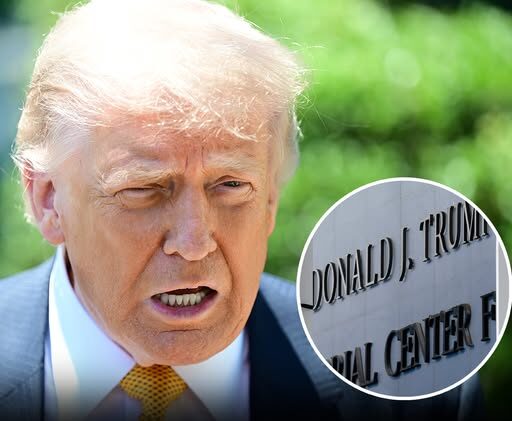
Federal Court Orders Removal of Trump Name From Kennedy Center Following Major Legal Ruling
Judge Rejects Controversial Renaming Effort
A federal court decision has cleared the way for the removal of Donald Trump’s name from the Kennedy Center, ending a contentious dispute over the identity of one of the nation’s most recognizable cultural institutions.
The ruling determined that the effort to rename the facility as the “Trump Kennedy Center” was never legally authorized. Judge Christopher Cooper concluded that the authority to change the official name of the center belongs to Congress, not to internal actions taken by individuals or governing bodies associated with the institution.
The decision immediately placed the spotlight on the process that led to the attempted rebranding and raised broader questions about the limits of executive influence over nationally recognized landmarks.
Questions Over How the Renaming Was Approved
Central to the court’s findings were allegations surrounding the manner in which the renaming effort was carried out.
Critics argued that the process lacked transparency and failed to meet the standards required for a legitimate institutional decision.
Claims emerged that microphones had been muted during discussions and that a vote was rushed through under circumstances that prevented meaningful debate.
Those allegations became a key part of the legal challenge, helping to frame the dispute as more than a disagreement over a name.
The Court’s Interpretation of the Law
Judge Cooper’s ruling centered on a straightforward legal question: who has the power to rename the Kennedy Center?
The court concluded that such authority rests with Congress.
As a result, actions taken outside that congressional process could not legally alter the institution’s official identity.
The ruling effectively invalidated the Trump-era rebranding effort and restored the original legal status of the center.
A Broader Message Beyond One Building
Although the immediate impact concerns the Kennedy Center’s name, the ruling carries implications that extend beyond a single cultural venue.
The decision addressed larger questions about how public symbols are governed and who has the authority to redefine them.
Judge Cooper’s opinion suggested that historical institutions cannot be reshaped simply through political influence or temporary control.
Instead, changes to nationally significant symbols must occur through the legal mechanisms established by law.
Representative Joyce Beatty’s Challenge Gains Validation
The lawsuit brought additional attention to the efforts of Representative Joyce Beatty, who challenged the legality of the renaming initiative.
At various stages of the controversy, critics dismissed her objections as political maneuvering or symbolic opposition.
However, the federal court’s ruling ultimately aligned with the core argument she advanced throughout the dispute.
The decision affirmed that the attempted name change lacked the legal foundation required for such a significant institutional action.
The Kennedy Legacy Returns to the Forefront
For supporters of the Kennedy Center’s original identity, the ruling represents more than a procedural correction.
Many view it as a reaffirmation of the historical legacy associated with the institution and the name it has carried for decades.
The court’s decision was welcomed by those who believed the rebranding effort threatened to overshadow the center’s longstanding mission and historical significance.
Supporters argued that preserving the original name protects the institution’s connection to the legacy it was created to honor.
Reaction From Trump Supporters
While supporters of the original Kennedy Center name celebrated the outcome, the ruling was viewed differently by many Trump allies.
For those who supported the rebranding effort, the court’s decision represented a significant setback.
The ruling reinforced the idea that influence exercised during a presidential administration does not automatically continue beyond the legal limits established by law.
Preparations to Restore the Original Identity
Following the ruling, attention has shifted from the courtroom to implementation.
Workers are expected to begin removing references associated with the disputed name change and restoring official materials to reflect the Kennedy Center’s original designation.
The process will involve updating signage, documentation, and other public-facing elements connected to the institution.
Although the physical changes may appear straightforward, they symbolize the conclusion of a legal battle that attracted national attention.
A Defining Moment in the Debate Over Public Institutions
The dispute surrounding the Kennedy Center became a powerful example of how legal authority, political influence, and historical memory can collide.
At its core, the case asked whether public institutions can be transformed through internal decisions or whether such changes require formal democratic approval.
The federal court’s answer emphasized the importance of legal process and institutional safeguards.
By rejecting the attempted renaming, the ruling reaffirmed that nationally recognized landmarks remain subject to the laws that govern them rather than the ambitions of any individual figure.
As the Kennedy Center resumes its original identity, the case leaves behind a broader lesson about the limits of power and the enduring importance of legal procedure.