
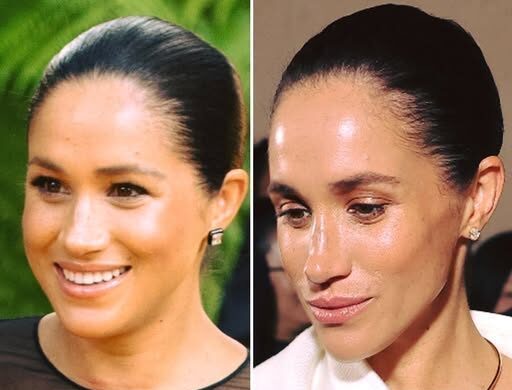
Why Before-and-After Celebrity Photos Rarely Tell the Whole Story
The Appeal of a Simple Comparison
The internet has a deep fascination with before-and-after images. One picture is placed beside another, and within seconds, viewers begin building a story around the difference.
For celebrities, this habit has become especially common. A face from one year is compared with a face from another, and strangers begin speaking as if the full private history between those moments is obvious.
The appeal is easy to understand. A side-by-side comparison feels direct, simple, and convincing. It seems to offer proof without needing explanation.
But that sense of certainty is often misleading. A photograph may capture a moment, but it does not capture every factor that shaped that moment.
It does not show the lighting outside the frame. It does not show the angle of the camera, the timing of the shot, the person’s health, emotions, stress level, or private circumstances.
Most importantly, it does not show the years, experiences, and ordinary human changes that happen between one image and another.
When Images Become Assumptions
Celebrity photo comparisons often promise clarity, but they usually create illusion. Two images, removed from their original setting, are treated like evidence in a public trial.
Viewers may decide they are seeing proof of surgery, scandal, decline, deception, or some dramatic personal transformation. The conclusion often arrives before any careful thought does.
The problem is not that people notice differences. Human beings naturally observe change. The problem begins when observation turns into certainty about causes no one actually knows.
A face can look different for countless reasons. Lighting can soften or sharpen features. Shadows can change the shape of a face. A camera angle can make someone appear tired, fuller, thinner, older, or younger.
Time itself changes every person. Aging is not a scandal. It is not a confession. It is not proof that someone has done something wrong.
Yet online discussions often treat visible change as a mystery to be solved. A wrinkle becomes a headline. A different expression becomes a theory. A slight fluctuation becomes a public debate.
What the Frame Leaves Out
A photograph always leaves something out. That is part of what makes it powerful and part of what makes it unreliable as proof of a larger story.
Outside the frame, there may be grief. There may be illness. There may be exhaustion after a long day, a difficult season, or a private struggle that no audience has any right to examine.
There may be joy, recovery, pregnancy, medication, stress, rest, or ordinary aging. There may also be nothing dramatic at all, only a bad angle or an unflattering moment captured at the wrong second.
When people look at a comparison without context, all of those possibilities disappear. The image becomes smaller than the life behind it, yet it is treated as if it explains everything.
This is especially unfair because celebrity images are rarely neutral. They are selected, cropped, shared, and presented in ways that encourage reaction.
The most dramatic comparison often travels the fastest. A normal, ordinary, balanced image may not attract attention, but a surprising contrast can instantly become a topic of discussion.
The Confidence of Distance
One of the most troubling parts of online judgment is the confidence with which strangers speak about lives they have never witnessed.
People may discuss another person’s body, face, health, or private choices with complete certainty, even though they are working from only a few images.
Distance makes this easier. A celebrity on a screen can begin to feel less like a person and more like a public object available for inspection.
That distance can encourage harshness. It can make speculation feel harmless, even when the subject of that speculation is a real person with a real life.
Public visibility does not remove someone’s humanity. Being famous does not mean every change in appearance must be explained to strangers.
The more familiar a celebrity seems, the easier it becomes for audiences to forget that familiarity is not the same as knowledge.
Why Certainty Can Be Misleading
Before-and-after comparisons often work because they simplify complexity. They turn a human life into a visual puzzle with an easy answer.
But human change is rarely simple. A face may reflect sleep, mood, stress, health, age, makeup, lighting, or even a split-second expression.
None of those details can be responsibly confirmed from two pictures alone. The image may invite a reaction, but it does not provide enough information for a verdict.
This is why confident claims based only on appearance can be so unfair. They replace uncertainty with assumption and treat private matters as public property.
Even when a difference is real, the cause may remain unknown. A responsible viewer can recognize change without pretending to know why it happened.
That distinction matters. Noticing is not the same as diagnosing. Observing is not the same as accusing. Comparing is not the same as understanding.
The Pressure Beyond Celebrity Culture
The effects of this habit do not stop with public figures. The way celebrities are judged online can quietly influence how ordinary people judge themselves.
When every visible change is treated as suspicious, people begin to feel that natural change needs a defense. A wrinkle becomes something to explain. Weight fluctuation becomes something to justify.
A tired face becomes a failure. A different look becomes a problem. Over time, normal human variation starts to feel unacceptable.
This creates a culture where people are expected to remain visually consistent, polished, and easily explained. But real life does not work that way.
Bodies change. Faces change. People go through seasons of strength, stress, recovery, growth, and aging.
If every change is placed under public suspicion, the result is not honesty. It is pressure, insecurity, and a constant feeling that being human is somehow not enough.
The Problem With Turning People Into Evidence
A celebrity photograph is often treated as proof, but proof requires more than appearance. It requires context, accuracy, and a careful understanding of what can and cannot be known.
Without that context, a comparison becomes a story written by distance. The viewer fills the silence with assumptions, and those assumptions can quickly become accepted as truth.
This is especially damaging when the subject involves health, aging, or personal choices. These are sensitive parts of life, not entertainment puzzles.
No one can fully understand another person’s experience from a single image. Even a series of images cannot reveal every private detail behind a public appearance.
When people forget that, they risk reducing a full human life to a few visible features. A person becomes a face, and the face becomes a debate.
That kind of attention may feel casual online, but it can carry a real emotional weight.
A More Honest Way to Look
A more responsible response to celebrity comparisons does not require pretending that differences do not exist. People can notice change without turning it into accusation.
They can acknowledge that a person looks different while also accepting that the reason may not be known. They can resist the urge to turn uncertainty into gossip.
This kind of restraint is not silence for the sake of silence. It is an honest recognition of the limits of what an image can show.
A photograph can show light, expression, posture, and timing. It cannot fully show grief, recovery, stress, medication, joy, illness, or the quiet passage of years.
It cannot explain a private life. It cannot confirm motives. It cannot serve as a confession.
When viewers remember those limits, they become less likely to mistake a visual difference for a complete truth.
Respect in the Age of Comparison
The age of comparison rewards quick conclusions. It encourages people to react instantly, comment confidently, and move on before considering the harm.
But respect begins with slowing down. It begins with admitting that some questions do not have a responsible public answer.
Not every change needs to become a theory. Not every face needs to be analyzed. Not every body needs to be explained.
There is room to be curious without being cruel. There is room to notice without turning another person’s appearance into a public judgment.
This matters because the habits people practice online shape the way they see the world offline. A culture that treats celebrities harshly often teaches ordinary people to treat themselves the same way.
Kindness in this context does not mean ignoring reality. It means refusing to pretend that a photograph contains more truth than it actually does.
A Photograph Is Not a Full Story
Before-and-after images will likely continue to attract attention. They are simple, visual, and easy to share.
But their simplicity is also their weakness. They can make complex lives look easy to interpret, even when the truth remains far more layered.
A person’s appearance can change for reasons that are ordinary, private, temporary, or deeply personal. The public may see the surface, but the full explanation often belongs only to the person living through it.
The most honest response is not to deny visible change, but to remain humble about what it means. A difference in appearance is not automatic proof of a hidden story.
In a culture built on comparison, restraint can be a form of respect. It protects public figures from careless judgment and reminds everyone else that human change is not a failure.
A photograph can capture a moment, but it cannot contain a whole life. Treating it as if it can is where misunderstanding begins.