
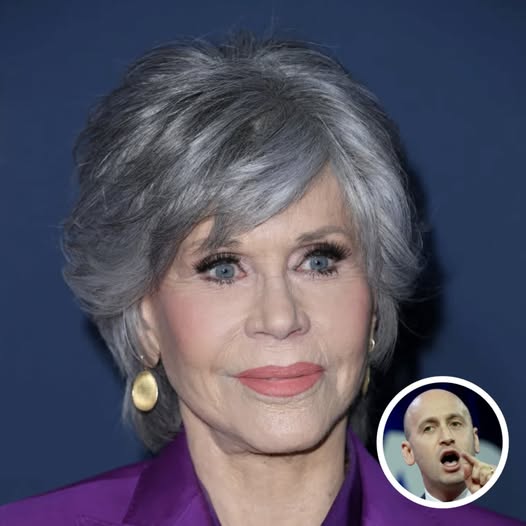
Debate Rekindled Over Jane Fonda’s Vietnam-Era Activism
Comments During Television Interview Spark Discussion
Actress and activist Jane Fonda has once again become the focus of public discussion following remarks made during a recent television interview by former White House adviser Stephen Miller.
During an appearance on Fox News, Miller referenced Fonda’s actions during the Vietnam War and argued that her activism from that era should remain part of how the public evaluates her legacy.
The comments quickly reignited a long-standing conversation about Fonda’s role in the anti-war movement and how historical activism continues to influence modern public debate.
The 1972 Visit to North Vietnam
Much of the discussion centers on Fonda’s 1972 trip to North Vietnam during the height of the Vietnam War. During that visit, she participated in radio broadcasts that criticized U.S. military policy.
Photographs taken during the trip showed Fonda seated near a North Vietnamese anti-aircraft gun. The images became widely circulated and sparked strong reactions across the United States.
For some observers, the photographs became one of the most controversial moments associated with the anti-war movement of that era.
Public Reaction and the “Hanoi Jane” Nickname
Critics of Fonda’s actions argued that the images and statements made during the trip appeared to show sympathy toward an opposing government during wartime.
As a result, the nickname “Hanoi Jane” emerged and has remained connected to discussions about her activism during the Vietnam War.
The controversy surrounding the trip has been revisited numerous times over the decades whenever Fonda’s political activism becomes part of public conversation.
Fonda’s Response Over the Years
In later years, Fonda acknowledged that the photograph taken during the visit caused significant hurt and anger, particularly among military veterans and their families.
She has repeatedly stated that posing for the image was a mistake and expressed regret about the impact it had on many people.
Her statements addressing the incident have been part of ongoing efforts to explain her actions and respond to the criticism that followed.
Connecting Past Activism With Present Advocacy
During the recent television interview, Miller also linked Fonda’s Vietnam-era activism to her involvement in current political and environmental causes.
In recent years, Fonda has been an outspoken supporter of environmental initiatives and climate advocacy efforts. She has participated in demonstrations and public campaigns related to environmental protection.
Her activism has included criticism of certain infrastructure projects, including the Keystone Pipeline, as part of broader discussions about climate policy.
A Career That Spans Film and Advocacy
Jane Fonda’s public life has combined both a long acting career and decades of involvement in social issues. She has appeared in numerous films and television projects across more than fifty years in the entertainment industry.
At the same time, she has consistently used her public platform to speak about political and environmental concerns.
For many supporters, her activism reflects a long-standing commitment to issues she believes are important. Critics, however, continue to point to her actions during the Vietnam War as a defining part of her public story.
Ongoing Public Debate
The renewed attention surrounding Fonda’s past highlights a broader question frequently raised when discussing well-known public figures.
Many people debate how historical actions should influence current perceptions of individuals who remain active in public life.
Some believe that past events provide important context when evaluating a public figure’s influence, while others emphasize the importance of considering a person’s later actions and contributions.
Balancing History and Present-Day Perspectives
The conversation surrounding Jane Fonda reflects how historical events can continue to shape public discussions many decades later.
Her involvement in both entertainment and activism has made her a visible figure in conversations about political engagement and cultural change.
As debates about her legacy continue, the discussion illustrates the complexity of evaluating public figures whose careers span multiple generations and social movements.