
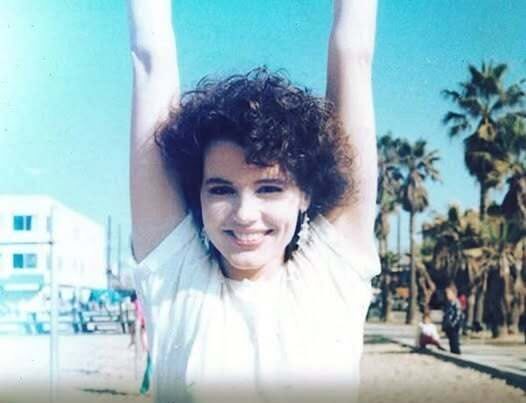
Geena Davis: From Sheltered New England Childhood to Hollywood Stardom and Media Advocacy
A Hollywood Career Built on Talent and Reinvention
Geena Davis became one of Hollywood’s most recognizable performers during the 1980s and early 1990s, rising from modeling work to award-winning acting in a relatively short span of time.
Her screen presence, intelligence, and ability to move between comedy, drama, science fiction, and character-driven stories helped establish her as one of the most respected actresses of her generation.
Behind that success, however, was a personal history shaped by a sheltered childhood, difficult experiences, emotional silence, and a lifelong effort to understand the lessons she absorbed while growing up.
Davis’s life story is not only about fame or memorable films. It is also about learning when politeness becomes harmful, how early experiences can shape adult behavior, and how personal awareness can later become public advocacy.
Early Life in Massachusetts
Geena Davis was born on January 21, 1958, in Wareham, Massachusetts. Her childhood took place far from the glamour, attention, and pressure of the entertainment industry she would later enter.
She grew up in a modest New England setting with her parents, Bill and Lucille, and her older brother Dan. Her family environment was traditional, practical, and built around discipline, hard work, humility, and proper behavior.
Davis later reflected that entertainment in her home was limited, with Disney animated films among the few movies she remembered watching as a child. Those films helped awaken her imagination, even though her exposure to performance and popular culture remained limited.
Her parents emphasized respect, modesty, and politeness. Davis has joked that their values were so old-fashioned they might have seemed “Amish-like” if they had known the term.
This upbringing gave her a strong foundation, but it also shaped a habit of silence and self-restraint that she would spend much of her adult life examining.
A Sheltered but Formative Childhood
Davis often describes her childhood as sheltered, simple, and grounding. Her family lived in rural New England, where daily life was practical and closely connected to the home.
Her father chopped wood to heat the house, while her mother grew much of the family’s food. The lifestyle was quiet and self-sufficient, with little connection to the wider world of celebrity or entertainment.
That environment taught Davis responsibility and resilience. At the same time, it limited her early understanding of social complexity, personal boundaries, and the need to speak up when something felt wrong.
As she later examined her childhood, Davis came to see that the values she had been taught could be both protective and restrictive. Politeness, respect, and modesty were important, but they also made it difficult for her to challenge uncomfortable situations.
The Lesson Behind “Dying of Politeness”
One of the most striking memories Davis later shared involved a frightening experience when she was eight years old. She was riding in a car driven by her elderly great-uncle when the vehicle drifted dangerously close to oncoming traffic.
The situation became life-threatening, yet Davis remained silent. She did not protest, shout, or ask him to stop. Her instinct was to stay polite, even when her safety appeared to be at risk.
That moment became deeply symbolic in her later reflections. It showed how strongly she had absorbed the idea that being agreeable mattered more than expressing fear or discomfort.
In her memoir Dying of Politeness, Davis explored how this childhood pattern followed her into adulthood. She recognized that silence, when rooted in fear of being rude, could prevent a person from protecting themselves or stating their needs.
The experience helped define one of the central themes of her personal story: the need to separate kindness from self-erasure.
Childhood Trauma and Silence
Davis also revealed a painful childhood experience involving inappropriate behavior from a neighbor. As a child delivering newspapers, she was subjected to abuse she did not fully understand at the time.
Because she was young, she struggled to make sense of what had happened. The confusion and shame that followed stayed with her for years.
Her mother eventually confronted the neighbor, but no formal legal action took place. Davis was left without a full explanation, which deepened the silence surrounding the experience.
As an adult, she came to understand how that moment affected her sense of boundaries. It reinforced the belief that uncomfortable situations should be endured quietly rather than challenged openly.
This pattern would become part of the emotional landscape she later examined in her writing and public reflections.
Standing Out During Her School Years
Davis also faced insecurity because of her height. She was noticeably taller than many of her classmates, which made her feel different during her school years.
Although her height helped her in sports, especially track and field events such as high jump and hurdles, it also made her a target for teasing.
She remained active despite those insecurities. She played the flute in the marching band and continued participating in school activities, showing early signs of discipline and versatility.
A year spent studying abroad in Sweden helped broaden her perspective and develop her language skills. That experience exposed her to a wider world and helped her grow beyond the limits of her sheltered upbringing.
She later attended New England College before transferring to Boston University, where she studied drama and began taking the idea of an acting career seriously.
Moving to New York and Entering Modeling
After her education, Davis moved to New York City in 1977. Like many aspiring performers, she worked several jobs while trying to build a career.
Her early work included retail jobs, waiting tables, and modeling as a window mannequin. These jobs helped support her while she looked for opportunities in the entertainment industry.
Eventually, she signed with the Zoli modeling agency. That step led to her appearance in the Victoria’s Secret catalog and brought her closer to the world of professional image-making.
Davis saw modeling as a possible bridge into acting. She believed that visibility as a model might help her be discovered by filmmakers, especially since other models had successfully moved into film.
Although modeling did not guarantee an acting career, it helped place her in the right setting for the breakthrough that would change her life.
The Breakthrough Role in Tootsie
Davis’s first major acting opportunity came when director Sydney Pollack noticed her in a catalog and cast her in the 1982 film Tootsie.
The film starred Dustin Hoffman and became both a critical and commercial success. Davis received attention for her performance, and the role gave her a strong entry point into Hollywood.
Tootsie marked the beginning of a rapid rise. It introduced Davis to a broad audience and proved that she could make an impression even in a film filled with established talent.
After that breakthrough, she continued gaining experience through television roles, including appearances in Buffalo Bill and Sara. Some early projects did not become major box office successes, but they helped her develop as a performer.
Each role added to her credibility and prepared her for the defining performances that would soon follow.
Beetlejuice, The Fly, and an Academy Award
Davis’s career gained major momentum with roles in The Fly, Beetlejuice, and The Accidental Tourist. These films demonstrated her range and helped establish her as a serious Hollywood talent.
In The Fly, she starred alongside Jeff Goldblum in a performance that combined emotional depth with the intensity of science fiction horror.
Beetlejuice gave her another memorable role, showing her ability to succeed in a visually bold and darkly comic film.
Her work in The Accidental Tourist earned her an Academy Award for Best Supporting Actress. That recognition confirmed her status as one of the most accomplished actresses of the period.
By the end of the 1980s, Davis had moved from modeling and early television work into the highest levels of film recognition.
The Cultural Impact of Thelma & Louise
One of Davis’s most iconic roles came in Thelma & Louise, directed by Ridley Scott. The film became a major cultural landmark and remains one of the most discussed movies of her career.
Her performance alongside Susan Sarandon created one of the most memorable female duos in modern film history.
The story’s focus on friendship, independence, rebellion, and the consequences of limited choices gave the movie a lasting place in popular culture.
For Davis, the role deepened her connection to stories centered on women’s experiences. It also helped shape her later awareness of how women were represented on screen.
Thelma & Louise remains a defining part of her legacy because it combined strong acting with a broader conversation about gender, freedom, and identity.
A League of Their Own and Continued Success
Following Thelma & Louise, Davis starred in A League of Their Own, another film that strengthened her reputation for choosing memorable, character-driven work.
The movie added to her image as an actress capable of portraying strong, intelligent, and emotionally layered women.
At the peak of her career, Davis was admired not only for her appearance but also for her intelligence, humor, and ability to bring depth to different kinds of roles.
Her success reflected a rare combination of screen charisma and thoughtful performance. She became a symbol of a period when audiences were increasingly drawn to complex female characters.
Changing Opportunities in Hollywood
As Davis approached her 40s, the number of major roles available to her began to decline. She later described this shift as dramatic.
Her experience reflected a broader pattern in Hollywood, where many actresses faced reduced opportunities as they grew older.
For Davis, the change was not only professional but personal. It increased her awareness of how the entertainment industry treated women at different stages of life.
That awareness would later become central to her advocacy work. The same industry that had given her fame also showed her the limits placed on women’s visibility and longevity.
Marriage, Family, and Motherhood
Davis has been married four times, including a marriage to actor Jeff Goldblum. Later in life, motherhood became one of the most meaningful parts of her personal journey.
At age 46, she welcomed her daughter Alizeh. She later became the mother of twin sons, Kaiis and Kian.
Her fourth husband, surgeon Reza Jarrahy, played an important role in this chapter of her life. The two met socially before beginning a relationship, and they married in 2001.
Together, they raised three children. Davis embraced motherhood despite the challenges that came with having young children later in life.
She has spoken about the overwhelming responsibility of caring for three children under the age of three, a period that brought both joy and pressure.
Advocacy for Gender Equality in Media
As her children grew, Davis became increasingly aware of gender inequality in film and television. This awareness led her to take action beyond her own acting career.
In 2004, she established the Geena Davis Institute on Gender in Media. The organization was created to promote better representation and equality for women in entertainment.
Her work in advocacy grew out of both personal experience and professional observation. Davis had seen how visibility, opportunity, and representation could shape public perception.
The institute became a major part of her later legacy, connecting her Hollywood career to a broader mission for change.
Through this work, Davis expanded her influence beyond acting and became a prominent voice in the conversation about women’s roles on screen.
A Legacy Beyond the Screen
Today, Geena Davis remains active as both an actress and advocate. At 69, she continues to work in the entertainment industry while supporting efforts to challenge inequality in media.
Her upcoming projects include a Netflix series from the creators of Stranger Things, showing that her career continues to evolve decades after her first major breakthrough.
Davis’s legacy is not limited to one film, one award, or one period of Hollywood history. It includes her performances, her personal honesty, her experience of motherhood, and her commitment to representation.
Her journey from a sheltered Massachusetts childhood to international recognition reflects resilience and reinvention. It also shows how early lessons, even painful ones, can later become a source of clarity and purpose.
Geena Davis remains a figure whose story connects Hollywood success with personal growth and public advocacy, making her influence far broader than the screen roles that first made her famous.