
Mullein: The Fuzzy Wild Plant With a Long History in Herbal Traditions
A Common Plant Often Mistaken for an Ordinary Weed
Many people pass tall wild plants along roadsides, garden edges, fields, and empty lots without giving them a second look. Some of these plants are quickly dismissed as weeds, even though they have been recognized and used in traditional herbal practices for generations.
One such plant is mullein, known scientifically as Verbascum thapsus. To an unfamiliar observer, it may look like a rough plant growing in poor soil. To herbal enthusiasts, gardeners, and plant lovers, however, mullein stands out as a species with a distinctive appearance and a long connection to folk traditions.
Mullein often grows in dry, disturbed ground where other plants may struggle. It can appear beside roads, along fences, near driveways, in pastures, around construction areas, and in vacant lots. Because it grows so easily in overlooked spaces, many people notice it only after learning what makes it unique.
How Mullein Can Be Recognized
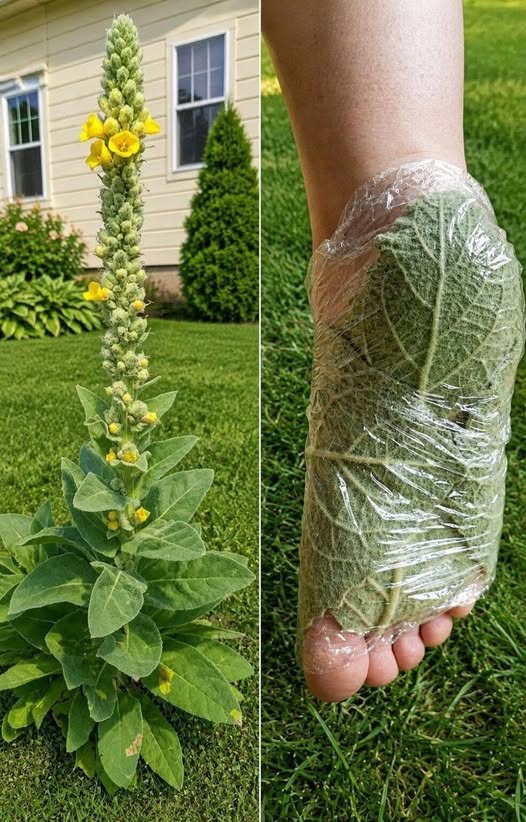
The plant is best known for its soft, fuzzy leaves and tall flowering stalk. Its leaves are thick, pale green, and covered with fine hairs that give them a velvety texture. This woolly surface is one of the most recognizable features of mullein.
When mature, the plant can rise several feet above surrounding grasses and smaller plants. Its upright stalk carries clusters of small yellow flowers, giving it a torch-like shape that makes it easier to identify during its second year of growth.
Mullein is a biennial plant, which means it usually completes its life cycle over two years. During the first year, it grows low to the ground in a circular cluster of broad leaves. This stage is known as a rosette.
In the rosette stage, mullein may not appear especially dramatic. The plant is still developing the energy it will use the following year, when it sends up its tall central stalk and begins to flower.
During the second year, the plant changes noticeably. A strong stalk grows from the center of the leaf cluster, eventually producing yellow blossoms that attract pollinators. After flowering and seed production, the plant’s life cycle is complete.
Why Mullein Grows in So Many Places
Mullein is native to Europe, Asia, and North Africa, but it has spread widely beyond those regions. Today, it can be found across North America and in many other areas where the conditions allow it to grow.
Its ability to survive in poor soil and disturbed places is one reason it is often treated as a weed. The plant does not need carefully prepared garden beds to establish itself. It can take root in open spaces where the ground has been disrupted by human activity.
Still, the word “weed” often reflects human preference more than botanical value. A plant may be unwanted in one yard but appreciated in another. Mullein can be removed as a nuisance by some people while admired by others for its appearance, resilience, or traditional associations.
A Plant With a Long Place in Folk Practices
For generations, mullein has held a place in folk medicine and traditional herbal preparations. Different parts of the plant have historically been used in teas, infusions, oils, compresses, and steam preparations.
Traditional herbal practices have often associated mullein with respiratory comfort, soothing preparations, and external uses. However, traditional use should not be confused with proven medical treatment. A long history of use does not automatically mean that a remedy has been scientifically confirmed or medically approved.
Much of mullein’s continuing popularity comes from its connection to older ways of living. In earlier times, people often paid close attention to the plants growing around them and used what was available in their surroundings. Mullein remains interesting not only as a plant, but also as part of that cultural memory.
Mullein Tea and Careful Preparation
One of the best-known traditional uses of mullein involves herbal tea. Dried mullein leaves have often been steeped in hot water to make a mild herbal drink. Some people value it because of its connection to old-fashioned herbal practices.
Because mullein leaves are covered in tiny hairs, careful preparation is important. Tea made from the leaves is usually strained through a fine filter or cloth before drinking. This helps remove small plant particles that could irritate the throat.
This detail is a reminder that even familiar herbs require caution. A plant may be widely discussed in traditional settings, but preparation still matters. Identification, cleanliness, and proper handling are all important when dealing with wild plants.
Traditional Flower Oils and External Uses
Mullein flowers have also been used in traditional infused oils. In some folk practices, the yellow blossoms are placed in oil and left to infuse over time. These oils have been used externally and have appeared in ear-related folk remedies.
Anyone dealing with ear pain, infection, injury, or ongoing symptoms should seek proper medical guidance rather than relying on home preparations. Ear problems can involve sensitive areas, and delaying appropriate care may create additional risks.
This does not take away from mullein’s historical role. It simply places that history in proper perspective. The plant can be appreciated for its traditional uses while still being approached responsibly.
The Importance of Correct Identification
Mullein is easier to recognize once its features are familiar, but beginners should still be careful. Many wild plants can look similar to people who are new to plant identification. Mistakes can be risky, especially when plants are being collected for personal use.
Anyone interested in foraging or preparing wild plants should rely on dependable field guides, experienced botanists, or trained herbal professionals. Guessing from appearance alone is not a safe approach.
Where a plant grows also matters. Wild plants found near roadsides, polluted areas, sprayed fields, or places with animal waste may carry contaminants. Harvesting from unknown locations can introduce risks that are not obvious at first glance.
Viral Wellness Claims and Mullein Leaf Wraps
In recent years, mullein has received renewed attention through social media wellness trends. One popular claim involves wrapping mullein leaves around the feet with plastic wrap and suggesting that the plant can “pull toxins” from the body overnight.
These videos often spread quickly because they are simple, dramatic, and connected to the growing interest in natural remedies. The idea may seem appealing, especially to people who prefer traditional or plant-based practices.
However, there is no solid scientific evidence showing that mullein leaves placed on the feet remove toxins from the body. The human body already has complex systems that process and remove waste, including the liver, kidneys, digestive system, lungs, skin, and lymphatic system.
A leaf wrap has not been proven to replace or improve those normal biological functions. Treating such claims with skepticism is important, especially when they are presented as dramatic solutions without proper context.
Separating Plant Appreciation From Exaggerated Claims
Mullein does not need miracle claims to be interesting. Its value can be found in its unusual appearance, its growth cycle, its role in folk traditions, and its ability to thrive in difficult conditions.
A plant can have cultural meaning and historical use without being presented as a cure-all. In fact, respecting a plant often means being honest about what is traditional, what is known, and what has not been proven.
Social media can make herbal trends spread faster than careful information. A short video may leave out important details about safety, allergies, contamination, identification, and the limits of evidence. Natural products are not automatically safe for everyone.
People who are pregnant, nursing, taking medication, managing chronic illness, or dealing with serious symptoms should be especially careful with herbal products. Even plants considered gentle in traditional settings may cause reactions in some individuals.
A Plant Worth Observing With Curiosity
For those interested in mullein from a gardening or educational perspective, the plant can be appreciated without making medical claims. It can be observed as part of a wildflower habitat, studied for its biennial growth pattern, or photographed for its soft leaves and tall flower spike.
Its yellow blossoms can attract pollinators, and its presence can teach people about disturbed soils and adaptable wild species. Mullein also encourages a broader conversation about how people define weeds and useful plants.
The same plant may be viewed in many different ways. To one person, it is an unwanted roadside weed. To another, it is a teaching tool, a folk remedy plant, a pollinator-friendly species, or a symbol of older herbal knowledge.
That complexity is part of what makes mullein fascinating. It challenges people to look more closely at the plants growing around them. A tall stalk beside a road or field may carry a history that reaches across regions, cultures, and generations.
A Responsible Way to Understand Mullein
Mullein is more than a wild plant with fuzzy leaves. It is a reminder that nature often hides in plain sight. Its soft texture, yellow flowers, and strong upright form tell a story of adaptation, tradition, and human curiosity.
At the same time, exaggerated claims should be approached carefully. Traditional interest does not replace medical evidence, and viral trends should not be treated as reliable guidance.
The most responsible way to appreciate mullein is with curiosity and caution. Learn to identify it correctly, understand the difference between traditional use and proven medicine, and remain skeptical of claims that promise dramatic results.
Whether found beside a path, in a field, or near a garden edge, mullein invites a slower kind of observation. Instead of seeing only a weed, it becomes possible to see a plant with history, character, and a long relationship with the people who have noticed and used it over time.