
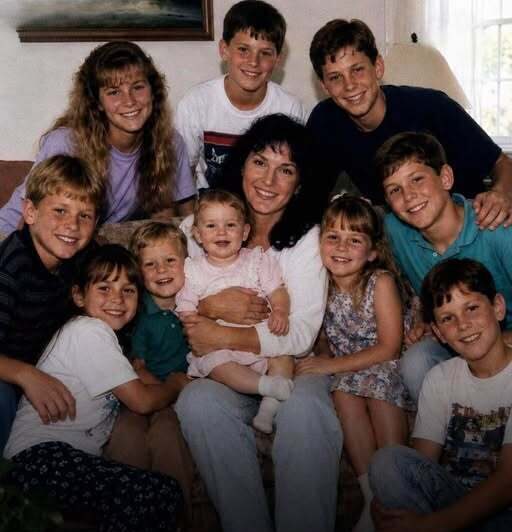
One Envelope Revealed Why Robert Disappeared Before the Wedding
A Life Broken One Week Before Marriage
Margaret believed she understood the moment her life changed forever.
For 30 years, she carried one explanation in her heart: Robert, the man she loved, had walked away from her and ten children just one week before their wedding.
There had been no warning that made sense, no long confession, and no goodbye that offered comfort. There was only a short note that left behind more pain than answers.
Then, decades later, an envelope arrived at her door and forced Margaret to revisit everything she thought she knew.
Meeting Robert and His Ten Children
Margaret was 32 when she met Robert.
He was 37, gentle, soft-spoken, and already carrying a responsibility that would have overwhelmed many people. Robert was raising ten children on his own after losing his wife two years earlier.
Their first meeting happened in a grocery store. Robert was trying to control an overloaded shopping cart while one of his youngest children, Sophie, reached her arms toward Margaret.
Robert quickly lifted the toddler and apologized.
“I’m sorry,” he said with an embarrassed smile. “She does that with anyone who smiles at her.”
Margaret answered with warmth.
“Then I suppose I’ll keep smiling.”
That small exchange became the beginning of something neither of them had planned.
Margaret did not only fall in love with Robert. She became attached to the children as well.
Amanda, the oldest, was 15 and carried herself with a maturity beyond her years. Derrick was quiet but dependable, especially when something needed repairing. Sue communicated as much with her hands as with her words.
Jacob and David, the twins, turned ordinary chores into contests. The quadruplets filled the house with movement and noise. Sophie, the toddler who had reached for Margaret in the grocery store, soon began calling her Mama.
A Proposal Surrounded by Children
Within months, Margaret was spending nearly every evening at Robert’s home.
She helped with schoolwork, cooked meals, soothed small injuries, settled arguments, and learned what each child needed most. Some needed patience. Some needed honesty. All of them needed love.
Six months later, Robert proposed.
There were no grand decorations, no music, and no dramatic setting. They were eating meatloaf and mashed potatoes while the children pretended not to listen from the hallway.
Robert still got down on one knee.
“Will you marry us?”
Margaret cried before she could answer.
“Yes.”
Not everyone supported her decision. Margaret’s mother believed she was making a terrible mistake.
“Ten children, Margaret. You haven’t even lived your own life yet.”
Margaret’s answer never changed.
“They are my life, Mama.”
Her mother warned her again.
“You’re being foolish.”
Eventually, Margaret stopped arguing. She knew her mother could not understand the bond already forming inside that crowded home.
The Moment Before Everything Changed
Two weeks before the wedding, Margaret tried on her dress.
Amanda helped zip the back while Sophie clapped with excitement. Outside the room, the boys pretended to be disgusted by the whole scene.
Margaret felt happier than she had ever been.
Then she noticed Robert standing behind her.
His expression confused her. It was not simple joy, but it was not exactly sorrow either. It looked almost like grief.
“You look beautiful,” he said softly.
Margaret reminded him that he was not supposed to see the dress.
“You’re not supposed to see the dress.”
Robert smiled.
“I know.”
Then he added something Margaret would not understand until many years later.
“I just wanted to remember.”
At the time, she did not know Robert had been hiding symptoms for months. He had been tired, losing weight, and covering headaches with small smiles.
Margaret believed it was stress. She would later learn it was something far more serious.
The Morning Robert Vanished
The morning Robert disappeared, the house felt different.
His side of the bed was cold. His truck was gone. When Margaret stepped into the hallway, Amanda was standing barefoot at the top of the stairs, hugging herself.
“Mama Margaret,” she whispered. “Daddy’s truck is gone.”
Margaret tried to reassure her, saying Robert had probably gone on an errand. But Amanda’s serious eyes showed she knew something was wrong.
After an hour of unanswered calls, panic set in.
Margaret called Robert’s brother, his foreman, his best friend, and her own mother. Nobody had seen him.
Then she found the note under the sugar bowl on the kitchen table.
Her hands shook as she unfolded it.
“I’m sorry. I can’t do this anymore.”
That was all he had left.
No explanation. No farewell. No mention of the children.
Margaret read the words again and again, searching for meaning that was not there.
Then Sophie walked into the kitchen in her pajamas, wrapped her arms around Margaret’s leg, and asked for juice.
“Mama, juice?”
That was the moment Margaret’s life divided into before and after.
A Choice Everyone Told Her Not to Make
Margaret’s mother called again and saw Robert’s disappearance as a warning.
“Margaret, listen to me. This is a sign.”
Margaret asked what she meant.
“What sign?”
Her mother answered plainly.
“Let the system take the children.”
Margaret looked toward the staircase where ten children were sleeping.
“They’re upstairs, Mama.”
Her mother insisted they were not Margaret’s responsibility.
“They are not your responsibility.”
Margaret refused.
“I can’t send them away.”
When her mother called her foolish again, Margaret’s answer became final.
“I said no.”
Her mother was not the only one who objected. Relatives, family friends, and even some of Robert’s relatives offered the same advice.
They told Margaret she was too young. They told her someone else could raise the children. They told her not to sacrifice her life.
Margaret listened to all of it. Then she looked at the ten children sitting around her kitchen table and knew what she had to do.
Becoming Their Mother
At the county office, a woman asked Margaret if she truly understood what she was choosing.
“Are you certain?” she asked gently. “Ten children is an enormous responsibility.”
Margaret knew.
“I know.”
The woman explained that the process would take years.
“It will take years.”
Margaret answered again.
“I know.”
The woman reminded her there would be no shame in walking away.
“There’s no shame in stepping away.”
But Margaret thought about Sophie, Amanda, and every child in that house.
“They already call me Mama,” I said.
“I can’t walk away from that.”
She signed the papers with a trembling hand. The legal adoptions took years, but in Margaret’s heart, they became her children that day.
Thirty Years of Questions
The first year nearly broke her.
Margaret worked days in a fabric warehouse and sewed school uniforms at night for extra income. Amanda learned to cook. Derrick handled the yard. Sue organized laundry. Jacob and David argued over dishes almost every night.
After everyone went to sleep, Margaret often sat alone at the table and wondered why Robert had left.
She imagined many possibilities. Maybe he had met someone else. Maybe he had debts. Maybe she had not been enough.
That question followed her for decades.
Was I not enough?
Margaret never dated again. There was no space for another life because her days were filled with homework, fevers, meals, graduations, tears, and bedtime prayers.
Still, she was happy.
She had the children.
Her mother remained distant for years and continued questioning Margaret’s choice.
“Are you still doing this, Margaret?”
Margaret always gave the same answer.
“They’re my children, Mama.”
Her mother said they belonged to someone else.
“They’re someone else’s children.”
Margaret never accepted that.
“No.”
Then she would add the truth she had built her life around.
“They’re mine.”
The Children Grew Into Their Own Lives
Over the years, the children became adults.
Amanda became a pediatric nurse. Derrick opened an auto repair shop. Sue became a teacher. Jacob and David became engineers and continued arguing over nearly everything.
Sophie became a social worker.
One day, Sophie told Margaret she had chosen that work because she wanted to be for other children what Margaret had been for her.
Margaret cried in the kitchen for an hour after Sophie left.
Thirty years passed, and Margaret never regretted her decision.
Every Saturday, the family came home. Grandchildren ran through the yard. The kitchen filled with the smell of roast chicken and Amanda’s lemon cake.
One Saturday seemed ordinary until a knock came at the door.
The Envelope at the Door
Margaret opened the door and found a man in a gray suit holding a leather folder.
“Margaret?”
She answered cautiously.
“Yes?”
The man introduced himself.
“My name is Mr. Johnson. I was Robert’s attorney.”
Margaret froze.
Mr. Johnson handed her an envelope with her name written across the front.
She recognized the handwriting immediately, even after 30 years.
“Mr. Johnson…” I whispered.
He explained why he had come.
“I was instructed to deliver this to you on this exact day.”
Then he left.
Margaret returned to the dining room, where all ten grown children were watching her.
“Mama?” Amanda asked softly.
Margaret opened the envelope. The room went silent.
“Read it, Mama,” Amanda whispered.
So Margaret read.
The Truth Robert Had Hidden
Robert had been sick.
The headaches, exhaustion, and weight loss had not been caused by stress. One week before the wedding, doctors had discovered a serious illness.
They believed he might have only months to live. Maybe a year.
There was an experimental treatment, but there were no guarantees.
Robert wrote that he could not bear the thought of marrying Margaret, leaving her a widow, and burying her and the children under medical debt.
“I couldn’t marry you, turn you into a widow, leave you with ten grieving children, and bury you all beneath medical debt. I thought cruelty would free you faster than pity.”
Margaret had to stop reading.
Sophie held her hand. Then Margaret continued.
The treatment had worked. Against all expectations, Robert survived.
But by the time doctors were confident, nearly two years had passed.
Robert came back once.
He drove past the house three times. Then he saw Amanda carrying groceries, Derrick teaching the twins how to repair a bicycle chain, and Sophie running toward Margaret while calling her Mama.
Robert sat in his truck for an hour.
Then he left again.
He believed returning would destroy the stability Margaret had built. He feared confusion, resentment, and legal conflict. He convinced himself staying away was kinder.
A Love Kept at a Distance
Years later, as Robert’s health declined again, he prepared a final goodbye.
He had created a trust. He had started a bookkeeping business. He had lived modestly, never remarried, and never had more children.
Every extra dollar went to Margaret and the children.
Then came the revelation that broke the room open.
Robert had hired a retired investigator.
Not to interfere, but only to make sure the children were safe and doing well.
He knew about Amanda becoming a nurse, Derrick opening his business, Sue teaching, the twins earning their degrees, and Sophie becoming a social worker.
He had watched their lives from the distance he created.
The final line blurred through Margaret’s tears.
“You gave them the life I couldn’t. I don’t ask for forgiveness. I only ask that you know I loved all of you from the distance I created.”
Letting Go After Thirty Years
Nobody spoke at first.
For 30 years, Margaret had believed Robert left because she had not been enough. She had carried that wound quietly through work, motherhood, sacrifice, and age.
Now she understood that the story had been different.
Robert had not left because he loved them too little. He left because he believed he was protecting them.
Whether that choice had been right or wrong no longer mattered in the same way.
Derrick wiped his eyes and asked what the letter meant.
“He watched us grow up?”
Margaret nodded.
Jacob and David, usually quick to argue, sat silent.
Sophie squeezed Margaret’s hand. Amanda wrapped her arms around her shoulders.
Then Tom, one of Margaret’s sons, spoke.
“He trusted you with us.”
Margaret looked around the table at ten children, their families, and the life that had grown from heartbreak.
For the first time in decades, she allowed herself to release the anger she had carried.
“I forgive him,” I said quietly.
“Because I’m 62 years old, and I’m too old to carry anger anymore.”
She lifted her teacup.
“To Robert.”
Amanda smiled through her tears.
“And to Mama.”
Margaret shook her head and cried, but all ten voices joined Amanda.
“To Mama.”
For the first time in 30 years, the empty chair Robert had left behind did not feel like a wound.
It felt like part of the same table, a place surrounded by the family Margaret had protected, raised, and loved through everything.