
Trump Faces Backlash After Off-Color Remark at Medal of Honor Event as Crypto Wealth Questions Grow
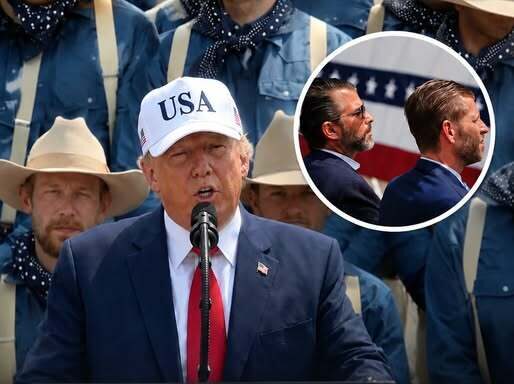
A solemn ceremony meant to recognize military courage turned into another flashpoint in Donald Trump’s long-running cycle of controversy after he made an off-color remark involving his adult sons during a Medal of Honor event.
The moment quickly drew attention because of the setting. The event was connected to one of the nation’s highest military honors, a space usually defined by respect, sacrifice, and formality.
Instead, Trump’s comment — “We’ll have a threesome” — created an awkward pause and uneasy laughter among those present. The remark appeared to leave some audience members uncomfortable as the tone of the room shifted from solemn recognition to visible tension.
A Joke That Landed in the Wrong Room
The remark came as Trump looked toward his adult sons during the event. What may have been intended as a joke immediately became the defining moment of the appearance.
In a political environment where every unscripted comment is rapidly clipped, shared, and debated, the line spread quickly. The setting made the backlash even sharper.
For many critics, the issue was not only the wording of the joke but the place where it was delivered. A Medal of Honor event carries emotional weight because it centers on military service, sacrifice, and acts of extraordinary bravery.
The reaction inside the room appeared uneasy. Laughter was present, but it was not the relaxed response of a crowd fully comfortable with the moment.
As the clip moved online, the discomfort in the room became part of the larger reaction. Viewers focused on the mismatch between the seriousness of the occasion and the nature of the comment.
Online Reaction Turns Harsh
The backlash intensified across social media, where veterans, civilians, and political critics condemned the joke as inappropriate. Many described it as disrespectful to the purpose of the event.
The Congressional Medal of Honor represents extraordinary military heroism. For that reason, critics argued that the ceremony should have remained focused entirely on service members and their sacrifices.
Some reactions centered on the phrase itself. Others focused on the broader pattern of Trump using informal or provocative remarks in formal settings.
The online criticism became especially strong because the moment was easy to understand and easy to share. A short clip, a serious event, and an uncomfortable joke created a controversy that required little explanation.
Supporters were more forgiving, framing the remark as sarcasm or an attempt at humor. Trump also tried to brush off the reaction by pointing to “fake news” and warning about how sarcasm is treated in politics.
Still, the controversy did not fade immediately. The setting continued to drive criticism, with many arguing that some moments should remain outside the normal theater of political jokes and media clashes.
Trump Tries to Deflect the Criticism
Trump’s response followed a familiar pattern. Rather than offering a direct apology, he suggested that his words were being distorted and that political sarcasm had become dangerous in a media environment shaped by constant scrutiny.
His reference to “fake news” placed the episode into a broader conflict that has defined much of his public life. Trump has often treated criticism of his remarks as a media-driven attack rather than a reaction to the words themselves.
For supporters, that explanation fit their view that Trump is frequently targeted unfairly. For critics, it only reinforced concerns that he was avoiding the seriousness of the setting.
The divide reflected a larger political reality. Trump’s words often operate differently depending on the audience. To loyal supporters, they can sound like humor, defiance, or authenticity. To opponents, the same remarks can appear reckless, disrespectful, or deliberately inflammatory.
In this case, the reaction was magnified because the event was not a campaign rally, television interview, or partisan gathering. It was tied to military recognition, which made the line feel especially jarring to those who objected.
Financial Disclosure Adds Another Layer
At nearly the same time, attention also turned to Trump’s newly released financial disclosure, which showed a major expansion of wealth connected to digital assets and family-linked ventures.
The disclosure placed fresh focus on Trump’s growing crypto-related fortune. Licensing deals connected to a meme coin, token sales, and family-backed ventures were described as part of a broader financial picture that has reshaped his wealth.
The figures drew intense attention because Trump’s digital fortune was described as moving beyond $1 billion. That number added new force to long-standing questions about the relationship between political power, personal branding, and private financial gain.
Trump’s business identity has always been central to his public image. But the crypto element brought a newer and more complicated dimension to the conversation.
Digital assets can create fast-moving financial gains, intense public interest, and difficult questions about transparency. When those assets are tied to a major political figure and his family, the scrutiny becomes even stronger.
Family Windfalls Under Scrutiny
The financial attention was not limited to Trump alone. The disclosure also highlighted family-linked earnings and ventures that have drawn questions from critics.
Melania Trump’s image licensing was described as bringing in millions more, adding another layer to the discussion about family branding and financial benefit.
For supporters, these numbers reflect business strength and the continued power of the Trump name. They see the financial gains as evidence that Trump remains a dominant figure in branding, media attention, and modern digital markets.
For critics, the same numbers raise concerns about conflicts of interest. They argue that the overlap between political influence and private profit creates ethical questions that cannot be dismissed as ordinary business activity.
The central concern is not simply that Trump and his family made money. The concern is whether political prominence, public office, and policy influence may create opportunities that ordinary private citizens could never access.
Crypto Wealth Becomes a Political Issue
The scale of Trump’s crypto-linked wealth has made digital assets part of the political conversation around him. What might otherwise be a financial story has become tied to questions about ethics, influence, and public accountability.
Crypto ventures are often difficult for casual observers to understand. They involve tokens, licensing, digital branding, and market enthusiasm that can change quickly.
That complexity can make the ethics debate even sharper. Critics argue that when financial structures are difficult to track, public officials and their families should face even stronger transparency expectations.
Supporters counter that success in emerging markets should not automatically be treated as suspicious. They frame the growth of Trump’s digital fortune as another example of his ability to turn attention into commercial value.
The debate reflects a broader question surrounding Trump’s public life: where does political influence end and private business begin?
Two Controversies Collide
The awkward Medal of Honor remark and the financial disclosure were separate issues, but together they created a larger portrait of Trump’s current public standing.
One controversy centered on tone, judgment, and respect during a solemn event. The other centered on money, family ventures, and ethics questions connected to a rapidly growing digital fortune.
Both stories fit into the same broader pattern. Trump remains a figure whose public appearances and private business interests generate intense attention, immediate reaction, and deep division.
In the case of the Medal of Honor event, the controversy was emotional and symbolic. It was about what should or should not be said in a room dedicated to military heroism.
In the case of the financial disclosure, the controversy was structural and political. It raised questions about how wealth, family branding, and influence intersect around one of the most polarizing figures in American public life.
Supporters and Critics See Different Stories
Trump’s supporters and critics continue to interpret the same events in sharply different ways. That divide was clear in the reaction to both the joke and the financial disclosure.
Supporters were more likely to dismiss the joke as sarcasm and view the criticism as exaggerated outrage. They also tended to describe the financial numbers as evidence of business talent and brand strength.
Critics saw a very different picture. To them, the joke showed poor judgment in a solemn setting, while the financial disclosure raised serious concerns about conflicts of interest and family enrichment.
This split is not new, but the combination of the two stories made it especially visible. Trump’s public identity continues to operate as both entertainment and political power, both business brand and governing force.
That combination is exactly what keeps him at the center of controversy. Every remark becomes content. Every financial move becomes a political issue. Every controversy becomes another test of how much his supporters will tolerate and how strongly his critics will respond.
A Continuing Pattern of Spectacle and Scrutiny
The Medal of Honor controversy may fade from the news cycle, but it added another example to a long list of moments in which Trump’s language became the story.
The financial questions are likely to remain more durable. Wealth tied to crypto ventures, family licensing, and digital assets will continue to invite scrutiny because of the size of the numbers involved and the political position Trump occupies.
Together, the two developments show why Trump’s public life remains difficult to separate into clean categories. A single week can bring a ceremonial appearance, an off-color remark, a media backlash, a financial disclosure, and a new ethics debate.
For supporters, that volatility is part of his appeal. They see a public figure who refuses to behave like traditional politicians and who continues to generate wealth and attention despite constant criticism.
For critics, the same volatility is exactly the problem. They see a political figure whose words can undermine solemn occasions and whose business interests create questions that remain unresolved.
The uneasy moment at the Medal of Honor event and the renewed focus on Trump’s crypto wealth both point to the same reality: controversy remains central to Trump’s public presence.
Whether the subject is a joke that leaves a room uncomfortable or a financial disclosure that reignites ethics concerns, Trump continues to dominate attention through a mix of spectacle, profit, and political conflict.