
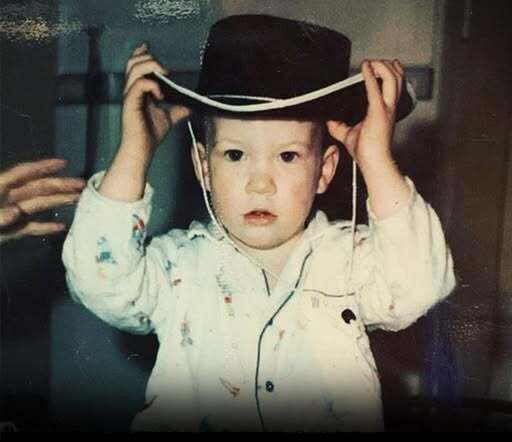
Dylan McDermott’s Journey From Early Loss to a Respected Hollywood Career
How Dylan McDermott Turned a Painful Childhood Into Strength
Dylan McDermott is known today as a successful actor with a long career in television, film, and theater.
His work in projects such as The Practice, American Horror Story, Olympus Has Fallen, Steel Magnolias, and Law & Order: Organized Crime helped make him a recognizable figure in Hollywood.
Behind that success is a personal story shaped by family hardship, early loss, and a difficult childhood that he later used as motivation in his life and career.
Early Life in Connecticut
McDermott was born on October 26, 1961, in Waterbury, Connecticut.
His birth name was Mark. His parents, Diane and Richard, were both teenagers when he was born.
Diane was 15 years old, while Richard was 17. Diane was Italian-American, and Richard was Irish-American.
The young couple separated before McDermott turned two, leaving his early family life marked by change from the beginning.
Only a few years later, another painful event would alter the direction of his childhood forever.
A Childhood Marked by Loss
When McDermott was five years old, his mother Diane died in February 1967.
For many years, the circumstances of her death were treated as accidental, though questions about the case remained for decades.
McDermott did not directly witness the moment of her death, but he was later considered an important witness because of what he remembered from that day.
Before the incident, Diane’s boyfriend, John Sponza, had ordered the young boy out of the home.
After Diane’s death, McDermott and his sister went to live with their maternal grandmother, Avis, in Waterbury.
That change gave the children a new home, but it could not erase the grief of losing their mother at such a young age.
McDermott later reflected on the hardship of his early years with honesty.
”I’m not happy that all this happened to me, but I learned from it,” he once said.
Growing Up With His Grandmother
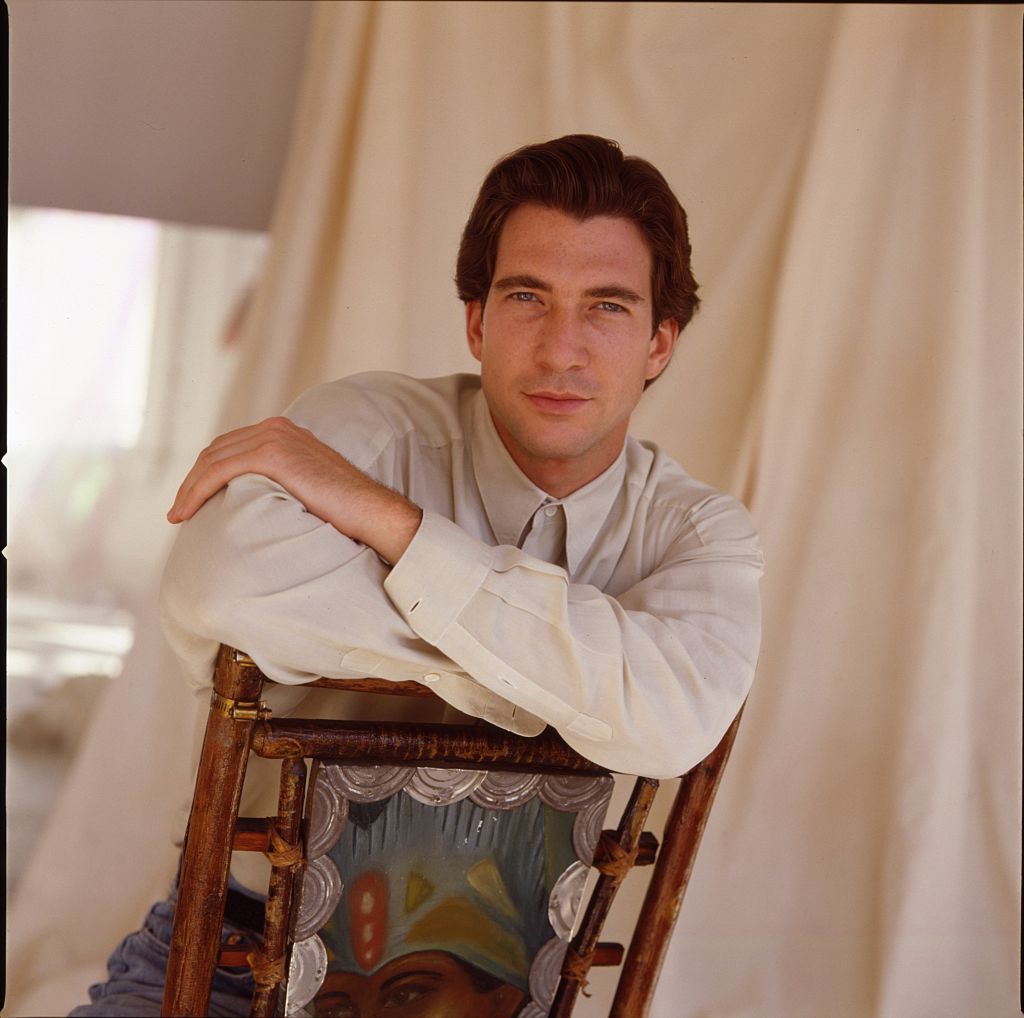
McDermott’s grandmother became a central figure in his childhood after his mother’s death.
He grew up in Waterbury, a working-class community that he later remembered as a challenging place.
His family was among the few white families in the neighborhood, which added to his feeling of being different during his early years.
Although his grandmother offered stability, McDermott still carried the emotional weight of his mother’s absence.
Those memories stayed with him and became part of the person he would become.
Feeling Out of Place as a Teenager
As a teenager, McDermott often felt awkward and unsure of himself.
He later joked about his “Dorothy Hamill hairdo,” describing the discomfort he felt during that stage of life.
To gain confidence, he began studying actors he admired.
He looked to screen legends such as Marlon Brando and Humphrey Bogart, observing their style, posture, and presence.
Those early attempts to copy famous actors helped him discover a form of expression that would later become his career.
His Father’s Life in New York
While McDermott lived with his grandmother, his father Richard was building his own life in New York City.
Richard ran the West Fourth Street Saloon in Greenwich Village, where he was known locally as “Mac.”
McDermott later explained that his father was still very young at the time and trying to understand his own future.
“Dad was essentially a 21 or 22-year-old bachelor, just trying to find himself,” the actor once explained during an interview with Irish America. “It just made sense at the time for me and my sister to stay with my grandmother rather than go with my Dad.”
As McDermott grew older, he began spending more time with his father in New York.
At about 13, he started helping at the saloon, first as a busboy, then as a waiter, and eventually as a bartender.
Lessons Learned Behind the Counter
The saloon exposed McDermott to many different kinds of people and experiences.
It was a busy environment filled with late nights, lively conversations, and difficult moments.
He helped serve customers and learned how to handle himself in a demanding adult world at a young age.
Looking back, McDermott acknowledged that the environment was not always easy.
”I was not big. I’ve been punched out many many times,” the actor told Movieline magazine in 2000.
For a time, he even shared an apartment with his father.
Because Richard was only 17 years older than him, their relationship sometimes felt more like a bond between brothers than a traditional father-and-son relationship.
Eventually, Richard encouraged his son to find his own place and begin moving toward a different future.
The Stepmother Who Changed His Path
When McDermott was 15, his father married playwright Eve Ensler.
Her influence became one of the most important forces in his life.
Ensler saw potential in him and encouraged him to consider acting seriously.
McDermott had already been around actors through his work at the saloon.
He remembered serving people such as John Belushi, William Hurt, and Ray Sharkey, and their lives made the entertainment world seem exciting to him.
When Ensler suggested that he could become an actor, the idea felt natural.
He decided to leave bar life behind and told his father about his plans.
His father supported the decision without hesitation.
“My old man was always supportive; he never questioned it,” he remembered. “He always believed in me, he just said, ‘Go ahead and do it.”
Beginning an Acting Career
McDermott soon landed a role in one of Ensler’s Off-Broadway plays.
That first opportunity helped him begin taking acting seriously as a profession.
His father supported him financially while he studied acting at Fordham University.
He later trained at the Neighborhood Playhouse and appeared in several stage productions.
One of those performances placed him opposite Joanne Woodward.
His work in Neil Simon’s Biloxi Blues later caught the attention of the casting agent for Hamburger Hill, helping him move toward a professional screen career.
The Meaning Behind the Name Dylan
As his career developed, McDermott had to change his professional name because of S.A.G. regulations.
He chose the name Dylan, which carried both artistic and personal meaning.
The name was partly inspired by Welsh poet Dylan Thomas.
It was also connected to a family story involving his father and stepmother.
“My father was going to have a baby with my stepmother and they were going to use the name Dylan,” he explains. “But there was a miscarriage, so the name kind of fell to me.”
The name became a symbol of love, loss, and connection to the woman who had helped guide him toward acting.
From that point forward, Mark became known professionally as Dylan McDermott.
Hollywood Success and Recognition
McDermott went on to build a respected and varied career in entertainment.
His credits include Steel Magnolias, Olympus Has Fallen, American Horror Story, and Law & Order: Organized Crime.
One of his biggest career moments came through The Practice.
In 1999, he won a Golden Globe for his role in the television drama.
He also received Emmy nominations, further strengthening his reputation as a serious actor.
In addition to his acting recognition, McDermott became known for his screen presence and was named one of TV’s “Ten Sexiest Men” by People magazine.
Still, his personal journey has always been deeper than fame, awards, or appearance.
Marriage and Family Life
McDermott married actress Shiva Rose in 1995.
The two met in a coffee shop, and he reportedly became interested in her immediately.
Rose later said that when she first saw the handsome actor, she was not interested at first.
Her feelings changed after hearing him speak, as she found him poetic and eloquent.
The couple had two daughters together, Colette and Charlotte.
Colette was born in 1996, while Charlotte was born in 2005.
After 12 years of marriage, McDermott filed for divorce in 2008, citing irreconcilable differences.
Court documents showed that the couple had already been separated for a year before the filing.
Personal Struggles and Later Relationships
McDermott is a recovering alcoholic and has been sober since 1984.
His long-term sobriety became an important part of his personal story.
After his marriage ended, he later began dating Maggie Q, his co-star from Stalker.
The two became engaged but were not in a rush to hold a formal wedding ceremony.
After a four-year engagement, they announced their split in February 2019.
Renewed Attention on His Mother’s Case
Even as McDermott’s career continued, questions about his mother’s death remained part of his life.
Diane died on February 9, 1967, when her son was still a small child.
In 2011, McDermott visited Waterbury for a fundraiser and met with Mayor Neil O’Leary and Police Superintendent Michael Gugliotti.
During that visit, he raised questions about the old case.
Investigators later discovered that many original files had been lost or were missing, making the review more complicated.
Even so, renewed attention brought important details back into focus.
Questions About the Original Finding
Several details raised doubts about the earlier conclusion that Diane’s death had been accidental.
Diane was right-handed, yet the fatal injury was on the left side of her head.
Autopsy records later showed that the weapon found near her body was too small to have caused the fatal injury.
These details helped investigators reconsider the case.
John Sponza, Diane’s boyfriend at the time, became central to the renewed review.
He was described as a low-level mobster with possible connections in law enforcement and possible ties as an informant.
Police also found evidence that Diane and young Dylan had experienced abuse from Sponza.
McDermott “vividly recalls” several occasions when Sponza threatened him with a gun, saying, “Shut up and get out of here,” according to Gugliotti.
The Case Is Reclassified
Police Superintendent Michael Gugliotti was struck by the extent of the difficult family history described during the renewed investigation.
”Sponza [told] the police that night that he very rarely, if ever, had arguments, yet everyone we spoke to, including Dylan who was only five at the time, remembered difficult arguments in the home,” Gugliotti said.
After reviewing the case again, investigators reclassified Diane’s death as a murder.
They concluded that Sponza should have faced charges in connection with her death.
Investigators also connected him to two other unresolved homicide cases.
Sponza never faced trial. In 1972, he was found dead in the trunk of a car in Waltham, Massachusetts.
A Sister’s Reaction to the Truth
McDermott’s sister, Robin Herrera, was only seven months old when their mother died.
Because she was an infant at the time, she did not have the same direct memories of the tragedy that her brother carried.
Still, the renewed findings gave her a different understanding of what happened to their mother.
She later expressed relief that the case no longer suggested Diane had caused her own death.
She said, “I’m happy to know my mother wasn’t mentally ill or depressed. Somebody took her from us; she didn’t leave us.”
How the Loss Shaped Him
McDermott has mostly remained private about the case and the emotions connected to it.
He told investigators that he had buried the memories for many years because he needed to survive and move forward.
Gugliotti shared McDermott’s explanation of how deeply he had hidden that part of his life.
“He said, ‘In order for me to survive and to get where I am today, I needed to bury that moment in my life deep within myself,” Gugliotti shared.
For McDermott, losing his mother at such a young age became one of the defining events of his life.
He later described how the loss changed him and hardened him emotionally.
“When you lose a parent young, it hardens you for life,” he said in 2000. “I have good memories of my mother. When you lose a mother so early, it’s all you have.”
He also explained that the most painful parts of his childhood became something he tried to use in a constructive way through his work.
”There were entire parts of my childhood that I wouldn’t recommend to anybody, for me as an artist, if I can use those parts in a positive, constructive manner, if I can keep the memory of my mother alive in my work, then it’s a good thing,” Dylan said.
A Career Built With Resilience
Dylan McDermott’s life story is not only about hardship. It is also about endurance, reinvention, and the ability to keep moving forward after early pain.
From a difficult childhood in Connecticut to a long career in Hollywood, he built a life that reflected both talent and determination.
His success did not erase the loss of his mother, but it gave him a way to transform part of that pain into purpose.
The renewed investigation into Diane’s death brought long-awaited clarity to a case that had remained unresolved for decades.
For McDermott and his family, that truth could not change the past, but it helped correct the story of what happened.
Today, McDermott remains known for his memorable performances, his longevity in entertainment, and the personal strength behind his public career.
His journey shows how a person can carry deep loss while still building a meaningful and accomplished life.