
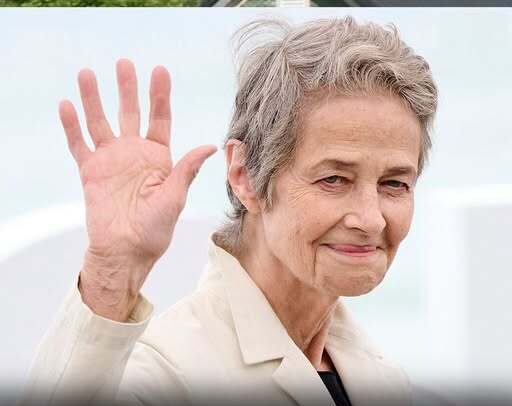
Charlotte Rampling and the Quiet Power of Aging Without Apology
A Presence That Was Never Defined by Youth Alone
Charlotte Rampling has long represented a kind of beauty that cannot be reduced to smooth skin, symmetry, or the brief glow of youth.
At 78, she continues to stand apart in a culture that often treats aging as something to hide, correct, or soften. Her presence remains compelling not because time has avoided her, but because she has allowed time to remain visible.
In an industry built around image, reinvention, and constant pressure to appear untouched, Rampling’s face tells a different story. It reflects experience, memory, discipline, grief, confidence, and the steady acceptance of a life lived in full view.
She did not become captivating by resisting age. She became captivating by refusing to treat it as an enemy.
Hollywood’s Harsh Spotlight and a Different Kind of Defiance
Hollywood has often been unforgiving toward women as they grow older. The entertainment world has repeatedly celebrated youth while encouraging many performers to maintain an appearance that seems separate from time.
Against that background, Rampling’s choice to age naturally carries a quiet force. It is not loud or theatrical. It does not need a campaign, slogan, or dramatic announcement.
Her refusal is visible in the way she carries herself, in the way she allows her expressions to remain human, and in the way she does not appear to erase the history written across her face.
That decision matters because the pressure to preserve youth can be especially intense for women whose careers began in front of the camera. For many, the public gaze becomes a form of judgment. For Rampling, it has become a space where authenticity still has power.
She has not presented aging as a defeat. Instead, she has shown that maturity can deepen a person’s presence rather than diminish it.
From Early Film Roles to Lasting Impact
Rampling’s screen identity was never built on conventional softness. From her appearances in films such as Georgy Girl and The Damned, she brought a striking seriousness to the camera.
Her beauty was never passive. It was observant, direct, and emotionally complex. She had the kind of presence that seemed to ask the viewer to pay attention rather than simply admire.
That quality helped separate her from a simple image of glamour. She was not only seen; she seemed to be watching back.
Even in her earlier years, there was a sense of independence in the way she appeared on screen. She did not seem designed to please every expectation placed on her. That distance, that control, and that refusal to become smaller for comfort became part of her enduring appeal.
Decades later, the same quality remains. The camera still finds in her a face that holds attention, not because it denies time, but because it has not been emptied of feeling.
A Face That Carries Memory
Much of the conversation around aging focuses on what disappears. Smoothness fades. Youthful fullness changes. The face becomes marked by years, emotions, and personal history.
Rampling’s example asks people to look at those changes differently. Lines are not only signs of age. They are traces of expression, resilience, and survival.
Her face appears expressive because it has not been made blank. It carries softness and severity, calm and intensity, distance and vulnerability. These contrasts are part of what makes her image so memorable.
In a beauty culture that often values sameness, Rampling’s individuality feels especially powerful. She does not seem to be trying to resemble a younger version of herself. She appears fully present as the woman she is now.
That presence turns aging into something visible and meaningful rather than something to be hidden from public view.
Natural Aging as a Public Statement
Rampling’s approach to aging has often been understood as simple, but simplicity can be radical when the surrounding culture demands constant correction.
No filters, no fillers, and no obvious attempt to erase the years have become part of the way people understand her public image. Her elegance comes from restraint rather than alteration.
This does not mean rejecting care, beauty, or style. It means refusing the idea that care must equal disappearance of age.
There is a difference between looking after oneself and trying to remove all evidence of having lived. Rampling’s image rests on that distinction.
Her appearance suggests that a woman can remain refined, magnetic, and admired without surrendering to the idea that age must be disguised.
The Discipline Behind Effortless Elegance
Part of Rampling’s appeal comes from the fact that her habits appear grounded rather than extreme. Her approach has been described through simple elements: real food, movement, sunlight, and rest.
These habits are not presented as a miracle formula. They are ordinary practices that support a life of balance and steadiness.
The simplicity is important. It moves the conversation away from dramatic transformations and toward consistency, self-respect, and personal rhythm.
In a world filled with complicated beauty promises, her approach feels almost understated. It suggests that elegance does not always require excess. Sometimes it comes from living with attention and refusing to turn the body into a project of panic.
Her example does not ask others to copy a routine. It points to a broader idea: the way a person lives can shape the way they carry themselves.
Self-Acceptance in a Youth-Obsessed Culture
The most powerful part of Rampling’s image is not only physical. It is emotional.
Her beauty is tied to self-acceptance, and that acceptance is rare in a world that often teaches women to monitor themselves constantly. Every line, every change, every sign of age can be treated as a problem to solve.
Rampling appears to reject that framework. She does not pretend time has not touched her. She allows it to be part of her identity.
This does not make her less elegant. It makes her elegance more complex.
Self-acceptance is not the same as giving up. It requires confidence, clarity, and a refusal to measure oneself only against youth. Rampling’s public image shows that acceptance can be active, disciplined, and deeply dignified.
Changing the Meaning of Beauty
For many years, beauty has often been presented as something temporary. The message is familiar: beauty belongs to youth, and aging means losing access to it.
Rampling challenges that belief without needing to argue against it directly. Her continued magnetism offers a different answer.
Beauty can become less about freshness and more about depth. It can come from the intelligence in a gaze, the calm of posture, the confidence of expression, and the honesty of a face that has not been stripped of its history.
That kind of beauty does not compete with youth because it belongs to a different stage of life. It has its own authority.
Rampling’s example matters because it widens the definition of what is allowed to be admired. She shows that beauty does not have to expire when youth fades.
An Icon Beyond the 1960s
It would be easy to view Rampling only as an icon connected to the 1960s, but that would make her story too small.
Her importance does not rest only on the era in which she first became known. It also rests on the way she has continued to evolve without surrendering the core of her presence.
Many public figures are remembered primarily for how they looked at the height of their youth. Rampling has made the later stages of life part of her lasting image.
That is why her appeal remains relevant. She is not simply a reminder of a past moment in film and style. She is an example of how a person can move through decades without becoming less herself.
Her aging has not erased the qualities that first made her compelling. It has sharpened them.
A Different Script for Growing Older
Rampling’s image offers a different script for aging, especially for those who feel trapped between visibility and pressure.
The common story says that growing older means retreating, hiding, or trying desperately to appear unchanged. Her story suggests something else.
Growing older can mean becoming more exact, more honest, and more deeply recognizable. It can mean carrying the evidence of life without shame.
That message is especially powerful because it does not rely on perfection. In fact, it moves away from perfection entirely.
Rampling’s face does not ask to be read as untouched. It asks to be read as real. That reality is part of its strength.
Why Her Image Still Resonates
Rampling continues to fascinate because she represents a balance that many people seek but rarely see celebrated.
She is elegant without appearing artificial. She is mature without being diminished. She is recognizable without seeming trapped by her younger image.
Her public presence gives people permission to imagine aging differently. It suggests that the later chapters of life can still hold power, style, mystery, and beauty.
That may be why her image feels so striking in the modern moment. The more the culture tries to smooth away age, the more memorable it becomes when someone refuses to disappear behind that demand.
Rampling’s beauty was never only about youth, and that is why it has endured. It was always about presence, and presence can deepen with time.
Aging Without Apology
At 78, Charlotte Rampling stands as a reminder that aging is not a public failure. It is evidence of endurance.
Her face carries the visible marks of years, but those marks do not weaken her image. They give it character, authority, and emotional weight.
In a world that often asks women to erase themselves in order to remain acceptable, her quiet refusal feels powerful.
She has shown that elegance does not require denial, and beauty does not require pretending the past never happened. Every line can hold memory. Every change can become part of the whole.
Through that acceptance, Rampling becomes more than a screen icon. She becomes a symbol of aging without apology, proof that time can change a face without taking away its power.