
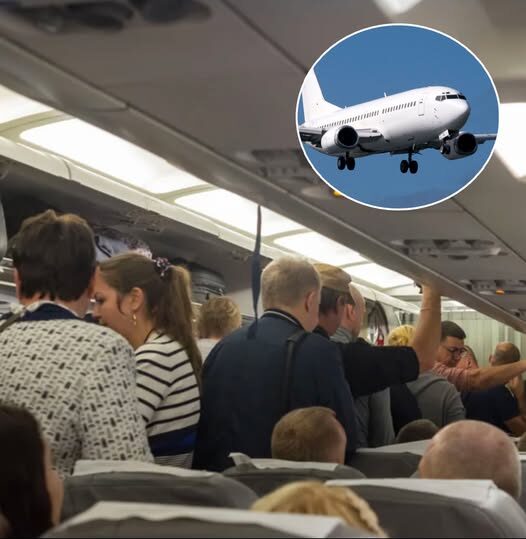
Turkey Introduces Fines for Passengers Who Rush the Aisle Before Planes Stop
New Enforcement Targets a Familiar In-Flight Frustration
For many travelers, the moment an aircraft’s wheels touch the runway signals the end of a long journey. Yet for some passengers, touchdown also triggers a sudden dash for the aisle.
The familiar scramble—seat belts clicking open, overhead bins swinging wide, and passengers crowding the narrow walkway—has become a routine source of irritation on flights around the world.
Now, authorities in Turkey have decided that the practice has gone far enough.
Officials have introduced new enforcement measures aimed at passengers who stand up or move into the aisle before it is their turn to disembark.
The change reflects growing concerns about both safety and courtesy during the final moments of a flight.
Official Directive From Aviation Authorities
The Turkish Directorate General of Civil Aviation has issued clear instructions to cabin crews operating flights within the country.
Under the directive, passengers who ignore disembarkation order procedures may face administrative penalties.
Kemal Yüksek, who leads the aviation authority, announced that travelers who fail to “respect the disembarkation priority of the passengers in front of or around them” could be formally reported.
Those reports may lead to financial fines under Turkey’s aviation regulations.
The directive specifically addresses individuals who rise from their seats before the aircraft has fully come to a stop or who push into the aisle ahead of their designated row.
Cabin crews have been instructed to monitor such behavior and document violations where necessary.
The Cost of Impatience
Passengers who ignore the new rules could face a financial penalty of up to 2,603 Turkish lira.
That amount equates to roughly $67 USD.
While the figure may not seem enormous to some international travelers, the fine is designed to serve as a deterrent rather than a revenue source.
Authorities have made it clear that the goal is to reinforce orderly disembarkation and improve compliance with safety procedures.
The fine represents a tangible consequence for behavior that has long been viewed as inconsiderate and potentially hazardous.
Behaviors Covered by the New Rules
The updated enforcement guidelines outline several specific actions that are now subject to penalties.
Among them is unbuckling a seat belt before the aircraft has completed its taxi and come to a full stop.
Standing in the aisle while the plane is still moving is also included.
Opening overhead bins prematurely—especially while the aircraft is in motion—falls under the same restrictions.
Passengers who attempt to move forward in the aisle before their row has been called to exit may likewise be cited.
Officials have emphasized that these behaviors are not merely breaches of etiquette but potential safety risks.
Safety Concerns Behind the Decision
The period immediately following landing remains an active phase of flight operations.
Aircraft may still be taxiing at varying speeds while maneuvering toward the gate.
Unexpected stops or abrupt movements can occur.
If passengers are standing or reaching into overhead compartments at that moment, the risk of injury increases.
Loose luggage may shift or fall.
Passengers who are not seated could lose balance.
Cabin crews are trained to ensure that everyone remains seated and secured until it is safe to stand.
The new enforcement measures aim to strengthen adherence to those instructions.
A Common Source of Passenger Frustration
Beyond safety considerations, the aisle rush has long been a point of tension among travelers.
On crowded flights, the scramble to stand often creates congestion within seconds of landing.
Passengers who remain seated frequently find themselves blocked by others who move forward prematurely.
The result is a chaotic and uneven disembarkation process.
Some travelers feel pressured to stand simply to prevent others from cutting ahead.
This cycle of impatience can intensify frustration inside an already confined cabin environment.
By introducing penalties, authorities hope to reduce that competitive atmosphere and encourage patience.
Role of Cabin Crews in Enforcement
Flight attendants play a central role in implementing the directive.
They are responsible for reminding passengers to remain seated and for ensuring that seat belts stay fastened until instructed otherwise.
Under the updated policy, crew members may document instances where passengers repeatedly ignore instructions.
Those reports can be forwarded to the appropriate authorities for administrative review.
The directive underscores the importance of respecting crew guidance throughout all phases of flight.
Compliance with safety instructions is considered a fundamental obligation for passengers.
Implementation Timeline
The enforcement of the fine is underway as of February 2026.
Authorities have indicated that the policy is in the process of being implemented.
Travelers flying to or through Turkey should expect stricter monitoring of cabin behavior during taxi and disembarkation.
While not every minor infraction may immediately result in a fine, repeated or deliberate disregard for the rules could trigger formal action.
The presence of a defined penalty introduces a new layer of accountability.
Encouraging Orderly Disembarkation
The standard disembarkation process typically follows a row-by-row pattern.
Passengers seated near the front exit first, followed sequentially by those behind them.
This approach minimizes congestion and reduces the likelihood of collisions or dropped baggage.
When individuals attempt to bypass this order, the entire system becomes less efficient.
By reinforcing adherence to this structure, authorities aim to promote smoother and safer exits from aircraft cabins.
The emphasis is on patience and cooperation rather than speed.

A Broader Message About Travel Conduct
The new measures reflect a broader conversation about passenger behavior in modern air travel.
With flights often operating at high capacity, cabin space is limited and shared among dozens or even hundreds of people.
Small actions can have amplified effects in such confined environments.
Respect for fellow travelers contributes to a more predictable and less stressful experience for everyone on board.
Officials have framed the enforcement as both a safety initiative and a reminder of common courtesy.
Remaining seated for an additional minute or two can help preserve order and prevent unnecessary disputes.
What Travelers Should Keep in Mind
Passengers flying within Turkey or connecting through the country should be mindful of cabin announcements after landing.
Seat belts should remain fastened until the aircraft has come to a complete stop and the crew signals that it is safe to stand.
Overhead compartments should not be opened while the plane is still taxiing.
Moving into the aisle should wait until the passengers in front have begun exiting.
These steps not only reduce the risk of injury but also ensure compliance with local aviation regulations.
Failure to follow these guidelines may result in a fine of up to 2,603 Turkish lira.
A Shift Toward Accountability
The introduction of administrative fines marks a shift from informal reminders to formal consequences.
While many airlines regularly ask passengers to remain seated, enforcement has often relied on voluntary compliance.
Turkey’s new approach places legal weight behind those instructions.
The possibility of a financial penalty sends a clear message that the rules are not optional.
Authorities hope the measure will foster greater awareness and discourage impulsive behavior.

Patience as a Practical Solution
The difference between standing immediately and waiting for the proper moment is often measured in seconds.
In most cases, rushing into the aisle does not significantly shorten a traveler’s overall journey time.
Yet the impact on safety and cabin harmony can be considerable.
By choosing to remain seated until instructed, passengers contribute to a smoother and more orderly conclusion to their flight.
For those traveling to or through Turkey, that brief pause could also prevent an unexpected expense.
In an environment already shaped by long queues, delays, and confined seating, patience may now be the most valuable travel habit of all.