
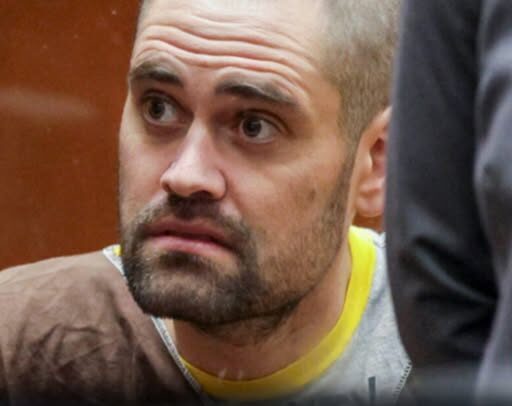
Nick Reiner Seeks Access to $1.6 Million Family Trust as Prosecutors Rule Out Death Penalty
Another Legal Battle Emerges While Nick Reiner Awaits Trial
Nick Reiner, the 33-year-old son of filmmaker Rob Reiner and producer and photographer Michele Singer Reiner, is fighting for access to money held in a family trust while awaiting trial on charges that he murdered his parents.
The financial dispute has emerged alongside the criminal case after Los Angeles County prosecutors announced on September 15, 2026, that they will not seek the death penalty.
Nick has pleaded not guilty to two counts of first-degree murder and remains in custody. If convicted of the charged special-circumstance murders, he could face life in prison without the possibility of parole.
His attorneys are now arguing that at least part of approximately $1.6 million held in a trust established for Nick belongs to him independently of his parents’ deaths and should be made available immediately.
Rob and Michele Reiner Were Found Dead in December 2025
Rob Reiner, 78, and Michele Singer Reiner, 70, were found dead at their Brentwood home in Los Angeles on December 14, 2025.
Authorities said both had suffered multiple sharp-force injuries.
Nick was arrested later that day near the University of Southern California and was subsequently charged in connection with both deaths.
The charges include special circumstances involving multiple murders and lying in wait, along with an allegation that a knife was used. Nick has denied guilt through his not-guilty plea, and the allegations remain unproven unless established in court.
Prosecutors have disclosed relatively little about an alleged motive, and the criminal case has not yet gone to trial.
Prosecutors Decide Against Seeking Capital Punishment
For months after the killings, it remained possible that prosecutors could seek the death penalty because of the special circumstances attached to the charges.
That changed on September 15.
Los Angeles County District Attorney Nathan Hochman announced that his office had decided not to pursue capital punishment after reviewing the case and consulting Nick’s siblings.
“We did speak with Nick Reiner’s siblings; they made their views very clear,” Hochman said. “We took their views into consideration in ultimately deciding not to seek the death penalty.”
The decision does not reduce the seriousness of the charges.
If Nick is convicted as charged, prosecutors say the maximum punishment would instead be life imprisonment without parole.
The district attorney has also said the case is not expected to reach trial until 2027, although the prosecution is prepared to proceed once the defense is ready.
Nick’s Defense Welcomes the Decision
Nick is currently represented by the Los Angeles County Public Defender’s Office.
His defense attorney, Kimberly Greene, has previously pointed to his history of mental-health and substance-use struggles while emphasizing that the defense intends to present the circumstances surrounding the case through the legal process.
Nick had initially been represented by private attorney Alan Jackson.
Jackson withdrew early in the case, after which Greene was appointed to represent Nick.
More recent court filings reveal that the availability of money for private legal representation has become part of a separate dispute involving a family trust.
The $1.6 Million Trust at the Center of the Dispute
The trust fight concerns money that Nick’s attorneys say was established for him years before the deaths of his parents.
Court filings describe a trust created for Nick in 1993 that currently contains approximately $1.6 million.
Nick is identified as the sole beneficiary.
The trust reportedly called for a portion of the money to be distributed when he reached the age of 30, followed by the remainder at a later age.
Nick turned 30 on September 14, 2023, more than two years before Rob and Michele were killed.
His lawyers say at least $558,000 became payable to him at that time.
That timing forms the heart of the defense team’s argument.
Why the Date of the Distribution Matters
Nick’s attorneys contend that the money scheduled for distribution in 2023 should be treated differently from property someone might inherit because another person died.
The distinction matters because California law contains what is commonly known as a slayer rule.
In general terms, the rule is intended to prevent someone who unlawfully causes another person’s death from financially benefiting from that death.
Nick’s attorneys argue that the disputed Age-30 payment became his before Rob and Michele died and therefore was not something he would receive as a consequence of their deaths.
They are asking the court to allow Nick access to those funds while the criminal case remains unresolved.
The Slayer Rule Has Become a Central Issue
The trust dispute does not determine whether Nick is guilty or innocent of the murder charges.
Instead, it raises a separate question about when his legal interest in the trust money was created and whether California’s slayer provisions can justify withholding funds that allegedly became payable years before the killings.
The defense argues that applying the rule to the 2023 distribution would improperly block money Nick was already entitled to receive.
His attorneys have also argued that some of the trust’s assets originated with his grandfather, legendary comedian and filmmaker Carl Reiner, rather than exclusively from Rob and Michele.
The court will ultimately have to determine what portions of the trust Nick can legally access while the criminal prosecution is pending.
Why Nick Says He Needs the Money
The most consequential reason cited by his lawyers is his criminal defense.
Nick’s attorneys say he wants to use trust funds to retain private counsel and legal experts rather than rely solely on court-appointed representation.
Alan Jackson represented Nick shortly after his arrest but later withdrew.
The trust filing states that anticipated funding for private representation did not materialize and that Nick hopes to retain Jackson’s firm again if money becomes available.
The filing argues that being unable to access the funds has affected Nick’s ability to choose the lawyers and experts he wants for a case that could result in life imprisonment without parole.
That argument adds urgency to what might otherwise appear to be a conventional trust dispute.
Attorneys Say Nick Cannot Access Even Small Amounts
Nick’s lawyers say the problem extends beyond paying attorneys.
They claim he has also been unable to obtain small amounts from the trust for ordinary jail commissary expenses.
According to the filing, Nick has not been able to access even $5 from the trust for basic items available to incarcerated people, including hygiene products and clothing essentials.
His attorneys argue that this illustrates how completely the funds have been withheld despite Nick being the trust’s beneficiary.
The filing says the inability to access money has continued while substantial trust-related legal expenses are themselves being paid from trust assets.
DA says he talked to family before deciding not to pursue death penalty for Nick Reiner https://t.co/mj116UFJxK
— Court TV (@CourtTV) September 15, 2026
The Trustee Dispute
The defense has criticized the handling of the trust by those responsible for administering it.
Court filings identified successor trustee Jodi Pais Montgomery and former trustee Paul R. Kanin in connection with the dispute.
Nick’s lawyers accuse the trustee of offering changing explanations for withholding distributions, including concerns about whether Nick could properly manage the money.
The trust reportedly still contains more than $1.5 million and requires the remaining funds to be distributed by the time Nick reaches 35, according to the defense filing described by Court TV.
The disagreement therefore centers not only on whether money should eventually be Nick’s, but whether he is entitled to control a portion of it now.
The Money Is Separate From Rob and Michele’s Estate, Defense Says
Nick’s legal team has emphasized another distinction.
They say the money being requested is not an inheritance created by Rob and Michele’s deaths.
Instead, they characterize it as property held in an already-existing trust for Nick’s benefit.
If the court accepts that distinction, the timing of the 2023 distribution could become particularly important.
If the court concludes that the slayer rule or another provision allows the trustee to continue withholding the money, Nick could remain dependent on publicly funded defense counsel unless another source of money becomes available.
Presumption of Innocence Remains Important
Despite the severity of the accusations and the unusual financial dispute surrounding the case, Nick has not been convicted.
He has entered a plea of not guilty.
The allegations against him must therefore be treated as accusations unless and until prosecutors prove them beyond a reasonable doubt.
The trust proceedings also do not decide whether he caused his parents’ deaths.
They focus on the ownership, timing and permissible distribution of assets held for his benefit.
Rob and Michele’s Other Children Have Been Consulted
The views of Nick’s siblings have already played a role in one major prosecutorial decision.
Hochman said he spoke with Nick’s siblings before deciding not to pursue the death penalty.
The family has also asked that sensitive grand-jury materials remain sealed, arguing that public disclosure of detailed evidence about their parents’ deaths would cause additional trauma.
A judge issued a conditional order concerning the sealing request while the legal process continues.
What Happens Next
Nick remains in custody while both the criminal prosecution and the trust dispute move through separate legal proceedings.
The murder case could ultimately determine whether he spends the remainder of his life in prison.
The trust case could determine whether he can access hundreds of thousands of dollars before that criminal case is resolved.
A hearing related to the trust and California’s slayer rule has been scheduled for October 23, 2026.
For now, two very different legal questions remain unresolved.
Prosecutors must prove their allegation that Nick murdered Rob and Michele Reiner.
At the same time, a court must decide whether money designated for Nick years before their deaths can legally be withheld because of charges that have not yet resulted in a conviction.
With capital punishment now officially off the table, the possibility of life without parole represents the most severe potential criminal outcome Nick faces.
Meanwhile, the fight over his $1.6 million trust continues, adding another complicated legal issue to a case already involving one of Hollywood’s best-known families.