

Coronation Street Star Julie Goodyear’s Husband Opens Up About Life After Her Dementia Diagnosis
A Different Chapter for One of British Television’s Most Familiar Faces
Julie Goodyear became a household name through her unforgettable portrayal of Bet Lynch on Coronation Street, creating one of the most distinctive characters in British television history.
For generations of viewers, Goodyear became associated with Bet’s confidence, humor, dramatic hairstyles, bold makeup and unmistakable leopard-print wardrobe.
Away from the television cameras, however, Goodyear and her husband, Scott Brand, have been navigating a much more private and difficult period of their lives.
In June 2023, Brand revealed that his wife had been diagnosed with dementia after experiencing increasing problems with forgetfulness.
The diagnosis brought significant changes to their marriage and everyday routine, with Brand gradually taking on the responsibilities of a full-time carer.
The Diagnosis Followed Increasing Forgetfulness
Before receiving confirmation of dementia, Goodyear and Brand had already sought medical advice because her forgetfulness had become increasingly noticeable.
The diagnosis provided an explanation for those difficulties while also confronting the couple with the reality that the condition was progressive.
Brand described receiving the news as heartbreaking.
He also decided to make Goodyear’s diagnosis public because she remained highly recognizable and continued enjoying interactions with friends and people who remembered her from television.
Those encounters could sometimes become more difficult because dementia occasionally left her confused, particularly when she was tired.
By explaining her condition publicly, Brand hoped people would understand if Goodyear appeared uncertain or reacted differently during an interaction.
Despite having stepped away from regular Coronation Street appearances years earlier, she remained immediately familiar to many members of the public.

Understanding the Changes Dementia Can Bring
Dementia describes a collection of symptoms involving cognitive decline severe enough to interfere with everyday activities.
Memory difficulties are among the most familiar symptoms, but the condition can also influence communication, reasoning, recognition, behavior, mood and the ability to complete activities that were previously routine.
The experience is not identical for every person.
Symptoms, progression and abilities can differ considerably, meaning that every individual and family can face a different combination of challenges.
For Goodyear and Brand, the diagnosis gradually changed routines that had once formed an ordinary part of their marriage.
Scott Brand Describes Watching His Wife Change
By March 2024, Brand had begun speaking more openly about the emotional reality of caring for his wife.
As part of Alzheimer’s Society’s The Long Goodbye campaign, he reflected on the changes he had witnessed since dementia entered their lives.
Brand remembered Goodyear as an energetic, fun-loving and larger-than-life woman whose personality could immediately fill a room.
Those qualities were familiar to television viewers, but they were also deeply personal characteristics for the man who had shared his life with her.
Watching parts of that familiar personality gradually change proved extremely painful for him.
The effects could be seen in simple aspects of everyday married life.
Activities that once required little planning became considerably harder.
Going shopping, sharing meals outside the home, walking together or deciding spontaneously to go somewhere could no longer necessarily happen in the way they once had.
Why Ordinary Moments Became So Important
For Brand, many of the most emotional changes were not dramatic events but the disappearance or alteration of ordinary routines.
Those experiences helped explain why the phrase The Long Goodbye resonated with his circumstances.
Families affected by dementia can sometimes experience grief while the person they love is still physically present.
Memories, independence, abilities and familiar parts of a relationship may change gradually as the condition progresses.
Brand’s experience represents his own family’s circumstances rather than every dementia story.
Different people retain different abilities, and the pace and nature of change can vary greatly.
Nevertheless, his willingness to discuss the emotional demands of caring for Goodyear offered insight into challenges faced by many spouses and relatives.
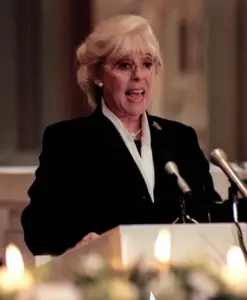
The Glamorous Image Viewers Remember
One particularly emotional change involved Goodyear’s relationship with her appearance.
Glamour had been central to the image millions associated with Bet Lynch.
Leopard print, striking makeup and elaborate hairstyles became defining elements of the character, while Goodyear herself had long taken considerable pride in how she looked.
Brand remembered a time when his wife rarely went anywhere without wearing makeup.
Her lipstick, outfits and overall presentation were established parts of her routine.
As dementia progressed, however, he noticed that some of those interests became less important to her.
Makeup that had once been used regularly could remain untouched, while clothing that would previously have attracted her attention no longer generated the same response.
Even the leopard-print styles so closely associated with her public image had lost some of their former significance.
Small Changes Can Carry Deep Emotional Meaning
For someone who had known Goodyear for many years, these apparently small differences represented far more than changes in fashion preferences.
Every familiar routine could be connected with memories accumulated throughout their relationship.
Selecting clothes or applying lipstick might appear insignificant from the outside, yet such habits can become symbols of the personality and everyday life a spouse remembers.
At the same time, dementia does not erase the person who existed before the diagnosis.
Goodyear remains the woman whose career created decades of memories for audiences, colleagues, friends and family.
Her illness forms part of her life now, but it does not replace the achievements, relationships and experiences that came before it.
Scott Brand Becomes a Full-Time Carer
One of the most significant changes following the diagnosis was Brand’s increasing responsibility for his wife’s everyday needs.
Becoming a full-time carer was not something he had expected when they began their life together.
His initial instinct was to manage the situation largely by himself.
Goodyear and Brand had valued their privacy, and allowing other people into such a personal part of their lives was initially difficult.
As the demands increased, however, Brand realized that attempting to handle everything without enough assistance was affecting his own physical and emotional well-being.
Caring had become a constant responsibility.
Alongside the practical work was the emotional difficulty of watching someone he loved experience continuing changes.

The Demands Placed on Family Carers
Families can suddenly find themselves responsible for complicated tasks after a dementia diagnosis.
A spouse or relative may need to organize appointments, handle paperwork, manage household responsibilities, understand available services and remain prepared for unexpected difficulties.
At the same time, the carer is adapting emotionally to changes within an important relationship.
Brand found that activities from his own life also became harder to arrange.
Social plans could no longer be made without considering Goodyear’s needs.
Even when an opportunity arose to meet friends or spend time away from caring responsibilities, exhaustion could reduce his desire to participate.
The experience gradually convinced him that he needed support as well.
Learning That Asking for Help Was Necessary
Brand has acknowledged that accepting both the diagnosis and the need for assistance was difficult.
He initially believed he could continue managing largely alone.
Eventually, he recognized that doing so was not sustainable.
Seeking support did not mean abandoning his responsibilities to his wife. Instead, it gave him additional resources to continue caring for her while protecting his own well-being.
Alzheimer’s Society became an important part of that support.
Brand connected with Dementia Adviser Julie Mann, who helped him understand some of the practical systems and services surrounding dementia care.
The assistance included guidance involving paperwork, planning and other responsibilities that had become increasingly difficult to manage independently.
Brand later emphasized how important that support became to him.
The Meaning Behind The Long Goodbye
In March 2024, Alzheimer’s Society introduced The Long Goodbye campaign to illustrate the repeated feelings of grief and loss some families experience as dementia progresses.
The television advertisement was narrated by actor Colin Firth and focused on the gradual changes that can affect memory, abilities, independence and relationships.
For Brand, the campaign’s message connected strongly with what had happened in his own marriage.
His sense of loss centered on simple shared experiences, including outings, meals, shopping and walking together.
Those moments were not connected with Goodyear’s celebrity career.
They were ordinary parts of a relationship built over many years.
The campaign also generated discussion because dementia experiences differ widely.
Some viewers found its portrayal difficult, while others believed it reflected feelings that families often struggle to describe publicly.

A Marriage Stretching Back Many Years
Goodyear and Brand reportedly first met during the 1990s, long before they eventually married.
The relationship attracted attention partly because of their age difference, but the couple remained together and married in 2007.
Brand became Goodyear’s fourth husband.
Over the years, their marriage largely existed away from the fictional drama and flamboyant television world that had made Goodyear famous.
By the time dementia changed their circumstances, Brand had known her for decades as his partner rather than simply as the actress recognized by millions.
That history gives additional meaning to his descriptions of the changes he now witnesses.
When he remembers her humor, energy and larger-than-life personality, he is recalling private experiences accumulated throughout their relationship as well as characteristics viewers might recognize.
Julie Goodyear’s Lasting Coronation Street Legacy
For television audiences, Goodyear remains inseparable from Bet Lynch.
She first appeared in Coronation Street during the 1960s before eventually becoming one of the program’s most recognizable regular characters.
Bet was bold, outspoken and glamorous, eventually becoming landlady of the Rovers Return Inn.
Her visual style became iconic.
The leopard-print clothing, dramatic makeup and carefully styled hair helped make Bet instantly recognizable even to people who were not regular viewers of the soap.
Goodyear’s performance went well beyond appearance, however.
She brought humor, strength and vulnerability to the character, helping Bet remain memorable through decades of British television.
Although Goodyear eventually stepped away from regular appearances, she returned on later occasions and remained strongly associated with Coronation Street.
A Career That Extended Beyond the Rovers Return
Goodyear also participated in television outside Coronation Street, including reality and entertainment programs.
Her long presence in British popular culture ensured that news of her dementia diagnosis in 2023 generated widespread attention and messages of support.
For many viewers, Goodyear remained connected to memories of watching Coronation Street over many years.
That familiarity also meant photographs of her after the diagnosis could attract significant public interest.
Photographs Prompt Differing Online Reactions
Brand has occasionally shared affectionate glimpses of life with his wife.
Some of those photographs generated comments from people who remembered Goodyear at the height of her television career.
One image shared by Brand in 2025 prompted differing reactions among some social-media users.
A number of commenters questioned whether such a personal photograph should have been posted publicly.
Others defended the image and viewed it simply as a moment between a woman and the husband caring for her.
Individual comments, however, cannot automatically be treated as representative of Goodyear’s wider audience.
Social-media discussions frequently amplify the strongest reactions even when they originate from a relatively small number of people.
Public Figures Also Experience Aging and Illness
The discussion surrounding Goodyear reflects a broader reality facing famous performers as they grow older.
Audiences can carry a fixed memory of an actor from a particular period of their career.
Seeing that person decades later, particularly while they are living with a serious illness, can produce powerful emotional responses.
However, aging and illness affect public figures just as they affect people outside the entertainment industry.
A person’s dignity is not dependent on continuing to look exactly as audiences remember them from television.
Goodyear’s value and identity extend well beyond a photograph or the changes associated with dementia.
Remembering Julie Beyond Her Diagnosis
Dementia has become an important part of Goodyear’s current life, but it does not erase everything she accomplished before the diagnosis.
She spent decades entertaining viewers and created a character that became deeply embedded in British popular culture.
Outside television, she also built relationships and memories as a wife, mother, friend and individual.
Brand’s public comments frequently return to the personality he remembers so clearly.
His descriptions of her humor, glamour and energy demonstrate that those memories remain central to how he sees his wife.
The sadness associated with the changes exists alongside those memories rather than replacing them.
The Emotional Weight Carried by Spouses
One of the most difficult aspects of dementia can be the changing relationship between partners.
Responsibilities that were once shared may gradually fall more heavily on one person.
Decisions previously made together can become harder to navigate.
A husband or wife may simultaneously remain a loving partner while also becoming responsible for increasingly complex care.
Brand’s experience illustrates that transition clearly.
His accounts contain grief and exhaustion, but they also repeatedly demonstrate his commitment to remaining beside Goodyear.
The difficulties of caring do not eliminate companionship or affection.
Small Moments of Connection Remain Important
Stories involving progressive conditions understandably focus heavily on what changes over time.
Daily life, however, does not necessarily consist only of loss.
People living with dementia may continue experiencing comfort, affection and meaningful moments with those around them.
What those moments look like can vary greatly depending on the individual and the progression of the condition.
Brand has sometimes shared messages centered on enjoyable days with his wife rather than discussing only the difficult aspects of caring.
A positive day does not mean the underlying condition has disappeared, just as a difficult period does not determine every future experience.
For families, adapting expectations and appreciating simple moments can become increasingly important.
Brand’s Message to Other Carers
One of the clearest lessons Brand has drawn from his own experience concerns the importance of accepting help.
He initially attempted to cope with too much responsibility on his own.
Privacy and determination made seeking assistance difficult, but eventually the pressure began affecting his health and well-being.
Connecting with Alzheimer’s Society and receiving support from a Dementia Adviser changed his approach.
The assistance gave him practical guidance while reminding him that being a devoted husband did not require handling every challenge independently.
His experience highlights the importance of recognizing the needs of carers as well as those of the person living with dementia.
A Love Story Changed but Not Erased
Julie Goodyear will remain Bet Lynch to millions of viewers who remember the leopard print, dramatic makeup and unforgettable personality she brought to Coronation Street.
For Scott Brand, however, she is the woman with whom he has shared decades of private life.
Dementia has changed many of the routines and experiences that once defined their marriage, and Brand has been open about the sadness of watching those changes happen.
At the same time, his words repeatedly reflect devotion to his wife and a determination to remain present as their circumstances evolve.
Goodyear’s diagnosis does not remove the decades of achievements and memories that came before it.
Her television legacy remains intact, while her current life tells a much more personal story about marriage, caregiving, adaptation and the importance of accepting support.
Behind the glamorous character remembered by millions is now a couple facing a difficult condition together, one day at a time.