
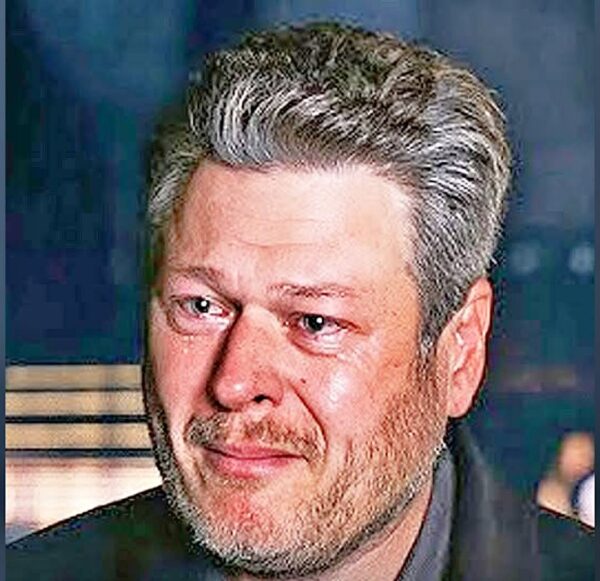
Blake Shelton Walked Away From Television—Then Found His Way Back to Music
The Country Star Chose Peace, Family and a Life Beyond the Spotlight
For years, Blake Shelton appeared to be everywhere.
His songs filled country radio, his concerts placed him before enormous audiences and his television career brought him into millions of American homes.
His highly visible role on The Voice turned him into much more than a successful country singer. He became one of television’s most recognizable personalities and remained a familiar presence throughout the show’s long run.
Then Shelton made a decision that surprised many viewers and fans.
He walked away from the program that had occupied a major place in his professional life.
After completing 23 seasons on The Voice, Shelton left the television competition in 2023. His departure closed an important chapter in a career built around music, touring, recording and years of demanding television production.
Rather than immediately pursuing another major opportunity, Shelton returned to Oklahoma and created distance between himself and the relentless pace of the entertainment industry.
Leaving behind an intense schedule
Walking away represented an enormous adjustment for someone who had spent so many years living in public.
Shelton had balanced several major responsibilities throughout his career. Recording new music required long periods of creative and technical work, while touring placed him on stages before large crowds.
His television commitments added another demanding part to that schedule. Maintaining such a visible career meant remaining constantly available to audiences while moving from one professional obligation to the next.
Success gave Shelton opportunities that many performers spend their entire careers pursuing. It also created a lifestyle in which quiet time could become increasingly difficult to find.
Leaving The Voice allowed him to step outside that cycle.
For the first time in years, his next move did not need to be another television season, concert or immediate career decision. He could return home and experience a slower rhythm of life.
Oklahoma offered something different
Life in Oklahoma gave Shelton something that the entertainment world could not provide in the same way: peace.
The contrast was significant. Television studios, concert venues and recording schedules had kept him surrounded by deadlines, public attention and constant movement.
At home, he could step away from the expectation that he always needed to be performing, promoting a project or planning what came next.
This period did not mean that Shelton had abandoned music or lost appreciation for the career he had built. It gave him room to reconsider what he wanted from that career after more than two decades in the spotlight.
He had already achieved recognition across multiple areas of entertainment. The break allowed him to focus on life beyond public success rather than immediately seeking another way to remain visible.
For a performer whose identity had been connected so closely with his work, slowing down became a meaningful change.
Time away changed his perspective
Stepping away from a major television role can create uncertainty, particularly after 23 seasons.
Audiences had become accustomed to seeing Shelton regularly, and his association with The Voice had become one of the defining features of his public career.
His decision showed that even a highly successful position can eventually become something a person is ready to leave behind.
Shelton did not need to immediately replace the show with another production of equal size. Returning to Oklahoma allowed him to determine whether his next step would come from genuine enthusiasm rather than the pressure to maintain momentum.
The distinction was important.
After years of constant work, continuing simply because it was familiar would not necessarily offer the fulfillment he wanted. Time at home created the opportunity to rediscover what had drawn him to music in the first place.
An unexpected collaboration renewed his interest
Shelton eventually returned to recording, but the process did not begin with a calculated attempt to restore his place in the spotlight.
A collaboration with Post Malone helped renew his passion for making music.
The partnership became an important creative turning point. It reminded Shelton that recording could still feel exciting after the pressure and repetition of maintaining a long entertainment career.
That renewed energy led to additional music and eventually to his 2025 album For Recreational Use Only.
The project marked a return to an essential part of Shelton’s identity. Long before television made him familiar to viewers outside country music, recording and performing songs had been at the heart of his work.
By returning after a period away, he was approaching music from a different position. He no longer appeared driven by the need to establish himself or prove that he belonged among the industry’s biggest names.
He had already built that legacy.
“Texas” returned him to No. 1
Shelton’s return demonstrated that his audience had remained interested during his time away from regular television.
His song “Texas” became another No. 1 hit, adding a new success to a career that had already lasted more than two decades.
The achievement confirmed that leaving The Voice had not ended his connection with listeners. Fans continued responding to his music even though he was no longer appearing on television every season.
The success also showed that stepping back did not require disappearing permanently.
Shelton could leave one demanding chapter, spend time away and then return when he had music he genuinely wanted to release.
That made the No. 1 result feel different from an early-career breakthrough. It was not the beginning of his public journey but evidence that an established artist could regain creative momentum after choosing to slow down.
A return to performing on his own terms
New music was not the only part of Shelton’s renewed professional activity.
He returned to live performance with a Las Vegas residency, bringing him back before audiences without recreating the same schedule he had maintained during his years of television, recording and touring.
The residency represented another way to remain connected with fans while shaping this stage of his career differently.
He also continued expanding his Ole Red entertainment venues. That work allowed him to maintain a presence in entertainment beyond recording songs and appearing on stage.
Together, the album, the No. 1 single, the residency and the growth of Ole Red showed that Shelton had not retired from public life.
He had simply changed his relationship with it.
Instead of allowing his career to control every part of his time, he appeared to be selecting projects that fit the life he now wanted.
No longer chasing greater fame
Earlier stages of an entertainment career often involve proving that success is possible.
Artists work to secure opportunities, reach new audiences and demonstrate that one successful moment can become a lasting profession.
Shelton had already passed through those stages. More than 20 years in the spotlight had given him success on country radio, major stages and national television.
He no longer needed another television program or hit song to establish his name.
That history changed the meaning of his return. The new music did not appear to come from a need to become more famous than he had been before.
It came after a deliberate period of distance and a renewed interest in recording.
This gave Shelton the freedom to approach his career with a different set of priorities. Professional achievements could remain important without occupying every part of his life.
Finding space for family and home
Oklahoma, family and music emerged as central parts of Shelton’s new balance.
His life at home provided a foundation beyond television ratings, radio success and concert attendance.
That balance did not require him to reject the entertainment industry that had shaped his adult life. It allowed him to decide how much space that industry should occupy.
For years, Shelton’s schedule demanded continuous attention. There was always another season to film, another performance to prepare for or another recording project requiring his time.
Leaving The Voice interrupted that pattern and gave him the ability to consider where work belonged within a fuller life.
The result was not a complete withdrawal. It was a more measured return that allowed both creativity and personal peace to exist together.
The importance of knowing when to slow down
Shelton’s decision reflected a reality that can be difficult to accept in a career built on constant visibility.
Remaining successful does not always require remaining present everywhere.
There can be value in recognizing when a demanding chapter has reached its natural conclusion. Leaving at that point can create space for renewed interest rather than allowing exhaustion to define the work.
Shelton’s years on The Voice made him a television fixture, but they did not represent the entirety of his identity.
Returning to Oklahoma allowed him to reconnect with a life that existed outside the studio. His eventual return to music showed that taking a break could restore enthusiasm rather than weaken his career.
His later success suggested that audiences were willing to welcome him back without requiring him to maintain constant exposure.
A comeback with a different meaning
From the outside, Shelton’s album, No. 1 single and Las Vegas residency might look like a conventional entertainment comeback.
Yet his story carries a different meaning.
He never fully disappeared, and he did not return because he needed to rebuild a forgotten career. He stepped away after reaching extraordinary visibility, then resumed working when music became exciting to him again.
The most significant change may not have been what he accomplished after leaving television. It may have been his decision to stop allowing achievement to determine every part of his life.
Shelton still records, performs and develops his entertainment venues. At the same time, he has made room for Oklahoma, family and a quieter existence beyond public attention.
That balance represents a different kind of success from ratings, chart positions or packed venues.
After more than two decades of being one of the most visible figures in country entertainment, Shelton appears to understand that slowing down does not mean giving up.
It can mean returning with greater clarity about what matters.
Blake Shelton’s biggest comeback may not be a comeback at all. It may simply be the story of a man who stepped away, found peace and discovered a way to keep making music without surrendering the life he had found beyond the spotlight.