
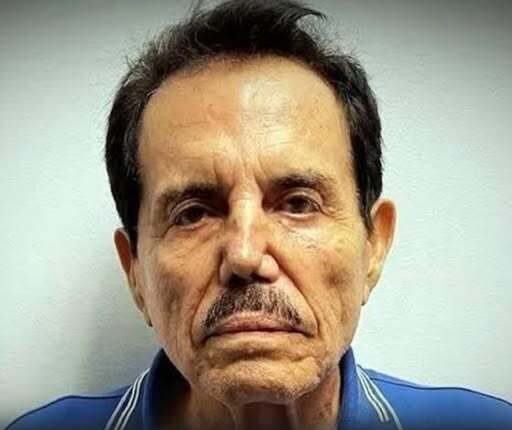
Sinaloa Cartel Co-Founder Ismael “El Mayo” Zambada Sentenced to Life in Federal Prison
Decades-Long Criminal Career Ends With Life Sentence
Ismael “El Mayo” Zambada Garcia, one of the most influential figures in the history of the Sinaloa Cartel, has been sentenced to spend the remainder of his life in federal prison.
The sentence brings an end to a criminal career that prosecutors said lasted for nearly four decades and involved large-scale international drug trafficking, corruption, violence and systematic efforts to eliminate people considered threats to the organization.
Zambada, now 76, helped establish the Sinaloa Cartel alongside Joaquín “El Chapo” Guzmán. While Guzmán became internationally known for his dramatic escapes, public image and eventual prosecution, Zambada operated with considerably less attention.
He remained largely outside the spotlight while helping direct an organization accused of moving enormous quantities of cocaine, fentanyl and methamphetamine into the United States and other countries.
His influence continued after Guzmán received a life sentence in 2019. Zambada emerged as a leading figure within the cartel and remained one of the most sought-after drug trafficking suspects in the world until his arrest in July 2024.
An Unexpected Arrest in the United States
Zambada’s years of avoiding capture ended under unusual circumstances. He was allegedly betrayed by one of Guzmán’s sons, kidnapped and placed aboard an aircraft traveling to the United States.
Federal agents were waiting when the plane arrived, bringing Zambada into American custody and ending a long-running search for the cartel leader.
The arrest represented a major development in the campaign against the Sinaloa Cartel. Unlike Guzmán, whose arrests and escapes had repeatedly generated international headlines, Zambada had maintained a quieter public profile while preserving his position inside the organization.
His ability to remain free for so long contributed to his reputation as a careful and disciplined operator. That reputation changed immediately after the July 2024 flight delivered him to waiting authorities.
Once in custody, Zambada faced allegations covering decades of criminal conduct. The case focused not only on the volume of drugs moved through the cartel’s network, but also on the violence and corruption used to maintain that operation.
Massive Drug Trafficking Operation
Prosecutors said Zambada helped oversee a criminal empire responsible for trafficking approximately 1.5 million kilograms of cocaine, fentanyl and methamphetamine into the United States and other nations.
The scale of that activity placed him among the most powerful drug traffickers of his era. The organization generated billions of dollars while illegal substances reached communities across national borders.
The cartel’s continued influence depended on a broad structure capable of transporting drugs, protecting routes, managing profits and preventing interference from law enforcement officials, rivals and potential witnesses.
Zambada was accused of playing a central role in directing that structure. His leadership extended beyond the shipment and sale of illegal drugs, involving methods designed to protect the cartel’s power and prevent challenges to its operations.
Following Guzmán’s life sentence in 2019, Zambada continued leading the organization. His position made him a major target for federal investigators seeking to disrupt the cartel’s leadership and international trafficking network.
Violence Used to Protect Cartel Power
The case against Zambada described an organization that relied heavily on fear and violence. Hitmen were used to assault, torture and kill people believed to threaten the cartel or interfere with its activities.
Those targeted allegedly included rivals, suspected informants and individuals viewed as disloyal. One of the people identified in the case was Zambada’s nephew, Eliseo Imperial Castro, who was known as “Cheyo Antrax.”
The violence was presented as a deliberate part of the cartel’s method of maintaining control. It discouraged cooperation with authorities and reinforced the organization’s influence within the regions where it operated.
Prosecutors described the damage caused by Zambada’s leadership as extending far beyond individual drug transactions. The organization’s conduct affected families, public institutions and communities in Mexico, the United States and elsewhere.
“It would be difficult to overstate the magnitude of the defendant’s crimes and scale of the corruption, violence, and other harm he spread throughout Mexico, the United States, and the world,” federal prosecutors said while describing Zambada’s role.
They also emphasized that Zambada “is the co-founder of one of the world’s most violent criminal organizations.
Millions Used to Corrupt Public Officials
Violence was only one method used to defend the cartel’s position. Millions of dollars were also spent bribing public officials in Mexico so the organization could continue operating with protection from interference.
Corruption helped create conditions in which the cartel could preserve trafficking routes, avoid accountability and maintain its influence for an extended period.
The combination of bribery and intimidation allowed the organization to protect its profits while weakening the institutions responsible for enforcing the law.
The sentencing reflected the full scope of the accusations, including the drugs moved through the cartel’s network, the officials corrupted by its money and the people harmed by its violent methods.
Federal officials argued that a permanent prison sentence was necessary because of the length of Zambada’s leadership and the lasting consequences of the organization’s conduct.
Officials Say an Era of Bloodshed Has Ended
U.S. Attorney Joseph Nocella Jr. said the life sentence closed a chapter marked by decades of illegal activity and violence.
“Ismael Zambada Garcia spent nearly four decades poisoning American communities to make billions of dollars in profit and ordering the murders of anyone who stood in his way. Today, that chapter closes for good,” Nocella Jr. said.
Officials involved in the prosecution said the punishment accounted for both the size of the drug trafficking operation and the methods used to keep it functioning.
U.S. Attorney Jason A. Reding Quiñones for the Southern District of Florida also described the sentence as a decisive conclusion to Zambada’s control.
“Garcia spent nearly four decades leading a cartel that poisoned American communities, corrupted public officials, and used murder and terror to protect its power,” Reding Quiñones said.
“Today’s life sentence ensures that his reign of violence is over for good.”
Court Orders Payment of $15 Billion
In addition to life imprisonment, the court ordered Zambada to pay “$15 billion in drug trafficking profits.”
Court records showed that he was convicted of 85 criminal violations. The financial order reflected the enormous profits connected to the trafficking operation he helped lead.
The life sentence had been widely anticipated after Zambada entered a guilty plea in August 2025. That plea eliminated the need for a lengthy trial and prevented the government from having to present its complete case before a jury.
His attorneys asked the court to consider the value of his cooperation when determining the sentence. They maintained that his decision to accept responsibility reduced risks for people who might otherwise have been required to testify.
The defense argued that his guilty plea “helped protect the safety of potential witnesses who will not need to be disclosed or called to testify.”
His lawyers also said the plea spared victims, witnesses and the government from the burden of a prolonged court proceeding.
Zambada Addresses the Harm Caused by Illegal Drugs
Before receiving his sentence, Zambada spoke about the consequences of his choices and acknowledged the damage associated with the organization he helped lead.
He said he understood the “grave harm that illegal drugs have done to the people of the United States, of Mexico and elsewhere.”
His statement addressed both the effects of drug trafficking and the violence committed by the cartel during his years of leadership.
“I grew up in an environment where violence and crime seemed normal, but now I know that’s no excuse,” Zambada said.
“There comes a time when every person must take responsibility for their decisions. I didn’t, and many people paid the price.”
He also acknowledged “the human toll of the violence and lawlessness that my criminal organization engaged in” and apologized to “everyone who has suffered or been affected by my actions.”
The statement represented a public acceptance of responsibility from a man who had spent decades operating as a powerful and largely hidden figure within the drug trafficking world.
A Warning to Future Drug Traffickers
Zambada used part of his final statement to address younger people who might consider entering the same criminal world.
He urged the next generation of drug traffickers to “choose a different path” and declared that “violence must end.”
His cooperation with prosecutors protected him from the possibility of receiving the death penalty. However, it was not enough to prevent the court from imposing a life sentence.
The punishment means Zambada will remain in federal custody for the rest of his life. It also places him alongside Guzmán, his former partner, who has been serving a life sentence since 2019.
The two men helped build the Sinaloa Cartel into one of the world’s most powerful criminal organizations, but both will now spend the remainder of their lives behind bars.
Final Chapter for a Powerful Cartel Leader
Zambada’s sentencing closes the legal chapter on a career that included nearly 40 years of drug trafficking, corruption and violence.
For much of that period, he avoided the type of attention that surrounded other cartel leaders. His low public profile allowed him to remain active while authorities pursued him across multiple investigations.
That period ended with his unexpected arrival in the United States in July 2024, followed by his guilty plea in August 2025 and his eventual life sentence.
The final judgment reflects the scale of the criminal organization he helped create, the enormous quantity of drugs tied to its operations and the violent measures used to preserve its power.
Federal officials presented the sentence as a permanent end to Zambada’s leadership. While the wider effects of the cartel’s activities remain significant, one of its most prominent founders will no longer be able to direct its operations from freedom.
After decades as a central figure in the Sinaloa Cartel, Ismael “El Mayo” Zambada Garcia will spend the rest of his life in federal prison.