
Video of Donald Trump at 9/11 Memorial Sparks Debate as Ground Zero Claims Face Scrutiny
A Solemn Ceremony Becomes an Online Controversy
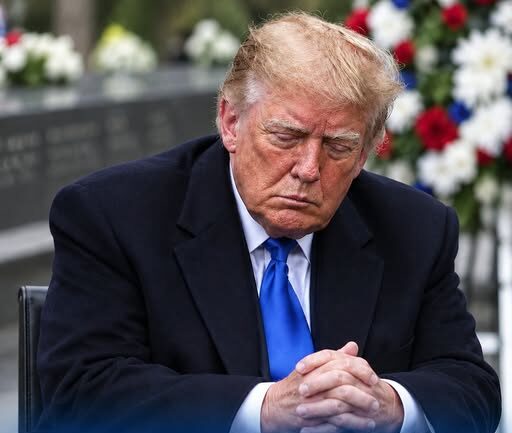
A video of Donald Trump attending a 9/11 memorial ceremony at the Pentagon quickly became the center of an intense online debate after viewers noticed his eyes appearing to close during the event.
The moment occurred while the names of those who died were being read. Cameras showed Trump sitting quietly and remaining largely motionless as the ceremony continued.
Some viewers interpreted the footage as evidence that he had briefly fallen asleep. Others argued that a short video or isolated image could not establish whether he was sleeping, resting his eyes or simply looking downward.
The footage did not independently confirm that Trump had nodded off. Nevertheless, the appearance was enough to trigger widespread commentary because it occurred during one of the country’s most solemn public commemorations.
Images from memorial ceremonies are often examined closely, particularly when national leaders and other prominent public figures are present. Small gestures can quickly become symbols of respect, indifference or political character, depending on how viewers interpret them.
Accusations Spread Across Social Media
Within minutes of the footage circulating, social media users began accusing Trump of falling asleep during the ceremony. The criticism moved rapidly from discussion of his posture to broader judgments about his conduct.
For some critics, the moment appeared disrespectful because it took place while the nation was honoring those lost in the September 11 attacks. They argued that public officials should remain visibly attentive throughout such an occasion.
Others cautioned that the footage captured only a limited moment and did not prove what Trump was experiencing. Closed or lowered eyes alone cannot establish that someone was asleep.
The disagreement highlighted how quickly ambiguous footage can become a political narrative. Instead of remaining a question about a few seconds of video, it developed into a wider argument about leadership, remembrance and public responsibility.
Some critics used the phrase “asleep at the wheel” to describe what they believed the image represented. Their criticism treated the footage as a metaphor extending far beyond the ceremony itself.
That interpretation remained an opinion rather than an established description of what occurred. The available images showed Trump’s eyes drooping or closing, but they did not conclusively reveal whether he had fallen asleep.
Why the Setting Intensified the Reaction
The Pentagon ceremony was not an ordinary political appearance. It was a memorial dedicated to remembering the people killed during one of the darkest days in American history.
The reading of victims’ names gives individual recognition to those whose lives were lost. Attendees are expected to approach that ritual with silence, attention and visible respect.
Because of that setting, viewers attached greater significance to Trump’s appearance than they might have during a routine event. A moment that could otherwise have passed without widespread attention became emotionally charged.
Public reactions to memorial behavior are often shaped by grief as well as politics. For families and citizens who continue to carry the impact of September 11, even the appearance of inattention can feel deeply personal.
At the same time, judging a person’s internal state from a limited recording remains difficult. The controversy therefore centered not only on what the video showed, but also on what viewers believed it meant.
A Second Dispute Surrounding September 11
The memorial footage circulated while Trump was already facing renewed scrutiny over his description of events near Ground Zero after the attacks. He had shared a dramatic account of being helped away from a building and later participating in recovery efforts.
Trump claimed that “big, strong” firefighters carried him away from a building near Ground Zero after it began making alarming sounds. He also said that he brought a construction crew to assist around the rubble.
Those statements attracted criticism because questions were raised about whether the events happened as Trump described them. His account was challenged publicly, including by a member of his own family.
Trump’s nephew characterized the story as offensive and untrue. Reporters examining the claim also described it as a “weird lie.”
Trump rejected those objections and maintained that his description was “exactly accurate.” The opposing positions left the public with a dispute rather than a settled account.
The Firefighter Story Faces Questions
The image of firefighters physically carrying Trump away from danger is a central part of his account. It places him close to the chaos surrounding Ground Zero and presents him as someone personally affected by the dangerous conditions.
However, the details included in the provided account do not identify the firefighters involved. Without named participants or additional documentation, the story remains difficult to evaluate from the claim alone.
The description of a creaking building adds urgency to the narrative. It suggests that Trump was removed because those nearby believed the structure might present an immediate danger.
Critics questioned whether such a dramatic event would have remained largely unknown. Their objections focused on the absence of publicly established details supporting the scene as Trump described it.
Trump’s insistence that the account was accurate did not end the dispute. Instead, the disagreement became part of a broader examination of how he has described his actions on and around September 11.
Questions About the Construction Crew
Trump’s statement that he brought a construction crew to help at the rubble created another point of controversy. The claim presents him as someone who used available resources to assist during the aftermath.
Critics challenged that description alongside the firefighter story. They questioned whether his account accurately represented what he and the crew actually did.
The disagreement is significant because stories about Ground Zero carry exceptional emotional weight. Claims of personal participation in recovery efforts can shape how a public figure is viewed during a moment remembered for sacrifice and courage.
For that reason, critics argued that any description of helping at the site should be treated carefully. Trump, however, continued to defend his version of events as accurate.
The dispute cannot be resolved simply by repeating either side’s position. Trump says the account is true, while critics and his nephew have publicly rejected it.
His Nephew’s Public Rejection
The criticism from Trump’s nephew drew particular attention because it came from within his extended family rather than from a traditional political opponent.
His nephew did not describe the Ground Zero story as a harmless exaggeration. He called it both offensive and untrue, directly challenging the credibility of Trump’s account.
That rejection added a personal dimension to an already sensitive controversy. Family criticism can carry added weight because it may appear less predictable than criticism from partisan rivals.
Still, the nephew’s statement represents his assessment of the story. Trump’s opposing insistence that his words were accurate means the disagreement remains explicit.
The conflict also demonstrates how memories of September 11 continue to produce strong reactions. Claims connected to the attacks are judged not only for their factual accuracy but also for whether they respect the people whose actions and losses are documented.
Two Controversies Begin to Overlap
The memorial footage and the disputed Ground Zero story concern different moments, but they became connected in the online reaction. Critics treated both as evidence of how Trump approaches the memory of September 11.
One controversy focused on his appearance during a present-day ceremony. The other involved his description of what happened near Ground Zero years earlier.
Together, they created a politically powerful narrative for his opponents. The image of Trump with closed or drooping eyes was placed beside claims that his account of personal involvement after the attacks was unreliable.
However, the distinction between the two matters. The video does not conclusively establish that Trump was asleep, while the Ground Zero account remains publicly disputed rather than resolved within the provided information.
Treating every allegation as confirmed would blur the difference between visible evidence, interpretation and conflicting testimony. A careful examination must keep those categories separate.
The Limits of a Brief Video
Short recordings frequently generate strong conclusions because they appear to provide direct visual evidence. Yet a camera captures only what can be seen from a particular angle during a limited period.
In Trump’s case, viewers could see his eyes lowering or closing while he sat quietly. The footage could not reveal whether he had actually lost consciousness or how long the moment lasted beyond what was shown.
That uncertainty did little to slow the online reaction. Social media often rewards immediate judgment, particularly when footage supports an existing political opinion.
Those who already viewed Trump negatively interpreted the moment as disrespectful. Supporters and more cautious observers questioned whether the accusation went beyond what the video could prove.
The result was a debate driven as much by political perception as by the recording itself. The same images produced sharply different conclusions depending on the viewer.
Remembrance Becomes Part of a Political Fight
September 11 memorials are intended to honor victims and reflect on collective loss. Political controversy can quickly redirect attention from that purpose toward the behavior of prominent attendees.
The argument over Trump’s eyes became another example of a solemn public event being absorbed into a larger political conflict. Instead of discussing only the names being read, online audiences focused on whether one attendee appeared sufficiently alert.
The Ground Zero dispute widened that conflict by raising questions about Trump’s account of his own role during the aftermath. His statements, his nephew’s rejection and criticism from reporters all became part of the same debate.
Trump continued to defend himself, insisting that his description was “exactly accurate.” Critics remained unconvinced and continued examining both his earlier claims and his appearance at the memorial.
A Debate Without a Simple Conclusion
The available footage shows Trump sitting with his eyes appearing to droop or close during the Pentagon ceremony. It does not, by itself, conclusively prove that he was asleep.
The Ground Zero controversy is similarly defined by competing claims. Trump maintains that firefighters carried him from a dangerous area and that he brought workers to assist, while critics and his nephew dispute that account.
Both controversies have become powerful because they concern a day that remains emotionally significant across the United States. Statements and behavior associated with September 11 receive scrutiny that extends beyond ordinary political disagreements.
For critics, the memorial footage and disputed personal story raise questions about Trump’s respect for the occasion and the reliability of his memories. For defenders, the accusations rely too heavily on interpretation and hostile assumptions.
What remains certain is that a brief visual moment and a contested story have reopened a wider argument about Trump’s relationship to September 11, both during its aftermath and at present-day commemorations.
The discussion is unlikely to end with a single image or another denial. As long as the footage continues circulating and the Ground Zero account remains disputed, the debate over what Trump did, what he remembered and what the public should believe will continue.