
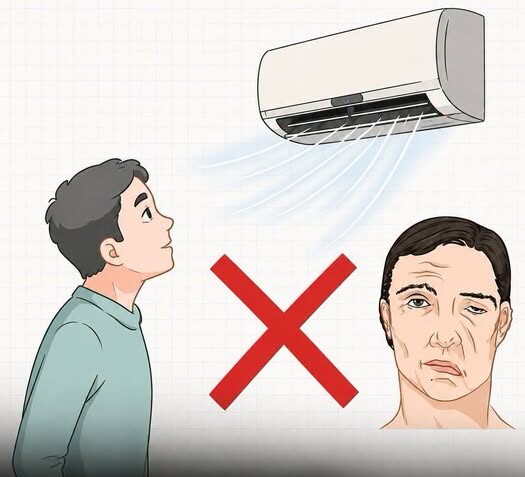
Can Sleeping With an Air Conditioner Blowing Directly on Your Face Cause Facial Paralysis?
Cold Air Is Not Considered a Direct Cause of Bell’s Palsy, but Prolonged Exposure May Increase Discomfort and Could Act as a Trigger in Some Vulnerable Individuals
Sleeping with an air conditioner blowing directly onto the body can feel refreshing during hot weather, especially when temperatures remain high throughout the night.
But keeping cold air aimed continuously at the face or body for hours may also cause discomfort, particularly for people who are sensitive to sudden or prolonged temperature changes.
One concern that sometimes circulates is whether sleeping directly in front of an air conditioner can cause facial paralysis.
The relationship is not that simple.
Cold air itself is not considered a direct cause of facial paralysis, but prolonged exposure may potentially contribute to conditions that could act as triggers in certain vulnerable individuals.
Facial Paralysis Has Several Possible Causes
Facial paralysis refers to weakness or loss of movement affecting muscles on one side or, less commonly, both sides of the face.
One commonly discussed form is Bell’s palsy.
Bell’s palsy occurs when the facial nerve becomes inflamed.
This inflammation can temporarily interfere with the nerve’s ability to control facial muscles.
The condition usually develops suddenly rather than appearing slowly over a long period.
Air Conditioning Is Not Usually the Primary Cause
It is important not to assume that a person developed facial paralysis simply because they slept in an air-conditioned room.
Facial nerve inflammation is more commonly associated with factors such as viral infections, immune system responses, underlying health conditions, or other medical circumstances.
Post-surgical complications and additional neurological or medical factors may also be involved.
Environmental temperature alone does not explain most cases.
Cold Air May Still Affect Some Sensitive Individuals
Although direct cold airflow is not considered the main cause of facial paralysis, prolonged exposure may potentially act as a contributing trigger in some people.
Sleeping for many hours with cold air blowing directly across the face can create continuous temperature stress.
Some people may also experience muscle stiffness, sinus discomfort, dry eyes, throat irritation, or general discomfort after prolonged exposure.
The possibility of cold air contributing to facial nerve symptoms should therefore be considered as a potential factor rather than a proven single cause.
Bell’s Palsy Is Linked to Facial Nerve Inflammation
Bell’s palsy develops when the facial nerve becomes inflamed or swollen.
That nerve controls many movements of the face.
When its normal function is disrupted, a person may suddenly find it difficult to smile, close one eye properly, or control facial expressions on the affected side.
The exact cause is not always immediately clear.
In many cases, viral infections or immune responses are considered more likely explanations than exposure to cold air alone.
Viral Infections Are Frequently Discussed as Triggers
One reason experts are cautious about blaming air conditioning is that Bell’s palsy has often been associated with viral activity.
An infection may trigger inflammation around the facial nerve.
The resulting swelling can interfere with normal nerve function and produce sudden facial weakness.
Because several mechanisms may be involved, determining one precise trigger can sometimes be difficult.
Some People May Be More Vulnerable
The supplied information suggests that certain individuals may be more sensitive to environmental stressors.
This can include older adults, people with weaker immune systems, and individuals living with conditions such as diabetes or high cholesterol.
These conditions may affect circulation, nerve function, or the body’s ability to respond to stress.
That does not mean such people will develop facial paralysis after using air conditioning.
It means additional caution may be reasonable when exposure is intense or prolonged.
Sudden Temperature Changes May Be Uncomfortable
Moving repeatedly between very hot outdoor temperatures and an extremely cold room can place additional stress on the body.
The effect may be especially noticeable when cold air is directed continuously toward one area of the face or neck.
Some people experience stiffness or discomfort after sleeping this way.
Maintaining a more stable sleeping temperature may therefore be more comfortable than allowing very cold air to blow directly onto the body throughout the night.
Direct Airflow Can Be Avoided Without Turning the AC Off
People do not necessarily need to stop using air conditioning.
The more practical approach is to adjust how it is used.
Instead of pointing the airflow directly toward the face, the vents can be redirected toward another part of the room.
This allows the room to remain cool while reducing continuous exposure to concentrated cold air.
A Timer May Also Help
Another option is using a timer.
The air conditioner can cool the room while someone is falling asleep and then reduce or stop operation later in the night.
This may help prevent hours of uninterrupted cold airflow.
Some air-conditioning systems also include sleep settings designed to gradually adjust temperature during the night.
Maintaining a Stable Room Temperature Is Important
An extremely cold bedroom is not necessary for comfortable sleep.
The goal should be maintaining a stable environment that feels comfortable without creating intense temperature differences.
If a person regularly wakes with stiffness, dryness, or discomfort, changing the direction or intensity of the airflow may help.
Small adjustments can often improve comfort without eliminating air conditioning altogether.
Facial Weakness Should Not Be Ignored
The more important issue is recognizing possible symptoms of facial paralysis when they occur.
Early signs can include weakness on one side of the face.
A person may notice that their smile appears uneven.
They may have difficulty moving part of the face normally.
Some people may also experience numbness or an unusual sensation in the affected area.
Symptoms Often Appear Suddenly
Facial paralysis such as Bell’s palsy commonly develops relatively quickly.
A person may feel normal and then notice significant facial weakness over a short period.
Because the change can happen suddenly, it may be alarming.
Sudden facial weakness should not simply be blamed on sleeping near an air conditioner.
Medical evaluation is important because several different conditions can cause similar symptoms.
Difficulty Controlling Facial Expressions Is Another Warning Sign
Someone experiencing facial nerve problems may have difficulty making normal expressions.
Smiling may become uneven.
Closing one eye can become difficult.
Movement around the mouth may also feel unusual.
These symptoms can affect everyday activities such as eating, drinking, speaking, or blinking.
Prompt Medical Evaluation Is Important
If sudden facial weakness, numbness, or loss of facial control develops, medical attention should be sought promptly.
Early evaluation allows healthcare professionals to determine what may be causing the symptoms.
It can also help distinguish Bell’s palsy from other conditions that may require different treatment.
Waiting and assuming the symptoms are simply caused by cold air may delay appropriate care.
Early Treatment Can Improve Recovery Outcomes
The timing of medical evaluation can matter.
When facial paralysis is identified early, treatment may be started sooner when appropriate.
That can improve recovery outcomes in some cases.
The specific treatment depends on the underlying cause and the person’s individual health circumstances.
For that reason, self-diagnosis based only on recent air-conditioning exposure is not recommended.
Not Every Case of Facial Weakness Is Bell’s Palsy
Facial weakness can occur for different reasons.
Bell’s palsy is one possibility, but it is not the only one.
Other medical conditions may produce similar symptoms.
That is another reason sudden changes in facial movement should be evaluated rather than simply monitored at home.
The cause should be determined based on the full medical picture rather than one environmental factor.
Air Conditioning Is Generally Safe When Used Sensibly
For most people, using air conditioning is not inherently dangerous.
It can make sleeping conditions far more comfortable during hot weather.
The concern is more about prolonged direct exposure than about air conditioning itself.
Very cold air blowing continuously toward the face or body for hours may create unnecessary discomfort.
Redirecting the airflow is a simple precaution.
Cold Air Should Not Be Blamed for Every Symptom
It can be tempting to connect a new health problem with whatever happened shortly before it appeared.
If someone wakes with facial weakness after sleeping near an air conditioner, the cold air may seem like the obvious explanation.
But timing alone does not prove cause.
Viral infections, immune responses, underlying illnesses, and other medical factors remain more established explanations for facial nerve inflammation.
People With Existing Health Conditions May Want Extra Caution
Individuals with diabetes, high cholesterol, weakened immunity, or other health concerns may already have factors affecting circulation or nerve function.
For them, maintaining a comfortable and stable sleeping environment may be especially worthwhile.
This does not mean they must avoid air conditioning.
Rather, they can avoid extreme cold and continuous airflow directly onto the face.
Comfortable Cooling Is Usually Enough
There is little benefit in making a bedroom excessively cold if a moderate temperature provides the same comfort.
A stable environment may reduce dryness, stiffness, and the discomfort associated with intense airflow.
Redirecting the vents, reducing fan speed, or using a sleep timer are simple options.
These changes can allow someone to remain cool without spending the entire night directly in the path of the air conditioner.
Prevention Does Not Need to Be Complicated
A few simple habits may improve comfort during sleep.
Avoid positioning the bed directly beneath or in front of the air-conditioning vent when possible.
Do not aim strong airflow directly at the face for hours.
Use a timer if prolonged cooling is unnecessary.
Keep the room temperature relatively stable rather than making dramatic changes between hot and cold environments.
Pay Attention to What Your Body Is Telling You
If you repeatedly wake with facial discomfort, stiffness, dryness, or irritation, consider changing the way the air conditioner is positioned.
Persistent symptoms deserve attention even when they seem minor.
If true weakness or loss of facial movement develops, however, the situation is different.
That should be medically evaluated promptly.
Air Conditioning Alone Should Not Be Treated as the Cause of Facial Paralysis
The most important distinction is between possible environmental triggers and established medical causes.
Sleeping in direct cold airflow may be uncomfortable and could potentially contribute to problems in a vulnerable individual.
But facial paralysis is typically more complicated than simple exposure to cold air.
Bell’s palsy involves inflammation of the facial nerve, and several medical factors may contribute to that process.
The Bottom Line Is Caution Without Panic
There is no reason to become frightened simply because you sleep with an air conditioner running.
Air conditioning itself is not inherently dangerous.
The sensible approach is to avoid extremely cold air blowing directly onto your face or body throughout the entire night.
If possible, redirect the airflow, maintain a comfortable room temperature, or use a timer.
Most importantly, do not ignore sudden facial weakness, numbness, or difficulty controlling facial expressions.
Those symptoms should be evaluated by a medical professional rather than automatically attributed to the air conditioner.
Cold airflow may contribute to discomfort and may potentially act as a trigger in some sensitive individuals, but it should not be treated as the primary explanation for facial paralysis without proper medical assessment.