
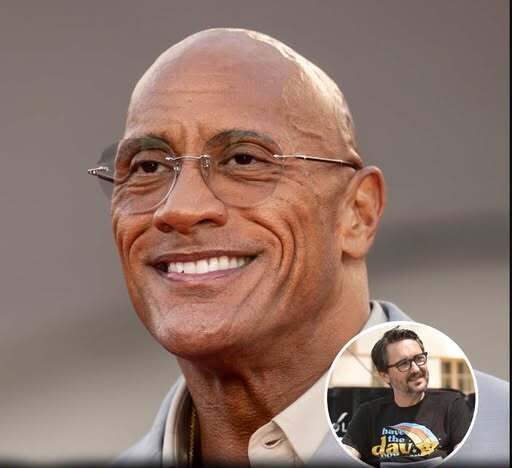
Dwayne Johnson Faces Backlash After Saying He Will Keep Political Views Private
Dwayne Johnson’s New Political Stance Sparks Debate
Dwayne Johnson has found himself at the center of public debate after explaining that he no longer intends to speak openly about politics.
The actor and former professional wrestler, widely known as “The Rock,” said he has decided to keep his political views private after years of public attention, criticism, and division surrounding celebrity involvement in political issues.
His remarks quickly drew strong reactions online, with some people supporting his decision and others accusing him of avoiding responsibility at a time when public figures are often expected to use their platforms to address major political matters.
The discussion has since grown beyond Johnson himself, reopening a broader conversation about whether entertainers, athletes, and other high-profile figures should publicly take political positions or remain focused on their work.
The Interview That Started the Conversation
The controversy began after Johnson spoke candidly about politics during a June 11 interview with Esquire.
During the interview, Johnson explained that he had reached a point in his life and career where he wants to keep his attention on creativity, storytelling, and the work that originally made him a major public figure.
“What I have learned through experience is that I need to keep—the main thing the main thing,” Johnson said. “The main thing for me… is creating. It’s art. It’s storytelling.”
His comments reflected a shift from his previous willingness to publicly discuss politics, including his past endorsement of Joe Biden during the 2020 presidential election.
Johnson said his experiences after that endorsement helped shape his current position, particularly because of the intense reaction that followed from fans, critics, and political observers.
For Johnson, the lesson appears to have been that public political statements can create a level of division that overshadows his main focus as an entertainer.
Johnson Says Politics Has Become Too Divisive
In the same interview, Johnson described the modern political environment as exhausting and deeply hostile.
He made clear that his decision was not simply about avoiding one political party or one particular issue, but about stepping away from the constant conflict that surrounds public political arguments.
“I’ve learned I’m going to keep my politics to myself,” he said. “Politics is omnipresent, and it’s forever. I don’t like it. I hate it at times. I hate the slinging. I hate all the bulls— that comes with it.”
Johnson’s words suggested frustration with the tone of political debate, especially when disagreement turns into public attacks, insults, and hostility.
Rather than contributing to that atmosphere, he said he prefers to focus on conversations that are more direct, private, and meaningful.
His position immediately placed him in the middle of a larger question that has followed celebrities for years: whether silence on political issues is a personal choice or a public failure.
Comments About Bruce Springsteen Added Fuel
Johnson also spoke about musician Bruce Springsteen, who had criticized Donald Trump during concerts.
Instead of joining the criticism, Johnson questioned why public figures with opposing views do not speak directly with one another away from the public stage.
Referencing Springsteen’s criticism of Trump, Johnson said his first reaction was, “Why don’t they talk? They should sit down and talk.”
That comment became another major part of the discussion because it appeared to show Johnson’s preference for personal dialogue rather than public confrontation.
Supporters of Johnson’s view saw the remark as a call for more respectful communication between people who disagree.
Critics, however, argued that public criticism can be important, especially when celebrities believe major political issues are at stake.
Wil Wheaton Criticizes Johnson
One of the most visible responses came from actor Wil Wheaton, who reacted after George Takei shared a Threads post about Johnson’s comments.
Wheaton strongly criticized Johnson’s decision to step back from political discussion.
“So disappointing to find out he is such a coward,” he wrote.
The remark quickly spread across social media and became one of the most discussed reactions to Johnson’s interview.
Wheaton’s comment reflected the view held by some critics that celebrities with large audiences should not retreat from public political conversations.
For those who share that position, a celebrity’s platform is not only a personal asset but also a tool that can influence public awareness and encourage civic engagement.
George Takei Says Silence Can Mean Complicity
George Takei also criticized Johnson’s stance, arguing that silence on political issues can amount to “complicity.”
Takei’s response added another layer to the debate because it framed political silence not as neutrality, but as a choice with consequences.
That argument has often appeared in public discussions about celebrities and politics, particularly during moments when cultural figures are pressured to speak about elections, national events, or social causes.
For Takei and others who agree with him, public figures have influence, and choosing not to use that influence can be seen as allowing harmful situations to continue without challenge.
Johnson’s supporters see the matter differently.
They argue that no entertainer should be required to share political views publicly, especially when doing so may alienate fans or deepen division among people who already disagree strongly.
The 2020 Biden Endorsement Still Shapes the Debate
Johnson’s decision is closely tied to his experience during the 2020 presidential election.
At that time, he publicly endorsed Joe Biden, a move he later said he believed was the right choice for him at that moment.
The endorsement marked a rare political step for Johnson, who had built a broad fan base across many different communities and political viewpoints.
However, the reaction to the endorsement was not something he later described positively.
Speaking to Fox News in 2024, Johnson said the endorsement created division that deeply affected him.
“The endorsement that I made years ago with Biden was one I thought was the best decision for me at that time,” he explained. “But what I realized—what that caused back then—was something that tears me up in my guts… which is division.”
“And that got me,” he added.
Those comments help explain why Johnson now says his political choices will remain private.
Johnson Says His Vote Is Between Him and the Ballot Box
After reflecting on the response to his 2020 endorsement, Johnson later confirmed that he would no longer publicly endorse presidential candidates.
He said his political decisions would remain “between me and the ballot box.”
That phrase has become a key part of his current position because it separates his right to vote from the expectation that he should announce or defend his choices publicly.
Johnson’s message is not that he has stopped paying attention to national issues.
Instead, he appears to be saying that he does not want his personal political decisions to become public entertainment or another source of conflict among his fans.
For a celebrity with a large and diverse audience, that choice can be seen as an attempt to avoid turning his career into a political battleground.
Johnson Still Speaks Out on Major National Events
Although Johnson has stepped back from party politics and presidential endorsements, he has not remained silent on every public issue.
Following the attempted assassination of Donald Trump during a Pennsylvania campaign rally in July 2024, Johnson condemned the attack.
His comments focused on rejecting political violence rather than supporting or opposing a political campaign.
“Whether you love Donald, don’t love Donald, it doesn’t matter,” Johnson said. “They tried to assassinate him. There’s no room for that.”
That statement showed that Johnson may still speak publicly when he believes a moment goes beyond ordinary political disagreement.
It also suggested that his decision to keep politics private does not mean he will avoid commenting on events he sees as morally clear or nationally significant.
Social Media Users Split Over Johnson’s Decision
As Wheaton’s criticism gained attention, social media users quickly divided into opposing sides.
Some agreed with Wheaton and Takei, saying that celebrities with enormous platforms should use their voices when political issues affect the public.
Others defended Johnson, arguing that entertainers should not be forced to take public positions or face criticism for choosing privacy.
“So it’s mandatory now for actors to talk politics?” one user asked.
Another person supported Johnson’s approach, writing, “We should all keep political views private. The world would be better.”
A third user added, “He doesn’t have to share his political views. It’s respectful that he doesn’t shove his political views in everyone’s face”
Those reactions capture the divide at the center of the debate.
For some, celebrity silence feels irresponsible.
For others, celebrity political commentary feels intrusive, unnecessary, or divisive.
The Larger Question About Celebrities and Politics
Johnson’s situation highlights a long-running disagreement about the role of famous people in political life.
Actors, musicians, athletes, and entertainers often have audiences larger than many public officials, giving them influence that can shape conversations far beyond their own industries.
Because of that influence, some people believe celebrities have a responsibility to speak up when they feel strongly about political issues or public events.
Others believe celebrity status does not create a duty to comment, endorse, or campaign.
From that perspective, entertainers should be free to protect their privacy and avoid turning their careers into political platforms.
Johnson’s decision places him directly between those two viewpoints.
He has participated in political discussion before, but he now says the experience showed him how quickly public statements can become divisive.
A Debate With No Simple Answer
The response to Johnson’s comments shows how difficult it has become for public figures to navigate political expectations.
Speaking out can lead to praise from people who agree, but it can also bring anger from those who do not.
Remaining silent can avoid some conflict, but it can also draw criticism from people who believe silence sends its own message.
Johnson has chosen to step back from public endorsements and keep his political views private, while still leaving room to speak out against events such as political violence.
His critics see that approach as disappointing or insufficient.
His defenders see it as reasonable, respectful, and consistent with the belief that personal political choices do not need to become public statements.
The debate surrounding Johnson is likely to continue because it reflects a wider cultural divide over fame, responsibility, privacy, and public influence.
Whether people view his decision as caution, neutrality, or avoidance depends largely on what they believe celebrities owe to the public beyond their work.
For now, Johnson’s position is clear: he wants his politics kept private, his creative work kept central, and his public platform focused less on division and more on storytelling.
What Do You Think?
Dwayne Johnson’s decision has sparked strong opinions on both sides.
Some believe celebrities should speak openly about politics because their voices can influence important conversations.
Others believe public figures have every right to keep their political views private and avoid adding more division to an already tense climate.
What do you think of this debate? What side do you land on? Let us know in the comments section on Facebook.