
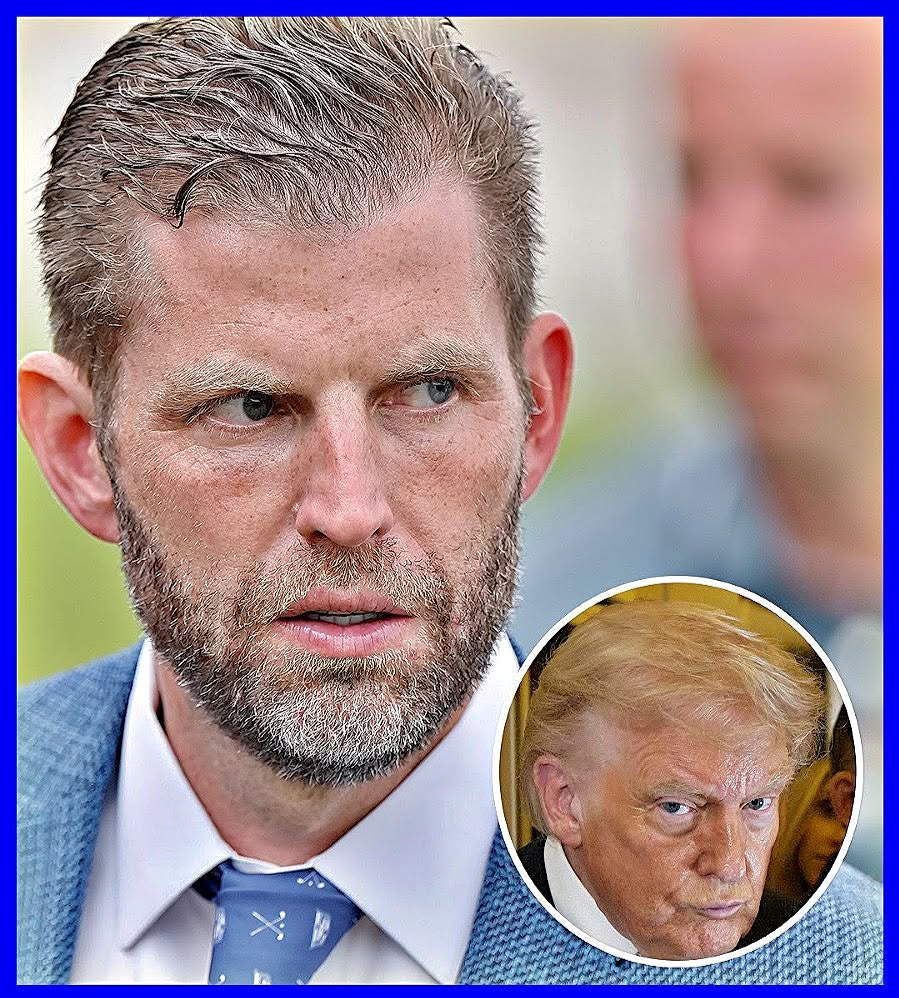
UFC White House Event Draws Attention After Disputed Eric Trump and Daniel Cormier Message Screenshots Circulate
Online Speculation Surrounds a High-Profile UFC Gathering
A wave of online speculation developed around a prominent Ultimate Fighting Championship event connected to the White House and the Freedom250 celebration, a broader commemoration of America’s 250th anniversary.
The gathering already had public attention because of its unusual setting, political visibility, and the presence of members of the Trump family alongside well-known guests. However, discussion quickly shifted away from the event itself after screenshots began spreading across social media.
The images appeared to show a private exchange between Eric Trump and retired UFC champion Daniel Cormier. The messages raised sensitive questions about fighter injuries, possible outcomes, and whether any bouts could be “rigged.”
Almost immediately, the screenshots triggered debate about whether they were genuine. The uncertainty only grew after both Eric Trump and Daniel Cormier responded in ways that left many observers still looking for a clear answer.
How the Controversy Began
Public interest surged when screenshots designed to look like private messages on X began circulating. The timing made the material especially explosive because it appeared just before a major UFC-related event at the White House.
The messages suggested that questions had been asked about injuries and potential fight outcomes. Because such details could matter greatly in sports betting and competitive integrity, the screenshots quickly drew intense scrutiny.
Some social media users treated the images as serious evidence of attempted insider behavior. Others were more cautious, noting that digital screenshots can be edited, staged, or created to look authentic even when no real conversation happened.
The combination of combat sports, political figures, and a national celebration created ideal conditions for the story to spread quickly. Each repost brought new reactions, new theories, and more uncertainty about what had actually occurred.
The White House UFC Event and Freedom250
The UFC appearance was tied to Freedom250, a series of observances marking America’s 250th year. The setting gave the event a level of national attention far beyond a standard fight night.
For many fans, the UFC’s presence at such a visible venue reflected the sport’s transformation from a once-controversial spectacle into a mainstream entertainment force. The event brought athletes, celebrities, and political figures together under a highly public spotlight.
That visibility also meant that any controversy connected to the event would travel fast. A rumor that might have stayed inside sports circles under normal circumstances instead became part of a much broader online conversation.
The actual competition was overshadowed for many viewers by the dispute over the screenshots. Questions about authenticity, betting integrity, and digital manipulation became central to the discussion surrounding the event.
What the Screenshots Appeared to Show
The disputed screenshots portrayed a late-night private conversation that stretched beyond midnight. The messages appeared to include questions about upcoming fights and whether certain fighters might be injured.
One of the most widely discussed parts of the exchange appeared to hint at interest in a particular matchup and the possibility of an unexpected result. That detail drew attention because even the appearance of inside knowledge can damage trust in a sport.
The replies attributed to Daniel Cormier appeared firm and dismissive of the idea that UFC fights could be scripted or manipulated. The tone shown in the screenshots suggested frustration that such a question would be raised at all.
For longtime followers of combat sports, the reaction attributed to Cormier seemed consistent with the values often associated with professional competition: fairness, discipline, and respect for fighters who risk their health in the cage.
Still, appearance alone did not prove authenticity. The screenshots looked convincing to some viewers, while others argued that modern tools can easily reproduce the style, layout, timing, and tone of private message threads.
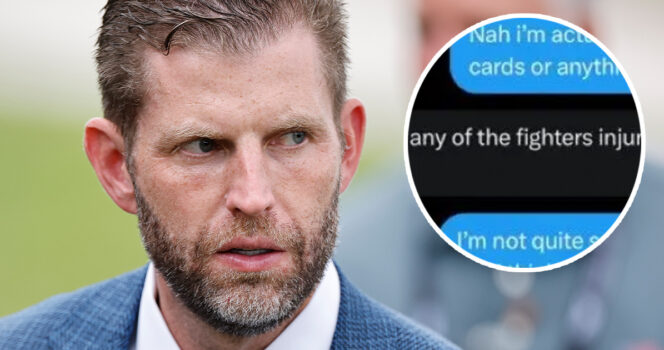
Eric Trump Denies the Messages Were Real
Eric Trump rejected the screenshots directly. He stated that the images were not authentic and said he had never contacted Daniel Cormier.
He described the screenshots as fabricated with artificial intelligence and framed the episode as part of a broader problem involving deceptive online content. From his position, the material was a false creation meant to mislead viewers.
Trump also emphasized the danger of convincing digital forgeries spreading widely before facts can be established. In a fast-moving online environment, a false image can reach a large audience before the people involved have a chance to respond.
He also pointed to the disappearance of certain posts after they first appeared as another reason to doubt the material. For those who believed the screenshots were fake, the vanishing posts added to concerns that the episode had been digitally engineered from the start.
Daniel Cormier’s Role Remains Unclear
Daniel Cormier’s involvement became harder to interpret as the discussion developed. After the screenshots gained traction, he posted a message that led some people to question whether the images had ever reflected a real exchange.
That response did not fully settle the matter. Instead, it opened several competing theories, including the possibility that an account may have been compromised, that the screenshots were staged, or that some other unexplained situation had taken place.
Some voices in mixed martial arts media said they had seen an initial Cormier post before it disappeared. That detail kept the controversy alive because it suggested there may have been more context than the public could see.
At the same time, others argued that the entire episode had the markings of a digital hoax built around recognizable names and a highly visible event. Without reliable verification, neither side could conclusively prove its interpretation.
No Confirmed Proof of Authenticity
At this point, no confirmed proof has established that the screenshots were real. The central people named in the controversy have not verified the messages as authentic.
Eric Trump has denied sending them, and Daniel Cormier’s public comments have not confirmed the exchange. The absence of a stable, independently verifiable record leaves the claims unresolved.
The fairest conclusion is that the images raised questions but did not provide firm answers. They attracted attention because they touched on serious issues, but attention and evidence are not the same thing.
Until credible verification emerges, caution remains the most responsible approach. The screenshots may have looked convincing, but modern online content can appear authentic while still being misleading or entirely manufactured.
Why Betting Integrity Made the Story So Sensitive
The controversy struck a nerve because it involved topics that are especially serious in sports: injuries, insider knowledge, betting, and the possibility of manipulated outcomes.
Any suggestion that private injury information could be used to influence wagers threatens public confidence. Fans, fighters, regulators, and betting operators all depend on the belief that competitions are fair and outcomes are not predetermined.
Combat sports can be especially vulnerable to intense reaction because every fight involves months of training and significant physical risk. Fighters place their careers and health on the line, so rumors about unfair influence can feel personal to athletes and fans alike.
The growth of legal sports betting has made these concerns even sharper. As wagering becomes more accessible, the importance of clear rules, oversight, and public trust becomes even greater.
Even a rumor about insider behavior can create damage before any investigation begins. That is why claims involving betting and fight integrity tend to generate swift and emotional responses.
Digital Fakery Adds Another Layer
The controversy also highlighted the growing challenge of fabricated digital media. Screenshots, images, audio, and video can now be produced or altered in ways that are increasingly difficult for everyday users to detect.
Eric Trump’s response focused heavily on that concern. He argued that the screenshots were created with advanced tools and used as misinformation.
Whether or not every viewer accepted that explanation, the broader warning resonated with many people. A message thread can look polished and realistic while still being completely false.
For readers, the safest approach is to wait for multiple reliable confirmations before accepting dramatic claims. Public denials from the people named in the material also matter, especially when the claim depends entirely on screenshots that have not been independently verified.
Why the Story Spread So Quickly
The story gained momentum because it sat at the intersection of sports, politics, and technology. Each of those subjects can generate strong reactions on its own.
Combined in one controversy, they created a powerful online cycle. UFC fans cared about the integrity of the fights. Political observers focused on the Trump family connection. Technology watchers saw another example of how easily digital material can create confusion.
The timing also mattered. Because the screenshots appeared around a high-profile White House event, they became part of a larger conversation already unfolding in public view.
As more people shared the images, the debate became less about the event itself and more about whether the public had witnessed a serious controversy or a carefully crafted hoax.
What Could Clarify the Situation
Several developments could help clarify what happened. A thorough digital review could determine whether the screenshots came from a legitimate account or were created elsewhere.
Platform-level information could also help reveal whether any unusual access, spoofing, or account activity occurred. Such details are often difficult for the public to obtain, which is one reason these disputes can remain unresolved.
Sports organizations and regulators can also examine integrity-related claims when necessary. If concerns arise around betting or fight fairness, officials may look for suspicious activity connected to specific matchups.
Those processes can take time, and public updates may be limited until firm conclusions are available. Without that kind of confirmation, speculation is likely to remain part of the story.
The Responsible View for Now
The central question remains simple: were the screenshots authentic, or were they fabricated? At present, there is no clear proof showing that the messages were real.
The individuals named in the screenshots have not confirmed their authenticity, and Eric Trump has strongly denied sending them. Daniel Cormier’s public response has not provided a final confirmation that the exchange occurred.
That makes caution the most reasonable position. The screenshots created a major reaction, but the available information does not establish them as verified evidence.
The episode serves as a reminder of how quickly dramatic claims can spread when they involve famous names, major events, and sensitive subjects. It also shows how difficult it can be to separate truth from manipulation in a fast-moving digital environment.
Final Thoughts
The UFC’s White House appearance connected to Freedom250 was expected to highlight athletes, competition, and the sport’s rise into the mainstream. Instead, much of the conversation turned toward a disputed set of screenshots and the unanswered questions surrounding them.
Eric Trump has said the images were fabricated and that he never contacted Daniel Cormier. Cormier’s comments have not confirmed the screenshots as real, and the disappearance of certain posts has only added to the uncertainty.
Until stronger evidence appears, the screenshots should be treated with skepticism. Technology can create convincing false material, and social media can spread it widely before the facts are clear.
For fans who care about the integrity of competition, the best response is patience. If there is a real issue behind the controversy, a proper review can bring it into the open.
If the screenshots were fabricated, the episode will stand as another warning about the power of digital misinformation. Either way, the controversy shows why careful judgment matters when sports, politics, betting, and technology collide in the public eye.