
Celebrity Voices Join “No Kings” Demonstrations Across the Country
Large Crowds Gather for a Day of Protest
Nationwide “No Kings” protests drew major attention on Saturday, March 28, as demonstrations took place in multiple cities across the United States. The events were described as a broad public show of opposition to Donald Trump, with organizers and participants using rallies, speeches, music, and public appearances to express political frustration and call for change.
Reports from the day stated that more than eight million people took part in the demonstrations. The turnout, combined with the number of well-known public figures in attendance, gave the protests a high national profile and added momentum to a movement that appeared in communities from coast to coast.
Several celebrities joined the gatherings, including Robert De Niro, Jane Fonda, Bruce Springsteen, and Jimmy Kimmel. Their appearances placed familiar cultural figures alongside thousands of demonstrators and reflected how widely the message of the protests had spread beyond traditional political circles.
The demonstrations were marked by speeches, musical performances, and public statements centered on civil liberties, economic concerns, and the direction of the country. Throughout the day, protesters voiced dissatisfaction with leadership, while speakers emphasized the importance of public action and civic engagement.
Robert De Niro Delivers a Sharp Message
Among the most talked-about appearances was Robert De Niro, who addressed the crowd with forceful criticism of Trump. De Niro, a longtime public opponent of the president, used his speech to frame the moment as one of deep political concern and national urgency.
Calling Trump a “corrupt leader” who “must be stopped now,” De Niro made clear that he viewed the protests as more than symbolic. His remarks portrayed the demonstrations as a direct response to what he described as a dangerous political climate.
“When the crowds are chanting ‘No Kings,’ what I’m really hearing, as we all know, is ‘No Trump,’” De Niro said.
He continued with an even stronger warning, saying, “There have been other presidents who have tested the constitutional limits of their power, but none have been such an existential threat to our freedoms and security — NONE — except Trump.”
De Niro also listed several issues that he said were fueling public anger. His comments touched on war, healthcare, rising living costs, housing, inflation, and the treatment of vulnerable communities, presenting the protests as an outlet for a wide range of frustrations rather than a single-issue campaign.
“It’s time to say no to Donald Trump. We’ve had enough,” he said. “No King Trump, no unnecessary wars that rob our resources, sacrifice our brave servicemen and women, and slaughter innocents. No corrupt leader enriching himself and the Epstein class buddies. No taking away healthcare from our most vulnerable neighbors, no unaffordable groceries, no unaffordable energy, no unaffordable housing and no inflation at its highest level since COVID. No government masked thugs shooting down our neighbors in the streets.”
His speech quickly became one of the defining moments of the day, with his remarks circulating widely as an example of the tone and intensity seen at the protests. The response also underscored how closely celebrity participation and political activism have become linked during major national events.
Jane Fonda Appears in Minnesota
Jane Fonda was another prominent figure at the demonstrations, taking part in a protest in Minnesota. Her appearance added a strong intergenerational presence to the movement, as she has long been associated with activism as well as public life in entertainment.
At the event, Fonda read a statement written by Becca, the wife of one of the victims referenced during the demonstrations. The words focused on grief, remembrance, and solidarity, giving the crowd a more personal and emotional moment within a day otherwise shaped by political rhetoric and public mobilization.
Part of the statement read, “I can’t stop talking about how absolutely beautiful it is to see how Minnesota shows up for its people.”
It continued, “I want to say thank you for how you’ve shown up for me…The reality is I am so heartbroken. I miss my wife. The world now knows that my wife sparkled with sunshine and shone with kindness that is unmatched. We were robbed of an incredible human…We choose the side of love.”
The message introduced a note of mourning and compassion into the gathering, reminding participants that many demonstrations are driven not only by abstract political disagreement but also by personal loss and community pain. That balance between policy criticism and human emotion became one of the central features of the day’s events.
Fonda had also protested the previous day outside the Kennedy Center. There, she warned that the administration was trying to “reshape American history and cultural life through fear and attacks on our First Amendment.”
She also said, “Today, books are being banned, plaques and monuments depicting historical events this administration wants to forget are being removed.”
Those remarks connected the Minnesota protest to a broader cultural argument about memory, expression, and public institutions. In doing so, Fonda helped frame the demonstrations as part of a national conversation not only about politics, but about education, art, and the preservation of history.
Bruce Springsteen Brings Music to the Message
Bruce Springsteen also played a notable role in the protests, combining performance with political commentary. He took the stage and performed “Streets of Minneapolis,” a protest song that directly referenced themes raised throughout the demonstrations.
The song included mention of “King Trump’s private army from the DHS” and referred to deaths highlighted during the rallies. Springsteen’s participation blended music with activism in a way that has long defined his public image, turning the stage into both a performance space and a platform for protest.
He told the crowd, “The power and the solidarity of the people of Minneapolis, of Minnesota, was an inspiration to the entire country.”
He added, “Your strength and your commitment told us that this is still America. This reactionary nightmare and these invasions of American cities will not stand.”
Springsteen continued by honoring individuals whose deaths were referenced during the demonstrations. He said, “You gave us hope. You gave us courage, and for those who gave their lives, Renee Good, mother of three, brutally murdered. Alex Pretti, VA nurse, executed by ICE, shot in the back, and left to die in the street without even the decency of our lawless government investigating their deaths.”
His appearance gave the protests one of their most visible artistic moments. It also illustrated how the demonstrations relied on more than speeches alone, using music and public performance to deepen the emotional impact of the day.
Also reported to be at the protest was Maggie Rogers, who joined a lineup that included major artists and performers. Joan Baez, one of the most recognizable voices in American folk music, also took the stage at the Minnesota State Capitol in St. Paul, performing alongside Rogers before a large crowd.
The presence of both established legends and newer artists suggested a movement that was pulling support from different generations and different corners of public life. Their appearances helped turn the protests into events that felt both political and cultural in scope.
Jimmy Kimmel and Other Public Figures Show Support
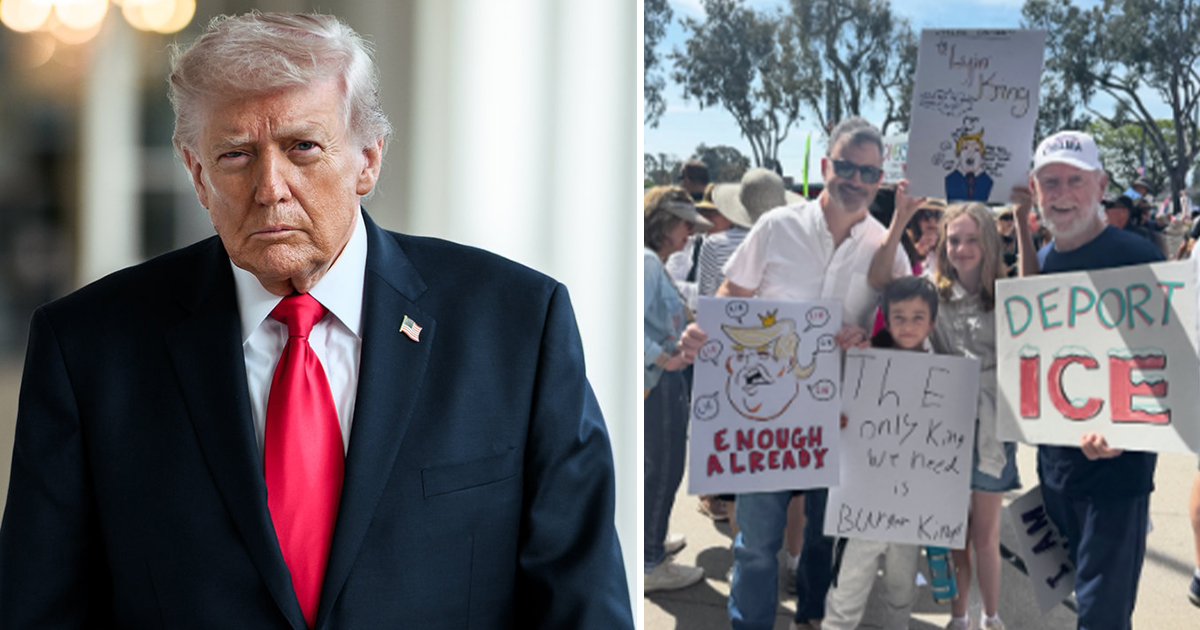
Jimmy Kimmel also joined the demonstrations and attended with his children. Afterward, he shared photos of protest signs on social media, including one that read “Enough already,” accompanied by a caricature of Trump.
He later wrote, “Great turnout at #NoKings.”
Kimmel’s participation highlighted how public figures from television and comedy also chose to align themselves with the day’s demonstrations. His presence added another layer to the event’s celebrity visibility and reinforced the impression that opposition to Trump was being expressed across a wide section of the entertainment world.
Other notable names were also seen at various rallies. Among them were actor Sam Waterston, singer Billy Porter, former CNN correspondent Jim Acosta, and author Ann Patchett. Their attendance showed that support for the demonstrations extended across film, television, journalism, literature, and music.
In Malibu, the “No Kings” rally drew another well-known crowd. Doug Emhoff attended and spoke at the event, while Kathy Griffin shared photos from the rally and held protest signs. The gathering also included actors Sam Elliott, Kristen Johnston, and Nancy Lee Grahn.
Elsewhere in Los Angeles, Annette Bening and Edward James Olmos joined demonstrators at separate events. Their appearances contributed to the sense that celebrity support was not limited to one city or one rally, but was instead spread across multiple regions and formats.
A Protest Movement With Broad Reach
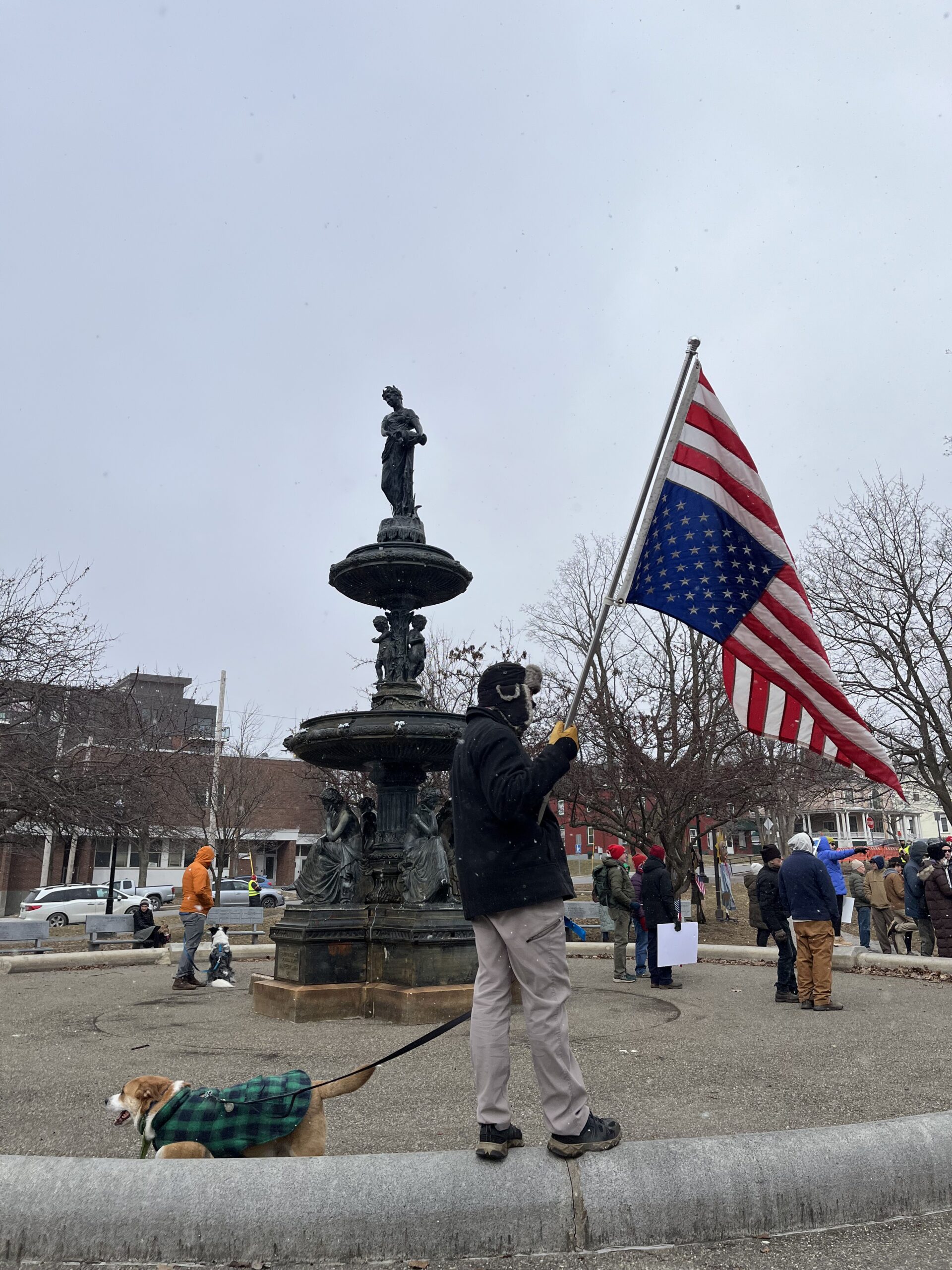
The demonstrations stood out not only for their message but also for their scale. From Minnesota to Malibu to Los Angeles and beyond, the protests reflected a coordinated wave of public opposition that unfolded in different settings while carrying a common theme.
The slogan “No Kings” served as the unifying language of the movement, giving protesters a short and memorable way to express concerns about power, leadership, and accountability. Speakers and participants used that phrase to connect a variety of issues, including the economy, civil rights, public memory, and national identity.
The large turnout and prominent participation suggested that the protests resonated far beyond a single audience. The movement appeared to bring together activists, artists, entertainers, and ordinary citizens in a shared public response to the political moment.
At the same time, the involvement of so many celebrities ensured that the events would receive wider attention. Familiar names brought cameras, headlines, and online discussion, but the speeches and performances also showed that many attendees were trying to use their visibility to amplify the concerns raised by demonstrators on the ground.
By the end of the day, the “No Kings” protests had become one of the most visible expressions of political opposition in recent months. The rallies, speeches, and performances created a picture of a movement energized by both public anger and public solidarity.
The breadth of celebrity participation also made clear that the demonstrations were not isolated gatherings. Instead, they became a national display of political resistance, with famous voices joining larger crowds to deliver a message that opposition is growing in intensity and visibility across the country.
As the protests concluded, the events left behind an image of a movement still building, driven by strong language, emotional testimony, and a nationwide call for change. Whether through speeches, songs, or simple presence in the crowd, the public figures who joined the demonstrations helped turn Saturday’s “No Kings” protests into a major moment of national attention.