
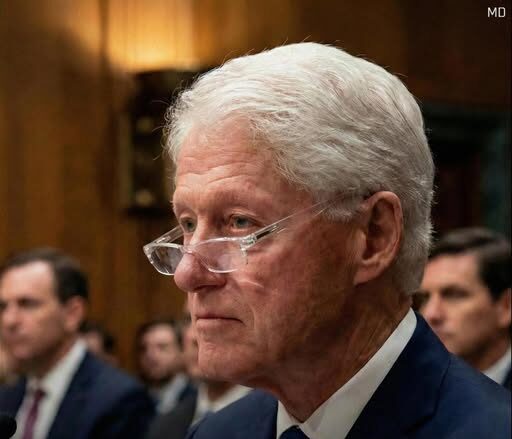
Hillary Clinton Testifies in Closed-Door Deposition Tied to Jeffrey Epstein Inquiry
Closed-Door Session Draws National Attention
Hillary Clinton appeared Thursday for a closed-door deposition connected to an ongoing congressional inquiry related to Jeffrey Epstein.
The session was held at the Chappaqua Performing Arts Center, where Clinton later made brief remarks to reporters gathered outside.
Although the deposition itself was conducted privately, the event quickly became a focal point of widespread public discussion.
As images from the day circulated across news outlets and social media platforms, attention extended beyond the legal matters under review.
Clinton Responds to Allegations and Reaffirms Position
During her public comments, Clinton characterized the inquiry as politically motivated.
She maintained that she had no knowledge of Jeffrey Epstein’s criminal activities.
In her sworn testimony, Clinton stated that she did not recall having direct interactions with Epstein.
She also denied visiting his private properties or traveling aboard his aircraft.
Her remarks reflected a consistent position that she was unaware of any wrongdoing connected to him.
Questions Raised About Ghislaine Maxwell
Lawmakers also questioned Clinton regarding Ghislaine Maxwell, Epstein’s longtime associate.
Maxwell has faced separate legal consequences in connection to the broader case.
Clinton acknowledged having met Maxwell at public events in the past.
One such occasion included her daughter’s 2010 wedding.
She explained that Maxwell attended that event as a guest of another invitee and was not present as a close family acquaintance.
Public Reaction Extends Beyond Legal Proceedings
As photographs from the deposition day appeared online, commentary quickly broadened beyond the substance of the inquiry.
Social media users began discussing Clinton’s updated hairstyle and overall appearance.
Some individuals offered compliments, describing her as confident and polished during her brief appearance before reporters.
Others speculated about possible cosmetic treatments, reflecting the intense scrutiny often directed at prominent public figures.
The conversation illustrated how political events frequently become intertwined with cultural commentary.
Debate Over Focus of Public Discourse
Supporters argued that public attention should remain centered on the facts presented during the deposition.
They emphasized the importance of evaluating testimony and legislative oversight rather than personal appearance.
Critics, however, continued to examine both the legal aspects of the case and Clinton’s public image.
The differing reactions underscored how high-profile proceedings often generate multiple layers of debate.
In the digital era, public figures routinely face analysis that extends well beyond policy discussions.
Composure Amid Heightened Attention
Despite the intense online conversation, Clinton remained composed during her remarks.
She called for a focus on verified facts and encouraged lawmakers to prioritize substantive oversight.
Her message emphasized the importance of addressing serious matters without allowing partisan conflict to dominate the process.
At 78, Clinton continues to maintain an active presence in American political life.
Her appearance at the deposition ensured significant media coverage and sustained public interest.
Ongoing Inquiry Continues to Draw Scrutiny
The broader congressional inquiry connected to Jeffrey Epstein remains a subject of national attention.
Clinton’s testimony represents one component of a larger effort to examine associations and accountability.
While the deposition itself was conducted behind closed doors, its implications continue to unfold publicly.
The response to Clinton’s appearance reflects the enduring impact of the Epstein case on political discourse.
It also demonstrates how figures with long public careers remain closely watched during moments of legal or political significance.
Balancing Legal Proceedings and Public Perception
The events of the day highlighted the intersection of legal inquiry and public perception.
Even routine procedural steps, such as sworn testimony, can generate expansive commentary in today’s media landscape.
As the investigation proceeds, discussions are likely to continue across both political and cultural spheres.
Whether public attention ultimately centers on the findings of the inquiry or on the broader reaction to Clinton’s appearance, the deposition has already reinforced the visibility of the proceedings.
For many observers, the day served as another reminder that major political figures remain subject to examination that extends well beyond the walls of a hearing room.