
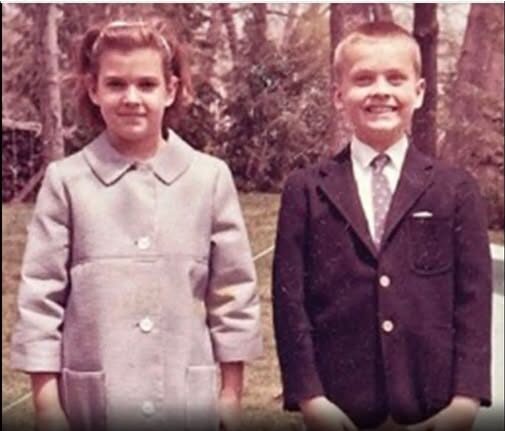
Kelsey Grammer Endured Profound Family Loss Before Becoming One of Television’s Most Celebrated Stars
The Frasier Actor Built an Extraordinary Career While Overcoming Grief, Addiction, and a Lifelong Fear of Abandonment
Kelsey Grammer became one of the most recognizable and respected performers in American television through his unforgettable portrayal of psychiatrist Dr. Frasier Crane.
His distinctive voice, sophisticated comedic style, and ability to combine humor with vulnerability helped make him a major television star. Across his career, he earned six Emmy Awards and entertained audiences for decades.
Behind that success, however, was a personal life marked by repeated and devastating family loss.
Before reaching the height of his fame, Grammer experienced the deaths of his grandfather, father, younger sister, and two half-brothers. Those events affected his emotional health, contributed to years of substance misuse, and left him struggling with guilt and fear.
Despite the pain, he continued pursuing his passion for acting. He eventually found sobriety, rebuilt his connection to faith, created a large family, and learned to speak openly about resilience and forgiveness.
A Childhood Divided Between the Virgin Islands and New Jersey
Kelsey Grammer was born in 1955 in Saint Thomas in the U.S. Virgin Islands.
His parents divorced while he was young. Following their separation, Grammer moved to New Jersey, where he was raised by his mother and maternal grandparents.
His father remained in the Virgin Islands, leaving Grammer’s grandfather, Gordon, to become the most important male figure in his childhood.
Gordon provided stability and guidance during a period of major change. Grammer formed a deep emotional connection with him and looked to him as a father figure.
That relationship made Gordon’s death especially difficult.
Losing His Grandfather at Twelve
When Grammer was 12 years old, his grandfather died of cancer.
As Gordon’s health declined, he became less patient with the young boy. Grammer was too young to understand fully how illness and physical suffering could change a person’s behavior.
Instead, he began wondering whether he had somehow caused the distance between them.
“And that begun the idea that there was something wrong with me,” he recalled in 1999.
The loss left Grammer grieving the person who had become his strongest source of male guidance.
It also contributed to a belief that the people he loved might eventually disappear from his life.
His Father Died One Year Later
Only a year after losing his grandfather, Grammer experienced another family tragedy.
At 13, he learned that his father had been killed outside his home in the Virgin Islands.
The man responsible was later found not guilty by reason of insanity.
The legal outcome left Grammer feeling powerless. His father was gone, but the court’s decision did not give him the closure or sense of justice he needed.
Within a short period, he had lost the two most important male figures in his early life.
Those experiences followed him into adolescence and shaped the way he viewed love, security, and loss.
Theater Became a Source of Purpose
As Grammer grew older, he found direction through acting.
Theater gave him a place to explore emotion, language, and human behavior. It also provided discipline and structure after years marked by instability.
He pursued formal training and studied theater at Juilliard in New York.
By the age of 20, Grammer was focused on building a career on the stage.
Then another devastating event changed his family forever.
The Loss of His Younger Sister
Grammer’s younger sister, Karen, was abducted and killed in Colorado Springs when she was 18 years old.
Grammer was studying at Juilliard when he learned what had happened.
The loss affected him deeply. Although he could not have predicted or prevented the crime, he blamed himself for failing to protect her.
He later explained how survivors can carry guilt even when they were not responsible.
“It’s hard to explain. It’s not rational. But it happens anyway. I know a lot of people who’ve lost their siblings and blame themselves.”
Grammer had been Karen’s older brother, and he believed that role should somehow have allowed him to keep her safe.
The belief was unfair to himself, but it remained emotionally powerful for many years.
Opposing the Release of the Man Responsible
Freddie Glenn was convicted in connection with Karen’s death and two other killings.
He initially received a death sentence, but that sentence was later overturned.
As the years passed, Glenn became eligible for parole consideration. Each hearing required Grammer to revisit one of the most painful chapters of his life.
In 2009, the actor wrote to the parole board and asked that Glenn remain incarcerated.
“I miss her in my bones. I was her big brother. I was supposed to protect her — I could not… It very nearly destroyed me.”
His words revealed that professional success had not diminished the emotional impact of Karen’s absence.
Decades later, the loss remained a central part of his life.
Offering Forgiveness Without Supporting Parole
In 2014, Grammer addressed Glenn through a video link during another parole hearing.
He acknowledged Glenn’s apology and said that he forgave him. However, he also made it clear that forgiveness did not mean supporting his release.
“I accept that you actually live with remorse every day of your life, but I live with tragedy every day of mine… I accept your apology. I forgive you. However, I cannot give your release my endorsement. To give that a blessing would be a betrayal of my sister’s life.”
Grammer’s decision showed that forgiveness and accountability could exist at the same time.
He was willing to release some of the anger he had carried, but he did not believe that doing so required him to overlook the consequences of Karen’s death.
Two More Family Losses Followed
The deaths of Grammer’s father and sister were not the only tragedies he endured.
In 1980, his half-brothers Billy and Stephen died during a scuba-diving accident.
When Billy failed to return to the surface, Stephen went back into the water to search for him.
Stephen died from an air embolism during the rescue attempt. Billy’s body was never recovered.
The accident added another painful chapter to a life already shaped by sudden loss.
Within a relatively short period, Grammer had lost several of the people closest to him.
Grief Followed Him Into Adulthood
Grammer continued building his acting career, but professional success did not remove the emotional weight of his past.
He later connected his struggles with alcohol and substance misuse during the 1990s to grief that he had never fully processed.
He admitted that he “just kept drinking” in an effort to “numb the pain.”
The temporary escape could not resolve the guilt he carried over Karen’s death or the helplessness created by the other losses in his family.
He Struggled to Forgive Himself
Karen’s death remained especially difficult for Grammer to accept.
Although he was not responsible for what happened, he continued to believe that he had failed her as an older brother.
“That was the time when I could not forgive myself for my sister’s death.”
For years, the most difficult forgiveness was not directed toward the man responsible.
It was the forgiveness Grammer needed to offer himself.
His Faith Was Tested
The repeated tragedies also affected Grammer’s spiritual life.
During some of his darkest years, he turned away from God and struggled to understand why so much pain had entered his life.
Over time, his perspective changed.
”I would advise people to step away from that. If I could, I would say, rather than turn away from God, turn toward Him in these situations,” the actor told Fox News Digital. ”Because it isn’t like God’s out to get you. But it feels like that sometimes. And that was very hard.”
His words reflected a gradual effort to carry grief in a healthier way rather than allowing it to control him.
Finding Sobriety in 1996
Grammer eventually reached an important turning point.
He has remained sober since 1996, ending the cycle of substance misuse that had followed him through some of his most difficult years.
Sobriety did not erase the past, but it allowed him to face life without continually trying to escape his emotions.
He gradually developed a more resilient view of suffering.
“Every one of us is going to experience some terrible loss. I just got a big dose. For every story you hear that’s tragic, there’s another that’s equally tragic or more so. I think you come to look at it as part of life.”
Grammer learned that continuing forward did not require forgetting the people he had lost.
A Lifelong Fear of Abandonment
Some emotional wounds remained difficult to overcome.
After losing so many loved ones, Grammer developed a powerful fear that anyone he cared about might eventually leave him.
”I have a great fear of abandonment. Everyone I have ever loved has left me,” he once said.
His statement reflected the pattern of loss that had shaped his childhood and early adulthood.
Love brought comfort, but it also carried the possibility of another painful separation.
The Beginning of His Acting Career
Despite the turmoil in his private life, Grammer steadily developed an extraordinary career.
He began working in theater during the late 1970s and made his Broadway debut in 1981 as Lennox in Shakespeare’s Macbeth.
His classical training prepared him for demanding roles and helped establish the commanding voice and precise delivery that later became central to his television work.
His major breakthrough arrived in 1984 when he joined Cheers as psychiatrist Dr. Frasier Crane.
The Role That Changed Everything
Frasier Crane was intelligent, sophisticated, insecure, witty, and often hilariously self-important.
Grammer’s distinctive voice and ability to combine elegance with emotional vulnerability made the character memorable.
What began as a role within the larger Cheers ensemble gradually became one of television’s most recognizable performances.
The character proved popular enough to continue in the spin-off Frasier.
As the title character, Grammer solidified his position as one of American television’s leading comedy actors.
A Six-Time Emmy Winner
Frasier became one of the most acclaimed comedy series on television.
Grammer earned four Emmy Awards for playing Dr. Frasier Crane and became a six-time Emmy winner across his career.
The character brought laughter to millions of viewers while giving Grammer a level of professional stability that contrasted sharply with the uncertainty of his personal life.
Audiences recognized Frasier’s wit, charm, frustration, and confidence.
Few understood the depth of the grief the actor continued carrying behind the performance.
Continuing His Career Into His Seventies
At 70, Grammer remained active and respected within the entertainment industry.
His career had expanded across theater, television, and film, allowing him to work in both comedy and drama.
Acting remained more than a profession. It continued to provide purpose, creativity, and a connection with audiences.
After losing so many loved ones unexpectedly, Grammer learned not to treat time as something guaranteed.
Finding Love With Kayte Walsh
Grammer’s personal life included several marriages before he found a renewed sense of stability with English flight attendant Kayte Walsh.
Walsh is the daughter of former footballer Alan Walsh.
The couple met on a flight to London, and their relationship developed quickly.
They married at The Plaza Hotel in New York City on February 25, 2011.
Walsh was 25 years younger than Grammer, but he described their relationship as deeply meaningful.
”This lovely woman lit up my world and changed my heart, which was a bit calloused and hardened against a lot of things. And we are good, and I feel young and alive.”
Becoming a Father of Eight
Grammer and Walsh welcomed their fourth child together in 2025, bringing his total number of children to eight.
He has four children from previous marriages and relationships and four with Walsh.
Fatherhood gave Grammer joy, but it also led him to reflect honestly on earlier mistakes.
”I have neglected a couple of the kids in my life, especially the first two,” Grammer once told People. ”I’m trying to make up for a little of it now. I’m still their dad, so you can always have [a] chance to show up.”
His admission showed that he did not believe past failures made improvement impossible.
Teaching His Children Not to Live With Anger
Grammer’s children have also expressed anger over the loss of their aunt Karen.
He understands those emotions because he spent years struggling with grief and resentment himself.
“They say stuff all the time, like, ‘I want to kill [Freddie],’” he explains.
“I tell them, ‘I understand it and respect you for it, but you’re going to want more from life than that.’”
He acknowledges their anger while encouraging them not to allow it to define their futures.
His Children Followed Creative Paths
Several of Grammer’s children entered areas connected to entertainment.
His daughters Spencer and Greer became actresses.
Two of his other children, Mason and Jude, pursued film production in college.
Their choices created a new generation of creative ambition within the family.
Grammer also became a grandfather in 2011 when Spencer welcomed her son, Emmett Emmanuel Hesketh, with her then-husband James Hesketh.
Family Became One of His Greatest Priorities
After enduring so many early losses, Grammer came to place enormous value on family.
He understood how quickly loved ones could disappear and how painful it could be to live with unfinished conversations or missed opportunities.
He has openly acknowledged that he was not always a perfect father or husband.
What mattered to him was the opportunity to continue showing up and repairing the relationships still present in his life.
Forgiveness Without Forgetting
One of the strongest themes in Grammer’s story is the relationship between forgiveness and accountability.
He told Karen’s killer that he accepted the apology and offered forgiveness.
At the same time, he refused to support his release.
For Grammer, forgiveness did not mean pretending that the loss had not devastated his family.
It became a way of preventing hatred from consuming the rest of his life.
Living With Grief Rather Than Erasing It
Grammer has never suggested that grief simply disappears.
His words about Karen show that the loss remained deeply personal even decades later.
His resilience came from learning to continue while remembering.
He built a career, maintained sobriety, raised children, found love, and welcomed grandchildren without denying the pain behind him.
The tragedies remained part of his story, but they no longer controlled every part of his future.
A Life Shaped by Loss but Not Defeated by It
Kelsey Grammer experienced more tragedy in his early life than many people face across several generations.
He lost his grandfather at 12, his father at 13, his sister at 20, and two half-brothers in 1980.
Those events contributed to addiction, spiritual doubt, guilt, and a profound fear of abandonment.
Yet they did not prevent him from building one of television’s most distinguished careers.
He became a six-time Emmy winner, created an unforgettable character, found sobriety, rebuilt his faith, and continued expanding his family.
A Lasting Message of Resilience
Grammer’s journey does not suggest that every emotional wound eventually disappears.
Instead, it shows that people can continue creating meaningful lives while carrying grief that may never fully leave them.
He learned that forgiveness could exist alongside accountability and that it was possible to return to faith after years of doubt.
He also recognized his failures as a father while believing he still had time to become more present.
Kelsey Grammer’s life reminds audiences that public success can hide private struggles.
His career brought laughter to millions, but his personal journey required him to survive repeated losses that nearly overwhelmed him.
Through family, sobriety, faith, and work, he found reasons to continue moving forward.
His story stands as a reminder that resilience is not the absence of pain. It is the decision to keep living with purpose after pain has changed everything.