
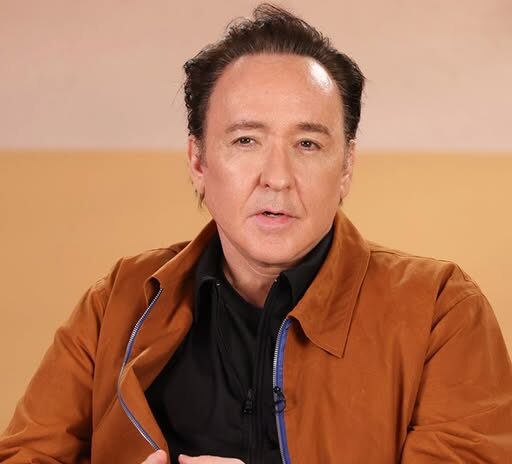
John Cusack Explains Why Hollywood Frustrations Led Him Toward a New Creative Path
The Actor Found Greater Freedom by Taking His Storytelling Beyond Traditional Filmmaking
John Cusack spent decades building a successful career as one of Hollywood’s most recognizable leading men, but years of disappointing experiences behind the scenes gradually changed the way he viewed the film industry.
After repeatedly watching projects struggle to secure financing or emerge from editing in a form he no longer recognized, Cusack became increasingly interested in telling stories without the restrictions of a major studio production.
That search for greater independence eventually led him away from conventional filmmaking and toward a different creative format. His first graphic novel, Momo, gave him an opportunity to shape a story without negotiating every decision with investors, executives, or committees.
A Long Career in Hollywood
Cusack, now 60, was once among the entertainment industry’s most prominent male stars. His film career included roles in Stand By Me, Serendipity and High Fidelity.
High Fidelity, released in 2000, became one of his best-known performances and earned him a Golden Globe nomination. The film strengthened his reputation as an actor capable of balancing comedy, romance, frustration, and emotional vulnerability.
His other recognizable projects included Must Love Dogs, Say Anything… and Hot Tub Time Machine. For many years, his name was closely associated with major studio productions and memorable leading roles.
Over time, however, the opportunities available to him began to change. Large roles became less frequent, while projects he hoped to develop often failed to move forward.
Cusack also became known for publicly expressing his political views, including his criticism of Donald Trump. As his presence in major Hollywood releases decreased, he increasingly focused on work that allowed him to communicate more directly.
Projects Became More Difficult to Finance
During a 2020 interview, Cusack spoke openly about the difficulties he had experienced while attempting to launch new film projects.
“I haven’t really been hot for a long time,” he confessed. “In the last few years, I haven’t been able to get projects financed. That could be a function of getting older. Or it could be a function of being cold.”
His comments reflected the uncertainty that can develop when an actor’s position in the industry changes. Even someone with a long list of successful credits may find that financing becomes harder to obtain when studios shift their attention toward other performers, trends, or types of projects.
For Cusack, the challenge was not simply finding an acting role. He also wanted to help create and develop stories, a process that usually requires substantial financial support when a feature film is involved.
A movie can depend on millions of dollars, large production teams, distributors, editors, executives, and numerous other decision-makers. Each participant may influence the final result, even when the project began with a clear creative plan.
Frustration With the Editing Process
Securing financing did not guarantee that Cusack would be satisfied with the finished film. He explained that projects could change dramatically after production ended and the material entered the editing room.
“You may go make a film…You do all this work. And the movie sort of gets butchered in the editing room,” Cusack, who produced and starred in 2010’s Hot Tub Time Machine, told the outlet. “And that happens, like…nine times out of 10? So, it’s not a very satisfying thing, if only one in 10 movies that you’re making work out the way they were planned.”
His experience highlighted the gap that can exist between the version of a movie imagined during development and the version ultimately presented to audiences.
Actors, writers, producers, and directors may devote months or years to a project. Once filming is finished, however, the structure, tone, pacing, and meaning of the story can be altered through editing and other studio decisions.
For Cusack, repeatedly seeing that happen made filmmaking increasingly unsatisfying. He eventually described the business as “brutal, transactional, superficial and dumb.”
The description revealed how deeply disappointed he had become with a system in which financial concerns and commercial calculations could outweigh the intentions of the people who originally created the work.
Why Momo Offered a Different Opportunity
Cusack’s frustration with filmmaking helps explain why his latest creative project is so different from the movies that established his career.
During a conversation at San Diego Comic-Con on July 24, he discussed the creation of Momo, his first graphic novel.
The format appealed to him because graphic novels can communicate stories through carefully selected images, perspectives, and visual sequences. In that sense, he saw a strong connection between illustrated storytelling and cinema.
“I always thought they were the closest things to film, really,” he said when asked what intrigued him about translating his ideas into a graphic novel. “You’re picking out shots, they’re so cinematic.”
A graphic novel allowed Cusack to think visually while avoiding many of the financial and organizational pressures attached to making a feature film.
Instead of coordinating actors, locations, equipment, large crews, and a multimillion-dollar budget, he could build the story through writing and illustrations.
A Genre-Bending Story With Cosmic Stakes
Momo was illustrated by Ignacio Noé and published by Mad Cave Studios. The project combines different genres and presents an unusual journey involving crime, science fiction, and political satire.
The graphic novel is described as “a wild, genre-bending road trip with cosmic stakes,” centered on “two criminals on the lam” who join forces to “recover an ancient artifact for Jackie Gleason.”
The unusual premise gave Cusack room to create a story that did not need to fit neatly into one traditional category.
By blending several styles, he was able to explore ideas that might have become more difficult to preserve within a conventional studio production.
The project also represented a significant personal shift. Rather than waiting for a film company to approve a budget, attach producers, and guide the project through development, Cusack could move ahead with a much smaller creative team.
Creative Control Without Negotiation
For Cusack, the greatest advantage of making Momo was the freedom to tell the story without repeatedly defending or changing his ideas.
“I thought, I want to tell a story, but I didn’t want to negotiate telling a story, really,” he said of the book that blends science fiction with political satire. “And when you ask somebody to put $20 or $30 million into a bank account [for a film], they want to have an opinion and they’re afraid and all that stuff.”
His remarks pointed to a central reality of filmmaking: anyone providing a large amount of money is likely to expect influence over how that money is used.
Investors and studios may become concerned about whether a story will attract a wide audience, recover its budget, or create additional commercial opportunities.
Those concerns can lead to requests for changes in dialogue, characters, themes, pacing, endings, or casting. For a creator seeking to protect a specific vision, the process can become a continuing series of compromises.
Momo allowed Cusack to avoid that situation. The project did not depend on a studio placing tens of millions of dollars into production, so the story could remain much closer to the one he originally wanted to create.
A Collaboration Between Two Creators
Cusack emphasized that the graphic novel was shaped primarily by himself and Noé, rather than by a large group of executives and outside decision-makers.
“This was just like, I wrote it, and I said, ‘I like the story,’ and then I got this beautiful, wonderful artist, Ignacio Noé, to do the illustrations and so nobody edited anything I wrote or that he drew. And so, it’s really a piece of work that was just done by two people [who] did a great job putting it out,” the star of Say Anything… said, adding that creating the book outside the traditional studio system is something that “doesn’t happen today.”
The arrangement gave both creators direct responsibility for the finished work. Cusack controlled the writing, while Noé created the illustrations that brought the story’s characters and settings to life.
Because the project remained in their hands, neither creator had to watch major portions of the work being altered by people who had not participated in its original development.
Cusack summarized the difference in direct terms.
“There’s no bull, and there’s no committee,” he said. “There’s no computer up in Seattle that’s poll testing it.”
His statement reflected his preference for a creative process guided by individual judgment rather than corporate analysis, audience testing, or decisions made by distant technology-based systems.
Writing Was Not Entirely New for Cusack
Although Momo is Cusack’s first graphic novel, it is not his first published work as a writer.
He previously co-wrote the 2016 essay collection Things That Can and Cannot Be Said. That project demonstrated his interest in expressing ideas through a format that did not depend on acting or film production.
The graphic novel expands that interest by combining written storytelling with cinematic illustrations. It gives him a way to use skills developed during his film career while working within a more independent structure.
Cusack has not completely rejected the possibility that Momo could eventually become a movie. He joked that he would be willing to take a role himself if the graphic novel were adapted for the screen.
Such an adaptation would bring the project back toward the industry that frustrated him, but it would begin with a completed story created on his own terms.
Joan Cusack Also Reconsidered Hollywood Life
John Cusack is not the only person in his family who has stepped back from some of Hollywood’s most visible traditions.
His older sister, Joan Cusack, made her first red carpet appearance since 2015 when she attended the London premiere of Toy Story 5 earlier in 2026.
The appearance ended an 11-year absence from major red carpet events. Joan explained that she had made family life in Chicago a priority.
“I’ve got to say, I did at a certain point say wait a second, I really want to make a priority of being in Chicago where I live and raising my kids,” the 63-year-old actor told E! News at the Pixar film premiere. “This is what I’ve been doing for 10 years.”
Her decision was not presented as a complete departure from acting. Instead, she chose to focus less on the public events that often surround major movie releases.
Joan has continued working, including her role as the voice of Jessie in the Toy Story franchise and her recurring appearance in Shameless from 2011 to 2015.
Why Joan Cusack Was Rarely Seen on Red Carpets
Joan also offered a straightforward explanation for why the public had not seen her at many high-profile premieres.
“Being on the carpet is just kind of one part of Hollywood. They don’t always have carpets for TV shows and all kinds of other things, so I just haven’t been in a movie this big in a long time,” said Joan, who had a recurring role from 2011 to 2015 in the TV series Shameless.
Her comments separated acting from the celebrity culture that often surrounds it. A performer can continue working without regularly appearing at large premieres, award ceremonies, or promotional events.
Both siblings appear to have reconsidered how much of the traditional Hollywood system they wanted to make part of their lives.
Joan focused on raising her children and remaining in Chicago, while John explored a creative format that offered him more control over the stories he wanted to tell.
A New Chapter Built Around Independence
John Cusack’s move into graphic novels does not erase his long history in film. Instead, it represents an effort to use that experience in a way that gives him greater ownership of the finished work.
After years of seeing films struggle for financing or change during editing, he found a format in which the central creative decisions remained with the writer and illustrator.
Momo allowed him to combine cinematic thinking with the freedom of independent publishing. He could select the moments, shape the tone, develop the political satire, and preserve the story without depending on a large studio budget.
For an actor who once described moviemaking as an increasingly frustrating and transactional process, that freedom appears to have become more valuable than the scale of a major Hollywood production.
His career may have moved away from the traditional leading-man roles that once made him a regular presence on movie screens, but his desire to tell stories has not disappeared.
Instead, Cusack has chosen a path that allows him to create with fewer compromises, fewer intermediaries, and a much smaller group of people shaping the final result.