
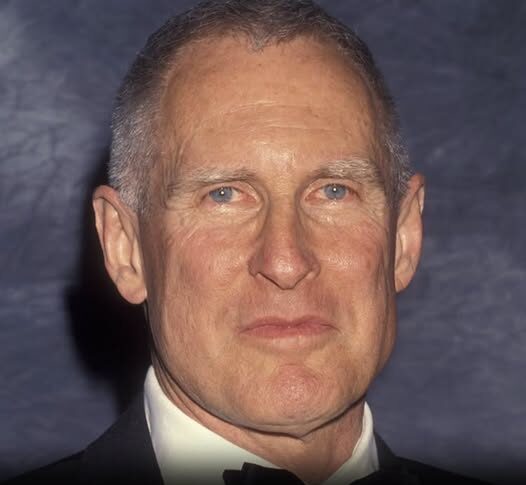
Jon Cypher Remembered at 94 as Hill Street Blues Star Who Chose a Quiet Conservation Burial
From Cinderella to Hill Street Blues, the Veteran Actor Built a Long Career Before Choosing a Simple Final Resting Place in Nature
Jon Cypher spent decades performing under bright lights, moving between television sets, theater stages and some of the most recognizable productions of his era.
But when the time came to decide how he wanted to be remembered after death, the veteran actor reportedly chose something far removed from Hollywood spectacle.
No elaborate monument.
No grand mausoleum.
No highly polished memorial designed to preserve the image of a performer who had spent most of his life in public.
Instead, Cypher chose a conservation burial in Oregon, returning to the earth beneath tall trees in a biodegradable shroud.
For an actor whose career was built on discipline, presence and longevity rather than constant celebrity attention, the simplicity of that decision felt unusually fitting.
Cypher Died at the Age of 94
Jon Cypher died at 94 after a career that stretched across several generations of American entertainment.
To many television viewers, he remained best known for his role as Chief Fletcher Daniels on Hill Street Blues.
To theater audiences, his history reached much further back.
And for people familiar with the earliest years of live television musicals, Cypher was also remembered for appearing opposite Julie Andrews in the 1957 production of Cinderella.
His career did not follow a single path.
It moved between classical performance, television drama, comedy and stage work.
His Breakthrough Came Opposite Julie Andrews
One of the defining early moments of Cypher’s career came when he was cast as Prince Charming opposite Julie Andrews in the 1957 live television production of Cinderella.
The role introduced him to a large audience at a time when live television events carried enormous cultural importance.
Performing in a live production demanded precision.
There were no second takes once the broadcast began.
Actors had to rely on preparation, timing and confidence while millions of viewers watched from home.
Cypher’s appearance in Cinderella became an important part of his professional story and established him as a performer capable of handling high-profile work early in his career.
He Built a Career That Extended Far Beyond One Role
Although Cinderella gave him early visibility, Cypher did not become defined by a single performance.
He continued working steadily over the decades.
His career included television, theater and other dramatic work that allowed him to move between very different types of characters.
Some roles were warm.
Others were stern.
Some required charm.
Others depended on authority.
That versatility became one of the qualities that allowed him to remain active for so long.
Hill Street Blues Introduced Him to Another Generation
Years after Cinderella, Cypher became especially familiar to television audiences through Hill Street Blues.
He portrayed Chief Fletcher Daniels, a character whose presence fit naturally into the complicated world of the acclaimed police drama.
Daniels could be demanding and difficult.
He represented institutional authority inside a series built around competing personalities, moral tension and the everyday pressures of police work.
Cypher brought enough strength to the role that the character remained memorable even in a series filled with distinctive performances.
He Was Known for Presence Rather Than Excess
Cypher’s performances often relied less on exaggerated gestures and more on control.
He could communicate authority simply by entering a scene.
That kind of acting does not always attract the loudest attention, but it can make a supporting character essential.
A glance, pause or change in tone could be enough to establish tension.
For a character such as Chief Fletcher Daniels, that restraint was especially effective.
He did not need to dominate every moment to make his presence felt.
Colleagues Remembered a Different Side Away From the Camera
People who knew Cypher personally remembered qualities that were not always visible in the tougher characters he played.
He was known for wit.
He could suddenly break into song.
He carried a warmth that contrasted sharply with some of the intimidating roles audiences associated with him.
Those memories help explain why tributes after his death focused on more than his acting credits.
They remembered the person between scenes as much as the performer in them.
Music Remained Important to Him
Cypher maintained a strong appreciation for music throughout his life.
Opera was among the interests associated with him.
That connection made sense for an actor who had begun his career in productions where voice, stagecraft and theatrical tradition remained central.
His occasional habit of breaking into song also became part of the way friends and colleagues described him.
It suggested a performer who did not leave theatricality entirely behind when the formal performance ended.
His Career Reflected Persistence
A long acting career rarely moves in a straight line.
There are successful productions and disappointments.
There are stretches of steady work and periods when opportunities become harder to find.
Cypher understood that reality.
He was known for speaking about the profession with humor, including the financial uncertainty that can accompany a life in acting.
That self-awareness became part of his personality.
He could acknowledge the instability of the profession while continuing to pursue it.
He Never Needed Celebrity to Define the Work
Some performers become cultural icons whose private lives receive almost as much attention as their professional accomplishments.
Cypher’s career followed a quieter path.
He worked.
He performed.
He moved between projects.
He built a body of work strong enough to be remembered without requiring constant public visibility.
That type of career can sometimes be overlooked precisely because it lacks scandal or spectacle.
But within the entertainment industry, durability is an achievement of its own.
His Final Request Reflected the Same Understated Approach
Cypher’s burial wishes appeared consistent with the way many people described his personality.
He did not choose an ornate memorial.
Instead, he reportedly requested a conservation burial in Oregon.
Such a burial emphasizes natural surroundings and minimal disturbance to the environment.
In Cypher’s case, that meant being laid to rest in a meadow beneath trees, wrapped in a biodegradable shroud.
The simplicity stood in contrast to the theatrical world in which he had spent much of his life.
A Conservation Burial Avoids the Traditional Monument
The image is striking because it is so different from the traditional Hollywood memorial.
There is no marble structure dominating the landscape.
No dramatic monument demanding attention.
The natural setting itself becomes the memorial.
For Cypher, the choice appears to have reflected a desire to return quietly to the environment rather than create another permanent object around his name.
It was a final decision based on restraint.
The Setting in Oregon Added to the Meaning
Oregon’s forests and open natural landscapes provide an especially fitting environment for the kind of burial Cypher chose.
The description of trees, meadow and biodegradable materials creates an image of gradual return rather than separation.
Instead of being sealed away from the natural world, the burial allows nature to remain central.
For someone who had spent much of his professional life surrounded by artificial sets, stage lighting and carefully constructed environments, the contrast is powerful.
There Was Something Theatrical About the Simplicity
Ironically, Cypher’s refusal of spectacle created its own memorable final image.
A veteran performer ends his life not beneath a spotlight but beneath trees.
No curtain call.
No grand stage.
Only the quiet landscape.
For those who admired him, the choice can feel almost like a final scene written with remarkable restraint.
His Career Connected Different Eras of Entertainment
Cypher’s professional life bridged periods of entertainment history that now feel dramatically different.
He performed during the era of major live television productions.
He worked through decades when network television became the dominant form of home entertainment.
He appeared in a celebrated ensemble drama during one of television’s most influential creative periods.
Few actors remain professionally relevant across so many changes in the industry.
Cinderella Remained an Important Piece of Television History
His role opposite Julie Andrews took place at a moment when television musicals were major national events.
Audiences experienced them simultaneously.
There was a sense of occasion that is difficult to recreate in the modern streaming era.
For Cypher, being part of that production placed him inside a memorable chapter of television history.
Even decades later, the role remained one of the earliest credits mentioned when people looked back on his career.
Then Came the Authority of Chief Fletcher Daniels
The contrast between Prince Charming and Chief Fletcher Daniels demonstrates the range Cypher developed over the years.
One character emerged from a fairy tale.
The other belonged to a complicated urban police drama.
One relied on romantic theatrical tradition.
The other required bureaucratic authority and dramatic tension.
Cypher was convincing enough in both worlds that neither performance seemed incompatible with the other.
Hill Street Blues Became Part of His Lasting Television Legacy
Hill Street Blues gained recognition for presenting police work through a large ensemble of flawed characters rather than simple heroes and villains.
Within that environment, authority figures could be complicated.
Chief Fletcher Daniels fit naturally into that world.
Cypher’s performance contributed to the tension between political pressure, institutional leadership and the officers operating beneath him.
It was a role that benefited from his ability to appear commanding without becoming one-dimensional.
He Knew How to Make Supporting Roles Matter
Not every lasting acting career depends on being the central star.
Great supporting performers can shape a production by giving the leading characters someone convincing to respond to.
Cypher understood how to fill that space.
His characters could alter the atmosphere of a scene even when the story did not revolve around them.
That skill helped him maintain a career across different formats and genres.
His Humor Helped Balance the Difficulties of Acting
Cypher also appeared to understand the absurdity that often accompanies professional acting.
The industry can be glamorous from the outside while remaining uncertain for the people trying to build careers within it.
His humor about perseverance and financial struggle reflected that contradiction.
Rather than pretending the profession was effortless, he could laugh at its instability.
That attitude likely helped sustain him through a career spanning many decades.
Friends Remembered the Man Behind the Serious Roles
For audiences, an actor can become permanently associated with the personalities he portrays.
Friends experience something entirely different.
They remembered Cypher’s humor and warmth.
They remembered music.
They remembered moments that never appeared on television.
Those memories give the tributes after his death a more personal quality.
The stern television chief was only one version of a much more varied man.
His Death Closes a Career That Began in Another Age
At 94, Cypher had lived long enough to see entertainment transform repeatedly.
The television industry he entered as a young performer bore little resemblance to the one that existed near the end of his life.
Yet performances survive technological change.
Old productions remain available.
Characters are rediscovered.
New viewers encounter actors who completed their work decades earlier.
That gives a performer’s career a strange kind of continuation.
His Burial Choice Created a Different Kind of Legacy
There is also something meaningful in the fact that Cypher’s final wishes drew attention not to fame but to simplicity.
People who spent their lives in entertainment are often memorialized through the same language used during their careers.
A star.
An icon.
A legend.
Cypher’s burial decision pointed away from all of that.
It suggested that when the performance ended, he wanted something ordinary and elemental.
Earth.
Trees.
Open sky.
No Monument Was Needed to Preserve the Work
A monument can preserve a name, but Cypher had already left behind something more durable.
His performances remained.
The productions remained.
The memories of colleagues remained.
People who watched Cinderella or Hill Street Blues could continue encountering him long after his death.
Perhaps that made an elaborate physical memorial unnecessary.
The work had already created one.
A Quiet Ending for a Life Spent Performing
Jon Cypher’s death at 94 marked the end of a career that moved from fairy-tale television to one of America’s most memorable police dramas and through countless stages in between.
He was Prince Charming.
He was Chief Fletcher Daniels.
He was a working actor who understood both the joy and uncertainty of the profession.
To colleagues, he was also a man with humor, warmth and an affection for music.
And when his final curtain arrived, he did not ask for a grand Hollywood farewell.
He chose a meadow in Oregon.
He chose tall trees.
He chose a biodegradable shroud and a return to the earth.
For a performer who spent decades stepping into carefully written roles, his final decision required no script at all.
It was simple, quiet and entirely his own.