
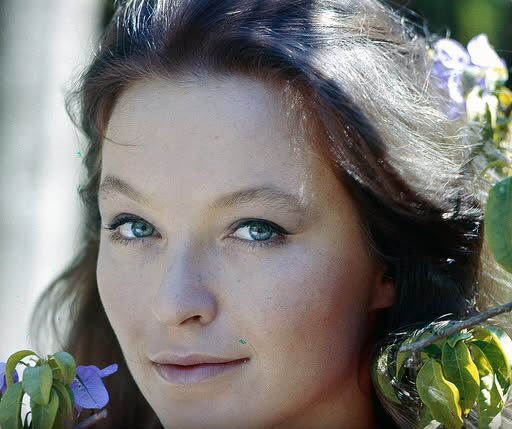
French Actress Marina Vlady Dies at 88 After a Remarkable Career in Film, Music and Activism
The Celebrated Actress Appeared in More Than 80 Films and Won Best Actress at the Cannes Film Festival
French actress Marina Vlady, whose career stretched across more than eight decades of international cinema, music and public activism, has died at the age of 88.
Vlady died Thursday at home while surrounded by her family and beloved animals, according to her children.
In a statement confirming her death, they described her life as “long and beautiful,” saying she had lived it fully.
For generations of movie audiences, Vlady was known as an actress capable of moving between popular productions and ambitious films while working with some of the most influential filmmakers of her era.
She appeared in more than 80 films during a career that began when she was still a child.
Marina Vlady Built an International Career
Vlady worked with major figures from both European and international cinema.
Her collaborators included French New Wave filmmaker Jean-Luc Godard and legendary filmmaker and actor Orson Welles.
Her career was never limited to one type of production.
She moved between commercial films and more challenging projects, developing a body of work that allowed her to take on dramatically different characters.
Although her early career often emphasized her appearance, Vlady gradually proved that she was capable of much more than the seductive or rebellious roles she was initially offered.
She sought out roles that allowed her to demonstrate range and complexity.
Her Cannes Victory Became One of the Defining Moments of Her Career
One of Vlady’s most important professional achievements came in 1963.
That year, she won the Best Actress award at the Cannes Film Festival for her performance in The Conjugal Bed.
The role became a major milestone in her career and brought her significant international recognition.
It also earned her a Golden Globe.
Vlady later recalled how unexpected the Cannes recognition had been.
”It was completely unexpected. I was told the day before; I fell off my chair and quickly slipped on a little black dress,” Vlady once shared.
The award confirmed her status as one of the most prominent actresses of her generation.
She Later Appeared in Orson Welles’ Chimes at Midnight
Two years after her Cannes triumph, Vlady took on one of the relatively rare English-language roles of her career.
She appeared in Orson Welles’ Shakespeare adaptation Chimes at Midnight.
The project placed her alongside one of the most influential figures in the history of cinema.
It also reflected the international nature of Vlady’s career, which crossed linguistic and national boundaries.
Although she remained closely associated with French cinema, her work reached far beyond France.
Vlady Was Born Into a Deeply Artistic Family
Marina Vlady was born Catherine Marina de Poliakoff-Baïdaroff in 1938.
She grew up in Clichy, near Paris, in a family of Russian immigrants who had fled the aftermath of the revolution.
Her father, Vladimir Poliakoff, had served in the French military and was also an opera singer.
Her mother, Militza, was a former ballet dancer.
The combination of music, performance and movement was therefore present throughout Vlady’s childhood.
All four Poliakoff sisters eventually entered the arts.
Creativity was not treated as something distant or unusual inside the household.
It was part of family life.
Her Childhood Was Far From Conventional
Vlady entered the professional world remarkably early.
She left school when she was only 12 years old.
She had already begun developing her skills as a performer and trained as a young dancer at the Paris Opera.
Her early years were therefore very different from those of most children her age.
Instead of following a conventional school path, she moved directly toward the demanding world of artistic performance.
That early start eventually opened the way to her film career.
She Appeared on Screen While Still a Child
Vlady began appearing in films when she was still very young.
Those early roles marked the beginning of a career that would ultimately include more than 80 films.
Her progress was rapid.
At only 16, she received the Suzanne Bianchetti Prize.
The award recognized her as one of France’s most promising young actresses.
Receiving such recognition as a teenager established Vlady as a performer whose potential was already attracting serious attention.
Her Early Roles Often Focused on Her Beauty
Like many young actresses entering the film industry during that era, Vlady was initially cast in roles that emphasized her appearance.
She frequently played seductive, rebellious or striking young women.
Those roles helped increase her visibility, but Vlady did not allow them to define the full direction of her career.
As she matured professionally, she deliberately pursued a broader range of characters.
She wanted to move beyond being viewed simply through the lens of physical beauty.
She Refused to Remain Trapped in One Screen Image
Vlady gradually built a career based on variety.
She alternated between commercial productions and more artistically ambitious films.
That approach gave her opportunities to work with respected directors while also reaching wider audiences.
Her willingness to change direction helped keep her career active across different periods of cinema.
Rather than allowing one successful character type to become permanent, she continued exploring new work.
Music Was Another Important Part of Her Creative Life
Acting was not Vlady’s only artistic pursuit.
She also explored music.
Together with her sisters, she recorded two albums.
The musical work reflected the creative environment in which the sisters had been raised.
With an opera singer for a father and a former ballet dancer for a mother, performance in different forms was deeply rooted in the family.
For Vlady, moving between cinema and music was therefore a natural extension of that background.
Her Life Extended Well Beyond Film Sets
Vlady was also involved in social and political causes throughout her life.
Her public commitments showed that she was willing to use her visibility for issues she considered important.
She opposed the Algerian War.
She also supported migrants and became involved in campaigns connected to access to housing.
Those activities became another significant part of her public identity.
She was not content to remain only an actress speaking through fictional characters.
She also participated directly in debates and movements taking place in French society.
Vlady Became an Advocate for Abortion Rights
One of the causes associated with Vlady was abortion rights in France.
She spoke out in favor of access at a time when abortion remained illegal in the country.
Taking that position placed her within a major social debate.
She also participated in protests against the deportation of Arab workers.
Those positions demonstrated her willingness to become involved in controversial political and social questions rather than separating her public career from her personal convictions.
Her Relationship With Vladimir Vysotsky Became a Major Chapter of Her Life
Vlady’s personal life also attracted significant public attention.
One of her best-known relationships was with Soviet singer, actor and poet Vladimir Vysotsky.
The two maintained a long-distance relationship for approximately a decade.
The relationship became one of the most emotionally significant chapters in Vlady’s life.
It also became part of her later literary work.
She wrote about their relationship in her memoir Vladimir, or the Aborted Flight.
The Romance Also Influenced Vysotsky’s Music
Vlady and Vysotsky’s relationship was not limited to their private lives.
It also entered his creative work.
The relationship inspired several of Vysotsky’s songs.
Their connection therefore became part of the cultural legacy surrounding both artists.
For Vlady, documenting the relationship later in her memoir allowed her to revisit a period that had deeply shaped her personal life.
Her Activism Continued Later in Life
Vlady’s involvement with public causes did not disappear as her film career developed.
Later in life, she and her partner, physician and political activist Léon Schwartzenberg, helped establish DAL, or Droit au logement.
The organization was dedicated to defending the right to housing.
The effort continued the pattern of activism that had accompanied Vlady for years.
Housing, migration and social inequality were not abstract issues to her.
She became directly involved in organizations and campaigns designed to address them.
She Remained a Recognizable Figure Long After Her Early Stardom
Vlady’s career and public life stretched across several generations.
She first became known when cinema itself was very different from the industry audiences know today.
Yet she remained visible decades later.
Her presence at public cultural events in later years demonstrated the lasting recognition attached to her name.
By then, her significance extended beyond any individual film.
She had become part of the broader history of French and European cinema.
More Than 80 Films Created a Remarkably Diverse Legacy
Appearing in more than 80 films gave Vlady an unusually extensive body of work.
Those productions covered different eras, genres and styles.
Her filmography reflected both commercial cinema and projects associated with major filmmakers.
Few performers manage to sustain such a long career while continually shifting between different kinds of roles.
Vlady’s longevity was built partly on that willingness to evolve.
Her Cannes Award Remains a Central Part of Her Film Legacy
Among all of her professional achievements, the 1963 Best Actress award at Cannes remains especially significant.
The recognition placed her among the actresses honored at one of international cinema’s most prestigious festivals.
The fact that the award surprised Vlady only adds to the story surrounding that moment.
She had not expected to win.
Yet the performance became one of the defining roles of her career.
Her Story Was Also One of Reinvention
Vlady’s career demonstrates how an actress initially defined by youth and beauty could gradually take control of a broader professional identity.
She began with roles that often emphasized those qualities.
Then she moved toward increasingly varied work.
She entered international productions.
She explored music.
She wrote about deeply personal experiences.
She participated in political and social movements.
Each stage added another dimension to the person audiences thought they knew from the screen.
Her Russian Family Background Remained Part of Her Identity
Vlady’s family story was also shaped by migration.
Her parents came from a Russian background and built a new life in France following the upheaval connected to the revolution.
The arts became central to the family they created.
Her father combined military service with opera.
Her mother brought the discipline of ballet.
Their daughters carried that creative heritage into their own careers.
For Marina Vlady, those family roots formed the beginning of a life that eventually reached audiences far beyond France.
Her Death Marks the End of an Extraordinary Life in the Arts
Vlady’s death at 88 closes a life that touched cinema, music, literature and activism.
She began working as a child and spent decades developing a career that constantly changed.
She became an award-winning actress.
She worked with internationally renowned filmmakers.
She pursued music with her sisters.
She wrote about one of the most important relationships of her life.
And she became involved in social causes that reached far beyond the entertainment industry.
Marina Vlady Leaves Behind Far More Than a Filmography
The simplest way to describe Marina Vlady’s legacy would be to point to the numbers.
More than 80 films.
A Best Actress award at Cannes.
A Golden Globe.
Decades of work with celebrated filmmakers and performers.
But those achievements represent only part of her life.
She was also a musician, memoirist, activist and member of an artistic family whose story crossed borders and generations.
Her children’s description of her life as “long and beautiful” captures something the list of professional achievements cannot.
Vlady’s life was not confined to the screen.
From her unconventional childhood and early entry into acting to international acclaim, political engagement and deeply personal relationships, she continually expanded the boundaries of what her public life could contain.
She died at home, surrounded by her family and beloved animals.
Marina Vlady was 88.