
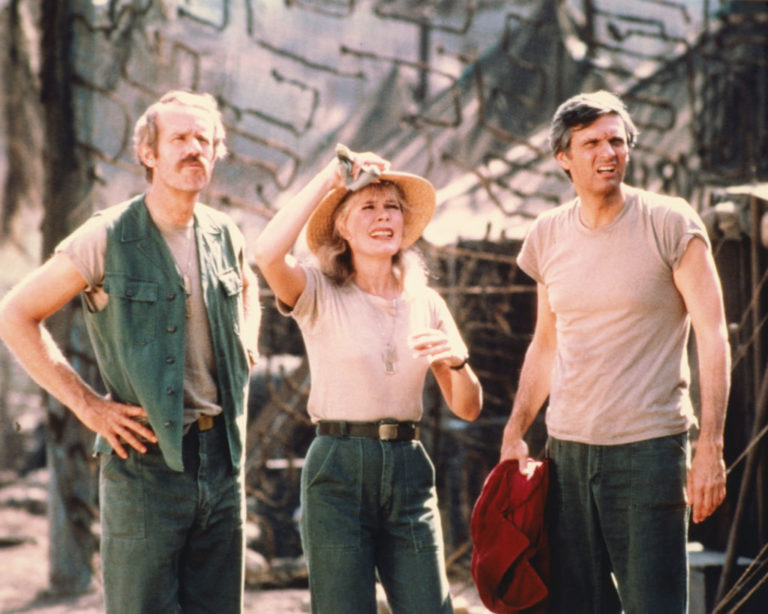
M*A*S*H Mistakes, Continuity Slips, and Behind-the-Scenes Stories Fans Still Love to Discover
A Series That Became Much More Than a Television Hit
If you grew up with M*A*S*H on television, you probably remember it as one of those rare series that could make people laugh and then turn deeply emotional just moments later.
The show built a lasting reputation through sharp dialogue, memorable characters, and a tone that balanced humor with the strain of life during wartime.
Set during the Korean War, M*A*S*H followed doctors, nurses, and support staff working at a mobile army surgical hospital as they handled medical emergencies, military pressure, and complicated personal relationships.
Over time, it became far more than a successful series. It turned into a cultural landmark that stayed with viewers long after the final episode aired.
Its finale in 1983 drew an extraordinary audience and remains the most-watched prime-time episode in television history. That kind of reach helped turn even small details from the show into part of television lore.
And as beloved as the series remains, longtime fans know there is another layer of enjoyment in revisiting it: the hidden bloopers, continuity changes, and fascinating production stories that slipped through over the years.
William Christopher’s Illness Became Part of the Story
One of the most surprising stories connected to the series involved William Christopher, the actor who played Father Mulcahy.
During season five, Christopher became seriously ill with hepatitis. The situation was so severe that there was concern he might have to leave the program entirely.
At one point, producers even considered removing Father Mulcahy from the series. That possibility could have changed the show in a major way, since the character had become an important emotional presence within the camp.
Instead, Alan Alda stepped in with a creative solution. He wrote an episode titled “Hepatitis” that worked Christopher’s condition into the storyline.
The move not only protected the character’s place in the series, but also allowed Christopher to remain involved during a difficult period in his personal life. It became one of those behind-the-scenes stories that revealed how closely connected the cast could be.
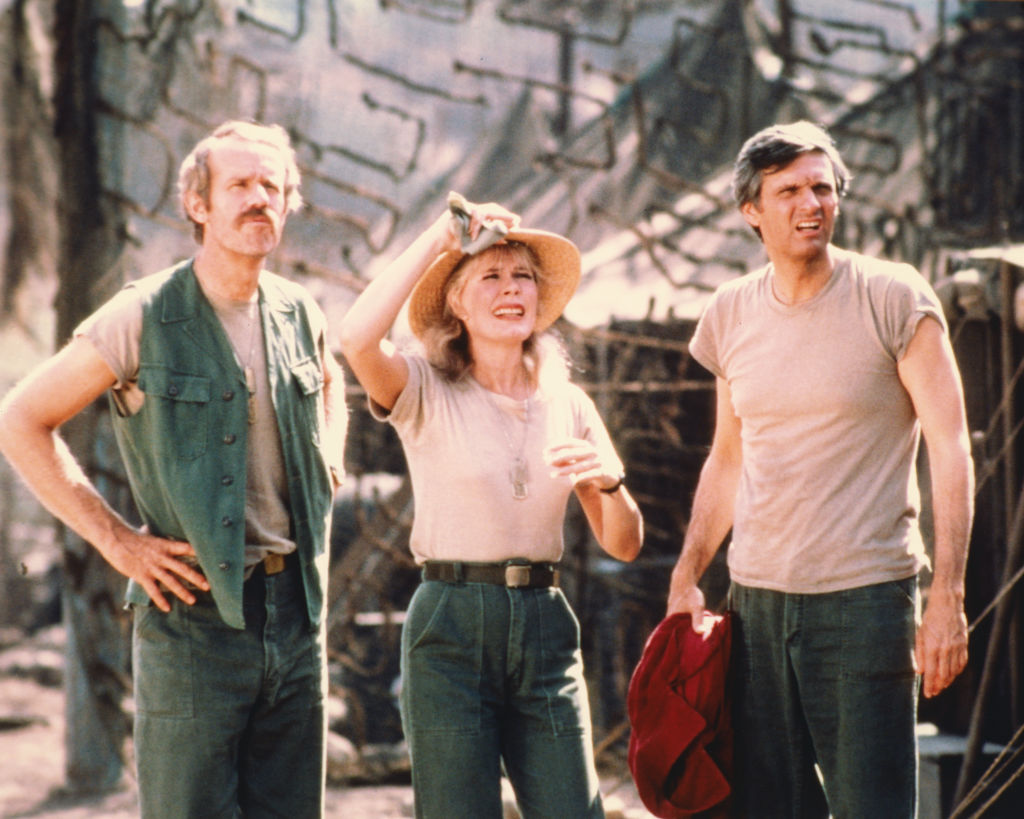
An Eerie Line About Frank Burns
The same episode also contains one of the most unsettling pieces of M*A*S*H trivia.
In “Hepatitis,” Hawkeye examines Frank Burns, and Frank casually says, “I do have a pea-sized tumor under my sternum.”
Years later, Larry Linville, the actor who played Frank, died from a malignant tumor under his sternum. The similarity between the line and the real-life cause of his death has remained one of the strangest coincidences associated with the show.
It is the kind of detail that transforms an ordinary bit of dialogue into something haunting once viewers learn the story behind it.
Jamie Farr Was Never Supposed to Stay So Long
Jamie Farr’s performance as Max Klinger became one of the most recognizable parts of M*A*S*H.
Klinger’s desperate efforts to secure a discharge, often by appearing in dresses and skirts, gave the series some of its most memorable comic moments. Farr played the role with such confidence that the character became impossible to ignore.
What many viewers do not realize is that Klinger was originally intended to appear in only one episode.
That plan quickly changed once audiences responded so strongly to the character. Farr’s performance won over fans, and Klinger developed into one of the show’s most enduring regulars.
It is hard to imagine the later years of M*A*S*H without him, which makes his one-episode beginning even more remarkable.
The Dog Tags Were Real
Another detail linked to Jamie Farr added a layer of authenticity that viewers never would have noticed on first watch.
The dog tags he wore on the show were not props created for production. They were his actual military dog tags from his own service before his acting career took off.
Those tags included his personal information, including his name, serial number, and religion. It was a small but meaningful connection between Farr’s real past and the fictional world he helped bring to life.
For a show built on the tension between realism and humor, that kind of genuine detail fit perfectly.
Military Accuracy Was Not Always Perfect
M*A*S*H was set during the Korean War, but not every prop and reference matched that period with total precision.
One of the clearest examples appears in the season two episode “For the Good of the Outfit.”
In Henry Blake’s office, viewers can see a Bell Huey UH-1 helicopter hanging as part of the décor. The problem is simple: the Huey did not make its first flight until 1956.
That places it well outside the timeline of the Korean War setting used in the series. It is a minor visual detail, but once noticed, it stands out as a clear historical mismatch.
These kinds of production slips are part of what makes rewatching the series so interesting. Even in a show praised for atmosphere and character, timeline errors occasionally slipped into view.
The Death of Henry Blake Changed Television
Few moments in M*A*S*H history hit audiences as hard as the death of Lieutenant Colonel Henry Blake.
When McLean Stevenson left the show in 1975, his character was written out in a way that shocked viewers. Instead of receiving a calm farewell, Blake was killed in a plane crash while on his way home.
At the time, it was a startling creative decision for a prime-time series. Television audiences were not used to major characters disappearing in such sudden and tragic fashion.
The reaction was intense. Fans were stunned, and the emotional response extended far beyond simple surprise.
Writers and producers defended the choice as a reflection of war’s harsh reality. In that sense, the death fit the deeper themes the show often explored beneath its comedy.
Still, the backlash was so strong that it influenced future decisions behind the scenes.
The Producers Decided Never to Repeat That Exit
The fallout from Henry Blake’s death was enormous enough to change how departures would be handled afterward.
Following the flood of angry mail from viewers, the show’s producers and writers made an agreement.
If another actor left the series in the future, they would not send that character off with another devastating ending like Blake’s.
That decision reveals just how powerfully audiences had bonded with the characters. M*A*S*H had become more than weekly entertainment. Viewers felt personally connected to the people inside the 4077th.
Once the response to Blake’s death became clear, the creators understood that another loss of that kind could land very differently than intended.
Gary Burghoff Quietly Hid a Physical Condition on Screen
Gary Burghoff, who played Radar O’Reilly, brought warmth and innocence to one of the show’s most loved characters.
Across his years on the series, many viewers never noticed that he was carefully concealing a physical condition.
Burghoff was born with Poland syndrome, a condition that can cause underdevelopment of the chest muscle and can also involve webbed fingers.
On camera, he often positioned his left hand in ways that drew attention away from it. He might hold a clipboard, tuck the hand into a pocket, or otherwise keep it partly hidden during scenes.
That choice helped ensure that audiences stayed focused on the character rather than the condition. It also showed the precision performers sometimes use in creating a screen presence that feels effortless.
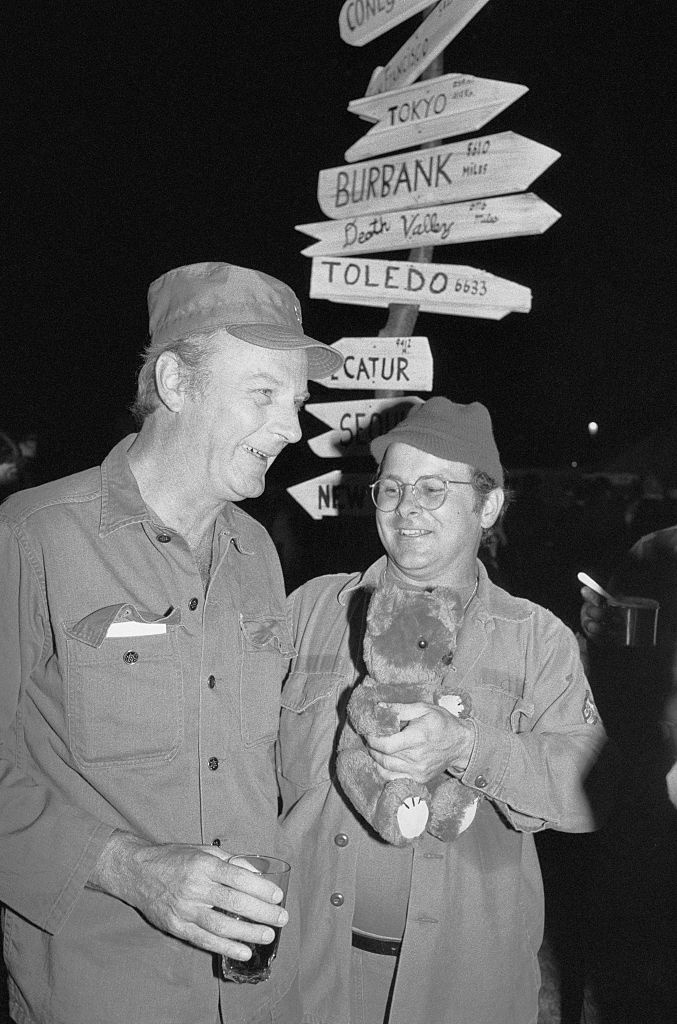
Why Radar Left the Series
Radar’s departure marked the end of an era for many viewers.
After appearing in every episode during the first three seasons, Burghoff eventually reduced his workload. His schedule had become difficult for his family life, and his number of appearances dropped significantly.
By season seven, the character received a two-part farewell in “Good-Bye Radar,” which explained his discharge from the Army.
Burghoff later made clear that financial gain was not the reason he stayed or left. “I didn’t leave M*A*S*H a wealthy man,” Burghoff said in an interview with People. “I could have renegotiated my contract, but money wasn’t the most important thing in my life…You either want to be rich and famous, or you want to be a daddy. You can’t do both.”
That explanation added a personal dimension to Radar’s exit, reminding fans that life beyond television often shapes what appears on screen.
Song References That Belonged to the Wrong Era
M*A*S*H occasionally tripped over time-specific references in its dialogue as well.
In the 1974 episode “Mad Dogs and Servicemen,” Radar is stuck in bed with what may be a rare case of rabies.
To comfort him, Margaret reads from a letter that mentions two songs: ”Diddy Wah Diddy” by Bo Diddley and ”The Wayward Wind” by Gogi Grant.
The issue is that both songs were released in 1956, several years after the Korean War had already ended.
For casual viewers, the lines pass unnoticed. But for fans paying close attention to the period setting, the references do not line up with the world the series is supposed to occupy.
Not Everyone Looked Ready for 1950s Army Service
Another visual inconsistency appeared in the styling of several characters.
As the series progressed, not everyone looked like they belonged in a strict 1950s Army environment.
Colonel Potter and Major Winchester generally appeared more convincing as men who could have served within that era’s regulations. Other characters, however, often seemed much more modern in presentation.
Haircuts in particular did not always reflect military standards from the period. In some episodes, the camp looked less like a wartime medical unit from the Korean War and more like a television set shaped by the fashion of the 1970s and early 1980s.
These details did not ruin the show, but they became part of the fun for attentive viewers looking back.
Hawkeye’s Background Kept Changing
Hawkeye Pierce may be one of television’s most famous characters, yet his personal history was never fully stable.
Early in the series, he is described as being from Vermont. At that stage, both of his parents are alive, he has a married sister, and there is even mention of a nephew.
Later, those details change dramatically. Hawkeye becomes an only child from Crabapple Cove, Maine, and his mother is said to have died when he was ten.
The contrast is impossible to ignore once fans begin tracing the details across seasons. It is one of the clearest continuity issues in the series.
Alan Alda did not seem bothered by the shifts. He appreciated the freedom for the character to grow, even if that growth came with rewritten facts from earlier episodes.
Alan Alda’s Talent Reached Beyond Acting
Alan Alda’s contribution to M*A*S*H went far beyond his performance as Hawkeye.
He became the first person to win Emmys for acting, writing, and directing on the same series, a rare achievement that reflected how central he became to the show’s identity.
One small example of that creative reach appears in “Comrades in Arms.”
When Winchester complains about Hawkeye and B.J. singing in the shower, Hawkeye replies, “Don’t blame me, I didn’t write this stuff.”
The line works as a joke within the scene, but it becomes even better once you know that Alda actually did write it. That kind of self-aware humor matched the intelligence that helped define the series in its strongest years.
The Evolution of Hawkeye and Margaret
The relationship between Hawkeye and Margaret Houlihan became one of the most interesting developments in the show.
In the earlier seasons, the two characters often clashed, though there was also clear mutual respect. Margaret recognized Hawkeye’s brilliance as a surgeon, while he gradually saw more of her complexity beyond rank and discipline.
As M*A*S*H evolved from a broader comedy into a richer mix of humor and drama, their connection deepened.
That shift reached a major turning point in the two-part season six episode “Comrades in Arms.” Stranded together overnight while North Korean bombs fell around them, the two characters shared an emotional conversation and eventually spent the night together.
The moment did not create a lasting romance, but it changed the emotional understanding between them and reflected the broader maturity the series had developed by that stage.
Loretta Swit later described their bond by saying, “They became loving friends. There are different kinds of love, and there was a very strong love between them. If you look at the series over time, their relationship grew and deepened. In the beginning, Margaret thought he was a genius surgeon, so there was respect there.”
Loretta Swit’s Role Became Bigger Than a Nickname
Loretta Swit also pushed for Margaret to be treated as a more fully realized character.
She never liked the nickname tied to Margaret for so much of the series and felt it reduced someone who was, in her view, deserving of more respect.
As the years went on, she worked persistently to move the character beyond that label and toward a stronger identity as a capable Army major and nurse.

That effort matched the larger direction of the show, which increasingly gave Margaret emotional depth, authority, and independence.
By the end of the series, she stood as one of the clearest examples of how M*A*S*H allowed its characters to grow far beyond their original comic setups.
Small Details, Lasting Fascination
There are plenty of other details that continue to spark conversation among fans, from Loretta Swit’s long nails in “Comrades in Arms” to speculation about changes in her appearance over the course of the series.
There is also the famously long farewell kiss between Hawkeye and Margaret in the finale, a moment that captured both awkwardness and affection at once.
What makes all of these stories so compelling is that they do not weaken the legacy of M*A*S*H. If anything, they add another layer to it.
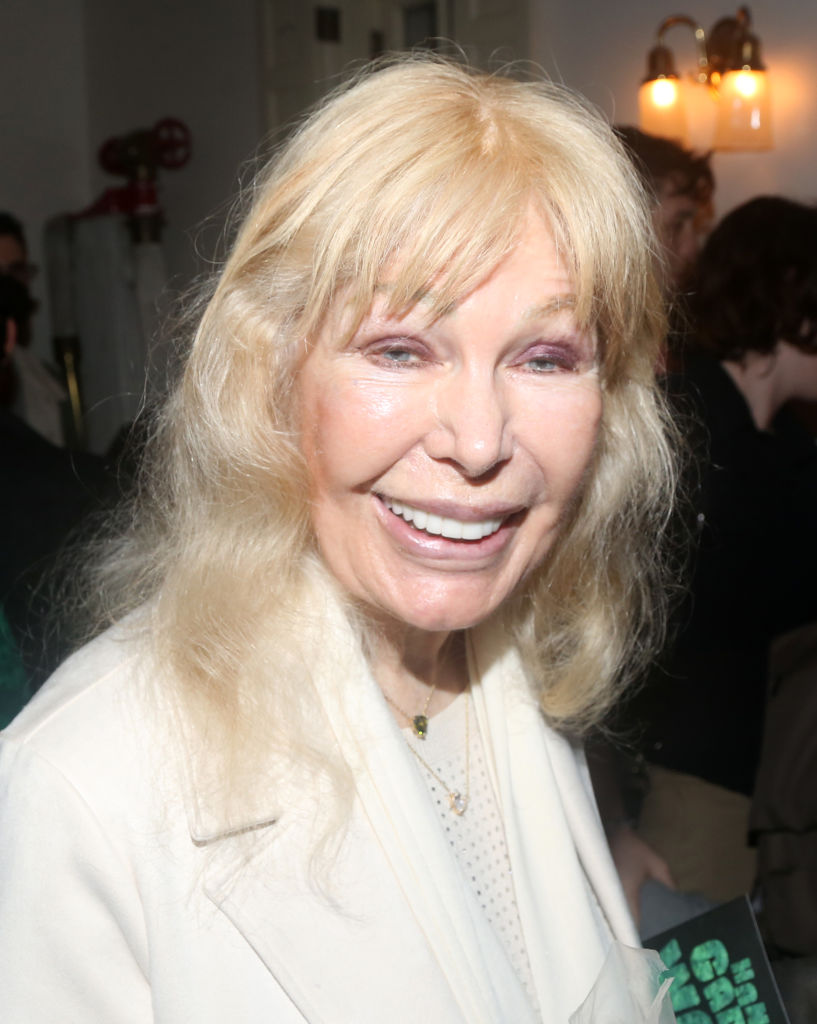
The show remains memorable not because it was flawless, but because it was ambitious, emotionally rich, and human enough to leave behind contradictions, surprises, and stories worth revisiting.
For longtime fans, discovering the mistakes and hidden details only makes another return to the 4077th more rewarding.