
Australian Mother Warns Parents About Laundry Pod Safety After Daughter Suffers Serious Eye Injury
An Ordinary Chore Turned Into a Serious Health Incident
An Australian mother is speaking out after a household accident involving a laundry detergent pod left her four-year-old daughter with a serious eye injury and a long recovery ahead.
The incident happened on March 23 while Jodi de Groot was doing laundry with her daughter, Luca. It was a familiar task in their home, and nothing initially suggested that the routine moment would take an alarming turn.
Jodi said Luca had helped with laundry before, making the activity feel normal and safe. At one point, the child was handed a detergent capsule to hold briefly while the washing machine was being loaded.
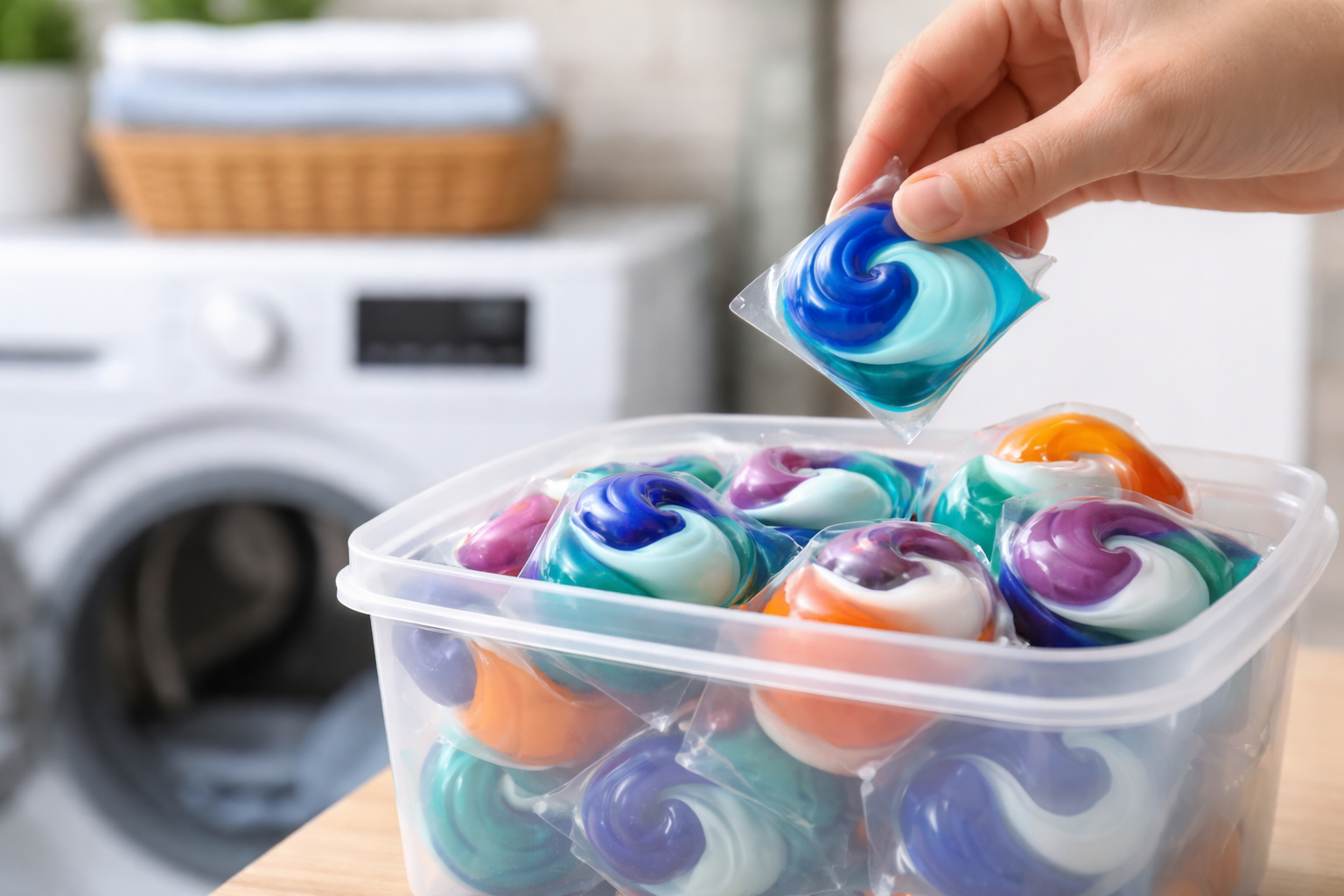
The pod appeared harmless at first glance. Its bright colors, smooth surface, and compact shape made it look like an ordinary household item.
In Australia, the detergent product is sold under the Omo name. In the United Kingdom, it is sold as Persil.
Within moments, however, the situation changed. Luca bit into the pod, causing it to burst and release concentrated detergent onto her face and into her eyes.
A Sudden Reaction and Immediate Concern
Jodi later said her daughter had never shown interest in biting the pods before. Because Luca often helped with laundry, the moment did not initially seem unusual.
“She’s never had the urge to bite them before,” Jodi later explained. “She helps me with the laundry a lot, but she normally doesn’t play with them.”
This time, the detergent capsule proved too tempting for the young child. Its appearance and texture made it especially appealing in a way that may not have seemed obvious beforehand.
Jodi recalled that the pod burst quickly after Luca bit it. The concentrated contents spread into the child’s eyes almost immediately.
“By the time I’d turned around, she’d already bitten it and it went into her eyes,” Jodi recalled. “They’re quite solid, so when they pop they spray.”
The child became distressed right away. Like many young children would in that situation, Luca rubbed her eyes, which caused the detergent to spread further.
“Kids being kids, she rubbed her eyes, which meant it went across both eyes,” Jodi said.
Emergency Steps at Home Before Medical Treatment
In the first moments after the exposure, Jodi tried to respond as quickly as possible. She took Luca into the shower in an attempt to rinse the detergent away with water.
The goal was to remove as much of the product as possible and ease the discomfort. Even so, Luca continued to show clear signs that the irritation was serious.
Jodi then checked the packaging instructions on the back of the product. She said the label advised users to seek medical advice, but she did not initially expect the situation to become so severe.
“I put her in the shower and looked at the back of the product,” Jodi explained. “It said to ‘seek medical advice,’ so I didn’t think it would cause such a big issue.”
When Luca did not improve and remained in obvious discomfort, Jodi contacted a poison hotline for guidance. The recommendation was immediate: Luca should be taken to the hospital without delay.
That advice marked the beginning of a much more serious medical response than the family had anticipated from what began as an everyday chore.
Hospital Treatment and Ongoing Medical Care
At the hospital, doctors began flushing Luca’s eyes with water in an effort to clear away the detergent. Multiple rounds of irrigation were carried out as medical staff worked to reduce the impact of the chemical exposure.
Despite those efforts, Luca’s eyes had already been significantly affected. Doctors determined that the detergent had caused chemical burns.
The child remained under close medical observation as specialists evaluated the extent of the injury and the best treatment plan moving forward. Her condition required more than short-term care.
Over the following days, Luca underwent three surgical procedures. Her treatment included an amniotic membrane transplant, a procedure in which tissue from the placenta is placed over the surface of the eye to support healing.
This type of treatment is delicate and is used to assist damaged tissue as recovery begins. The fact that such a procedure was needed illustrated how serious the exposure had become.
For 16 days, Luca remained in the hospital while doctors monitored her progress. During that period, her family faced uncertainty as they waited to see how much her eyes would recover.
Concerns During Recovery
At one point during Luca’s hospital stay, doctors believed an additional surgery might become necessary. Her mother said there was concern because Luca was not opening her eyes.
“There was a point where doctors thought she might need a fourth surgery because she wasn’t opening her eyes,” Jodi said. “But we managed to encourage her to open them.”
Gradually, there were signs of improvement. Luca began to recover some of her sight, bringing relief to her family after days of worry and treatment.
Even with that progress, the incident left lasting effects. Jodi said her daughter now has a slight vision impairment.
“She has a slight vision impairment,” her mother explained. “It could have been a lot worse. It’s been incredibly traumatic.”
Eventually, Luca was well enough to return home, but her recovery did not end when she left the hospital. Her eyes remained red and irritated, and doctors advised that healing could take as long as a year.
Regular follow-up appointments are now part of her routine as specialists continue to monitor both her vision and the condition of her eyes over time.
A Mother’s Warning to Other Families
The experience has had a lasting effect on Jodi, who now wants other parents to think carefully about how they store and handle laundry detergent pods at home.
She believes many families may not fully understand the level of risk these products can pose to young children. Because the pods are colorful, soft, and pleasantly scented, they may not seem as dangerous as they actually are.
Jodi has said that current packaging does not fully communicate the seriousness of possible exposure. In her view, stronger warnings and wider public awareness are needed.
“It’s not good enough,” she said, referring to the current labels. “They look and smell quite nice. They’re attractive to kids.”
She added that many parents may assume direct contact with a detergent pod would cause only temporary irritation rather than a serious injury requiring hospital treatment.
“You wouldn’t think direct contact could cause burns, three surgeries and 16 days in hospital,” she said. “There needs to be more awareness.”
Her message is rooted in the idea that familiar household products can still carry significant risk, especially when children are nearby and everyday routines create a sense of comfort.
Manufacturer Response
Following the incident, Unilever, the manufacturer behind the detergent brands involved, issued a statement addressing Luca’s injuries.
A company spokesperson said Unilever was saddened to hear about what happened and had been in contact with the family to better understand the circumstances surrounding the event.
“Safety is always our number one priority,” the spokesperson said.
The company also noted that its laundry capsules are sold with child-resistant closures and warning labels intended to meet industry safety standards.
That response reflects the broader challenge manufacturers face when products that serve a common household function also present a potential hazard if used improperly or accessed by young children.
Even when safety measures are included, parents and caregivers may still underestimate how quickly an accident can happen during an everyday task.
Why Laundry Pods Continue to Raise Safety Concerns
Luca’s experience has renewed attention around a concern that has been discussed for years by safety advocates: the design and appearance of laundry pods can make them especially attractive to children.
Unlike traditional detergent bottles or boxes, pods are small, brightly colored, and often visually appealing. Their soft outer layer and compact shape can make them seem more like a toy or sweet than a cleaning product.
For young children, who often explore objects through touch and taste, that combination can increase the chance of accidental exposure.
The concern is not limited to one brand or one country. Wherever detergent pods are sold, the same basic issue remains: a product designed for convenience can also create a hazard if it is left within reach of children.
This is why safety campaigns often emphasize careful storage, close supervision, and immediate action if exposure occurs. The danger may not be obvious until something goes wrong.
Jodi’s account underscores how fast that kind of incident can unfold. A task that had been repeated many times before changed in seconds, leaving very little time to react before the child needed urgent care.
A Lasting Reminder for Parents
For Jodi and her family, the incident has changed how they think about common household products. Items used every day can still pose serious risks, particularly to young children who do not understand the consequences of touching or biting them.
Her warning to other parents is based on firsthand experience. She wants families to recognize that something familiar and routine can become dangerous very quickly.
The story is also a reminder that packaging, appearance, and scent can all influence how children respond to household items. A product intended to simplify laundry can look harmless even when it is not.
As Luca continues her recovery, her family remains focused on healing and long-term care. The medical treatment she received helped her begin regaining sight, but the recovery process is expected to continue for many months.
For other parents, the message is simple and direct: laundry pods should be treated with the same caution as any other potentially harmful household product.
What began as an ordinary chore in one home has now become a warning for many others. In Jodi’s view, greater awareness could help prevent another family from facing the same frightening experience.
[url=https://joshnka.com/product/laptop-pb/]Dangerous item, poor, fake bad product[/url]
[url=https://joshnka.com/wp-content/uploads/2020/07/laptop-pb2.jpeg]Dangerous item, fake, fake product[/url]