
Newly Released Epstein Files Reveal Disturbing “Lolita” Inscriptions Written Across Young Women’s Bodies
The Images Add a Troubling New Dimension to Questions About Abuse, Control, and the People Who Enabled It
Among the millions of newly released files connected to Jeffrey Epstein, investigators discovered images that have added another deeply disturbing layer to an already notorious case.
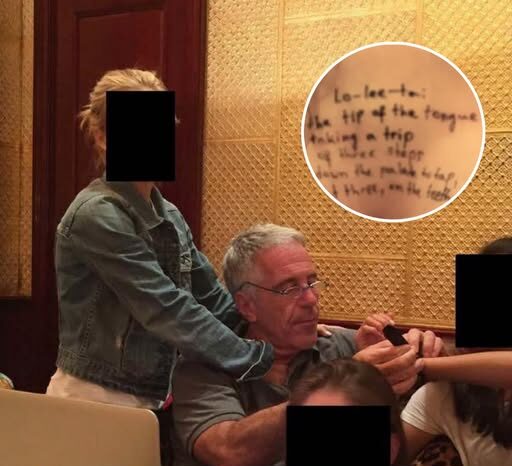
The photographs appear to show young women with handwritten quotations from “Lolita” placed across different parts of their bodies. The words can be seen along their necks, legs, and feet, transforming passages from a controversial novel into physical markings displayed in real settings.
The discovery is unsettling not only because of what was written, but because of the meaning associated with the source material.
“Lolita” centers on the sexualization of a 12-year-old child through the perspective of an adult predator. The appearance of lines from that novel on the bodies of young women connected to Epstein’s world raises serious questions about intention, symbolism, and the culture that surrounded his conduct.
Words That Appear Deliberately Chosen
The inscriptions do not appear to be meaningless notes or casual writing.
They were selected from a literary work closely associated with predatory obsession, manipulation, and the sexualization of a child. That connection gives the images a meaning that extends beyond the physical words themselves.
The placement of the quotations across bodies suggests a deliberate performance. The writing appears arranged to be seen, photographed, and preserved.
Rather than existing privately on a page, the lines were transferred onto people, turning literature into a visible display of power.
This detail changes how the images may be understood. What might initially appear to be bizarre or provocative writing becomes more troubling when considered alongside the themes of the novel from which it was taken.
The choice of “Lolita” suggests an awareness of the story’s central subject and the disturbing cultural associations surrounding it.
A Literary Reference With a Dark Meaning
The significance of “Lolita” has often been misunderstood or reduced to a misleading cultural label.
Within the context described in the released files, however, its use appears closely tied to domination and predatory desire. The novel’s narrator is obsessed with a 12-year-old girl, making the decision to place its words on young women especially disturbing.
The inscriptions create a direct link between fictional predation and the real-world environment documented in the Epstein materials.
That link does not appear accidental. The words seem designed to evoke the novel and its themes while placing real individuals inside a staged representation of control.
The result is difficult to dismiss as a random act. The quotations appear to function as symbols, using recognizable literary language to communicate possession, secrecy, and power.
The Bodies Became Part of the Message
The most unsettling aspect of the images may be that the words were not written in a notebook, on a wall, or in a private letter.
They were written directly onto bodies.
That choice turned the people in the photographs into part of the presentation. Their skin became the surface on which the message was displayed.
Writing across the neck, legs, and feet created a visual arrangement that appeared intended for documentation. The placement suggests that the photographs were not accidental records of an ordinary moment.
Instead, the images appear constructed to communicate something to whoever viewed them.
The quotations may have served as a taunt, a coded reference, or a declaration of control. Regardless of the intended audience, their presence reinforces the imbalance of power that has long defined public understanding of Epstein’s conduct.
From Hidden Abuse to Deliberate Staging
Epstein’s case has often been described through secrecy: private residences, closed doors, powerful connections, and conduct concealed from public view.
The “Lolita” inscriptions introduce a different but related element.
They suggest that the environment was not only secretive but also deliberately staged. The abuse of power appears to have been accompanied by imagery, symbolism, and references chosen to reflect or celebrate predatory themes.
This makes the material feel less like an isolated collection of disturbing photographs and more like evidence of a controlled atmosphere in which domination was openly represented among those present.
The literary quotations appear to transform private wrongdoing into a kind of performance.
That possibility makes the images particularly difficult to view. They do not merely document the presence of young women. They appear to place those women inside a visual narrative created by someone else.
A Possible Display of Power
The inscriptions may be interpreted as evidence of how completely power could shape the environment around Epstein.
Writing words associated with a fictional predator onto real bodies suggests confidence that the act could occur without interruption or consequence.
It implies that the people involved believed they controlled the room, the photographs, and the future of the material.
The images may also reflect a belief that wealth, access, and influence could provide protection from scrutiny.
When individuals believe they are beyond accountability, symbols that would normally expose wrongdoing can become part of the display itself.
In that sense, the “Lolita” quotations may represent more than disturbing personal behavior. They may reveal a culture in which control was so complete that the reference to predation no longer needed to be hidden.
Other Materials Deepen the Concern
The photographs were not released in isolation.
They appeared among other materials that included redacted passports, maps of private islands, and messages referring to “sending girls,”.
Seen separately, each item raises its own questions. Viewed together, they create a broader picture of movement, access, communication, and secrecy.
The redacted passports suggest international travel and identities that remain partly concealed.
The maps of private islands point toward secluded locations where activity could occur away from ordinary public observation.
The messages about “sending girls,” add another troubling element by suggesting that young women were discussed in transactional or logistical terms.
Against that background, the “Lolita” inscriptions appear less like an eccentric detail and more like part of a larger system built around power and exploitation.
The Files Create a Record, Not Just a Rumor
For years, much of the public discussion surrounding Epstein included allegations, speculation, incomplete accounts, and unanswered questions.
The newly released files bring additional material into public view.
Photographs, messages, travel-related documents, and maps create a record that can be examined directly rather than discussed only through rumor.
The images of handwritten quotations are especially powerful because they preserve a physical moment.
They show words placed on bodies inside an environment connected to a man already associated with extensive abuse allegations.
The photographs do not answer every question about who participated, who witnessed the events, or what happened before and after each image was taken.
However, they make it harder to maintain emotional distance from the reality represented in the files.
The Epstein Transparency Act Brings Material Into Public View
The Epstein Transparency Act forced this material into the open, removing some of the secrecy that had surrounded the files.
The release allows the public to see evidence that had previously remained inaccessible or hidden behind legal and institutional barriers.
Transparency does not automatically provide complete accountability. Documents can be heavily redacted, photographs may lack context, and identities may remain concealed.
Even so, releasing the material changes the public conversation.
It allows people to examine patterns rather than relying entirely on summaries or secondhand descriptions.
The appearance of the “Lolita” inscriptions demonstrates why access to the files matters. Without the release, the existence of these photographs might have remained unknown outside investigative circles.
Redactions Leave Important Questions Unanswered
Although the files have entered public view, many details remain obscured.
Redacted passports hide information that could clarify who traveled, where they went, and how individuals were connected.
Other missing names and concealed details continue to limit the public’s ability to understand the full network surrounding Epstein.
The photographs themselves may show evidence of disturbing conduct, but they do not necessarily identify every person involved in creating or witnessing the scenes.
This uncertainty shifts attention toward the people who may have enabled the environment to continue.
Who arranged the travel?
Who controlled access to the properties?
Who sent messages, managed schedules, or observed the young women entering and leaving?
The files may provide fragments of those answers, but the redactions prevent the entire picture from becoming visible.
The Question of Enablers Remains Central
Epstein could not have maintained a large and secretive world without assistance.
The maps, travel documents, communications, and images suggest an environment involving logistics, property access, and coordination.
That reality raises questions about the people who worked around him or benefited from their connection to him.
Some may have known little. Others may have witnessed troubling behavior and chosen not to intervene.
The central issue is not limited to who committed direct acts of abuse. It also includes those who may have ignored warning signs, protected powerful individuals, or helped maintain the system in which misconduct could continue.
The photographs demand a wider examination of responsibility.
They show an atmosphere in which predatory symbolism could apparently be displayed openly enough to be photographed and preserved.
Why the Inscriptions Feel Like More Than Evidence
The “Lolita” quotations carry a quality that makes them feel different from conventional documents.
A passport records identity. A map shows location. A message records communication.
The inscriptions appear expressive.
They seem to communicate an attitude toward the people whose bodies carried the words.
That is why the images may feel less like isolated evidence and more like a statement about power.
The choice of text, the placement on the body, and the act of photographing the result combine to create a symbolic scene.
It appears to turn exploitation into an aesthetic performance, borrowing language from a novel about predation and placing it inside a real-world setting.
The Material Challenges Comfortable Distance
Large criminal cases can become abstract over time.
Names, court filings, property records, and timelines may create emotional distance from the people harmed.
The photographs disrupt that distance.
Handwriting across a person’s neck, legs, or feet is immediate and physical. It reminds viewers that the case involved real bodies and real rooms, not merely legal theories or political arguments.
The images also show how exploitation can be hidden inside settings that appear controlled, luxurious, or socially protected.
Power does not always conceal itself through darkness. Sometimes it operates in plain sight among people who believe no one will challenge it.
A Record That Demands Witnesses
The newly released material does more than invite curiosity.
It places a responsibility on the public to look carefully at what the files reveal and what remains concealed.
Being a witness does not mean drawing conclusions unsupported by evidence. It means refusing to ignore patterns simply because they are disturbing or connected to influential people.
The “Lolita” inscriptions should be examined alongside the passports, maps, and communications rather than treated as an isolated spectacle.
Together, the materials raise questions about organization, intent, and the confidence with which exploitation may have been carried out.
The Search for Accountability Is Not Finished
The release of millions of files does not automatically resolve the Epstein case.
Many identities remain redacted, relationships remain unclear, and questions about responsibility continue.
The photographs provide another piece of the record, but they also reveal how much the public still does not know.
Who selected the quotations?
Who wrote them onto the women’s bodies?
Who took the photographs?
Who was present in the rooms?
Who saw the images afterward and remained silent?
Those questions matter because abuse on this scale rarely depends on a single person acting entirely alone.
The Files Reveal a Culture of Domination
The most disturbing interpretation of the inscriptions is that they represent a deliberate celebration of control.
The use of “Lolita” connects the imagery to a fictional predator’s obsession with a child.
Placing those words on real bodies suggests not only awareness of the connection, but a willingness to display it.
That possibility transforms the photographs from strange artifacts into evidence of a broader culture.
Within that culture, young women may have been treated as objects, messages, or symbols rather than as people with autonomy and dignity.
The writing turned their bodies into surfaces for someone else’s language.
Questions the Public Cannot Afford to Abandon
The newly released files have brought disturbing images into daylight, but transparency is only the beginning.
The public still needs to understand who enabled Epstein, who benefited from access to his world, and why warning signs failed to stop the conduct sooner.
The “Lolita” inscriptions are especially powerful because they appear to reveal more than secrecy.
They suggest deliberate staging, symbolic domination, and confidence that the people involved would not face consequences.
Seen beside redacted passports, island maps, and messages about “sending girls,” the photographs become part of a larger and more troubling record.
That record should not be reduced to shocking imagery or temporary public outrage.
It demands sustained attention to the systems, relationships, and decisions that allowed the abuse to continue.
The words written across those bodies tell a story that powerful people may have expected to remain hidden.
Now that the material has entered public view, the central question is no longer whether people are willing to read it.
The question is whether institutions and the public are willing to keep demanding answers about who participated, who protected the system, and why it was allowed to endure for so long.