
Collision Between Passenger Jet and Fire Truck Forces Shutdown at LaGuardia Airport
Late-Night Incident Disrupts Airport Operations
A serious aviation incident occurred late Sunday night at LaGuardia Airport in New York when a passenger aircraft collided with a fire truck on the runway, resulting in multiple injuries and a temporary halt of all airport operations.
The event unfolded just before 11:40 p.m. on Runway 4, creating immediate concern among airport personnel and triggering an emergency response. Flights were quickly suspended as authorities worked to assess the situation and ensure safety across the airfield.
The unexpected collision caused widespread disruption, affecting both incoming and outgoing flights and leaving passengers stranded or redirected to alternate locations.
Aircraft Involved and Details of the Collision
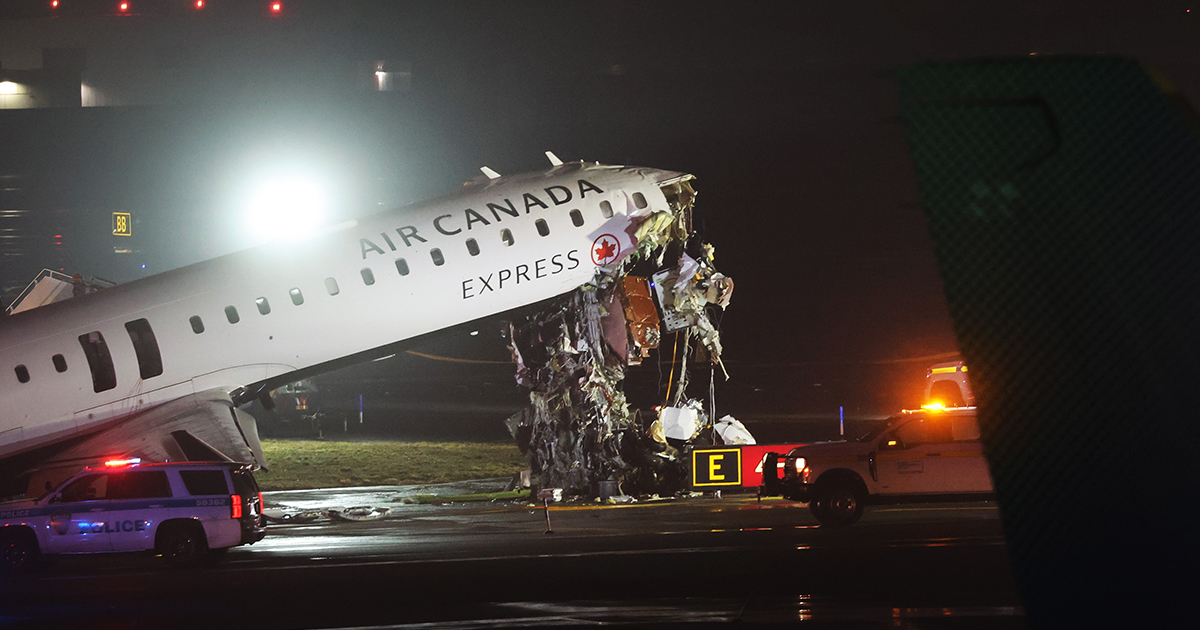
The aircraft involved in the incident was an Air Canada CRJ-900 regional jet that had just completed a flight from Montreal. The plane was in the process of taxiing toward its gate when it struck the fire truck on the runway.
At the time of the collision, the aircraft was carrying approximately 80 to 100 passengers. Data indicates that the jet was moving at around 24 miles per hour when the impact occurred.
The force of the collision brought the aircraft to a stop on the runway, highlighting the severity of the incident and the potential danger posed to those on board and nearby.
Injuries Reported Among Emergency Personnel
Multiple injuries were reported following the crash, with at least four individuals said to be in critical condition. Among those injured were two Port Authority police officers who were assigned to firefighter duties at the time.
Both officers were transported to a hospital for urgent medical treatment. Reports indicate that one of the injured officers holds the rank of sergeant, while the other is an officer.
The injuries sustained during the collision have raised concerns about the safety of ground operations and the circumstances leading up to the incident.
Reports of Fatalities Add to Concern
In addition to the injuries, reports indicate that two pilots were killed in the crash. The loss of life has added a tragic dimension to the event, further intensifying the seriousness of the situation.
The confirmation of fatalities has prompted additional attention from authorities as they work to determine how the collision occurred and what factors may have contributed to the outcome.
The aviation community continues to monitor developments as more information becomes available regarding the incident.
Air Traffic Control Communications Under Review
Early details suggest that the fire truck involved in the collision had received clearance from air traffic control to cross the runway prior to the incident. This has led to questions about how the aircraft and vehicle ended up in the same location at the same time.
Audio recordings from air traffic communications indicate that controllers issued urgent instructions for the vehicle to stop shortly before the crash occurred. These warnings, delivered multiple times, highlight the critical moments leading up to the impact.
The timing and sequence of these communications are expected to play a key role in understanding what happened during those final seconds.
Weather Conditions May Have Played a Role
Weather conditions at the time of the incident were described as poor, which may have contributed to the circumstances surrounding the collision. Reduced visibility or other environmental factors could have affected both the aircraft crew and ground personnel.
While the exact influence of weather has not been fully determined, it remains one of several factors under consideration as investigators review all aspects of the event.
Understanding how conditions on the runway may have impacted operations will be an important part of the ongoing investigation.
Immediate Shutdown and Flight Diversions
Following the collision, the Federal Aviation Administration took swift action by halting all flights in and out of LaGuardia Airport. This precaution was necessary to allow emergency crews to respond safely and to prevent further incidents.
The shutdown led to the diversion of at least 18 flights to nearby airports. Passengers were redirected to John F. Kennedy International Airport and Newark Liberty International Airport as part of the effort to manage the disruption.
These diversions created logistical challenges for travelers and airlines, underscoring the widespread impact of the incident beyond the immediate crash site.
Scene Highlights Severity of the Incident
Images from the runway showed the aircraft stationary after the collision, emphasizing the seriousness of what had taken place. The positioning of the plane and the visible aftermath of the crash provided a clear indication of the force involved.
Emergency responders worked at the scene to assist the injured, secure the area, and begin initial assessments. Their efforts were critical in managing the immediate aftermath and ensuring that all individuals received the necessary attention.
The visual evidence from the runway continues to serve as a stark reminder of the risks associated with ground operations at busy airports.
Investigation Remains Ongoing
Authorities are continuing to investigate the circumstances that led to the collision. Multiple factors, including communication between air traffic control and ground vehicles, weather conditions, and operational procedures, are being examined.
The goal of the investigation is to determine exactly what went wrong and to identify any steps that can be taken to prevent similar incidents in the future.
At this stage, no final conclusions have been announced, and officials have not provided a timeline for when more detailed findings will be released.
Impact on Aviation Safety Discussions
The incident has sparked renewed attention on runway safety and coordination between aircraft and ground vehicles. Events like this highlight the complexity of airport operations and the importance of clear communication at all times.
Airports operate in highly dynamic environments, where even minor misunderstandings can lead to serious consequences. This situation has underscored the need for continued vigilance and adherence to established protocols.
As more details emerge, the aviation industry is expected to closely review the findings and consider any recommendations that result from the investigation.
Passengers and Crew Left Shaken
For the passengers on board the aircraft, the experience was likely both unexpected and unsettling. The sudden impact during what is typically a routine taxiing phase would have caused significant concern among those on board.
Crew members also faced a challenging situation, needing to respond quickly to ensure the safety of passengers while coordinating with emergency personnel on the ground.
The emotional impact of such an event can be lasting, even for those who were not physically injured.
Looking Ahead as Authorities Seek Answers
As investigations continue, attention remains focused on understanding the precise sequence of events that led to the collision. Each piece of information will contribute to a clearer picture of what occurred on the runway that night.
The outcome of the investigation is expected to inform future safety measures and operational guidelines, helping to reduce the risk of similar incidents.
In the meantime, the aviation community, airport staff, and passengers alike continue to process the effects of a night that brought unexpected disruption and concern to one of the nation’s busiest airports.