
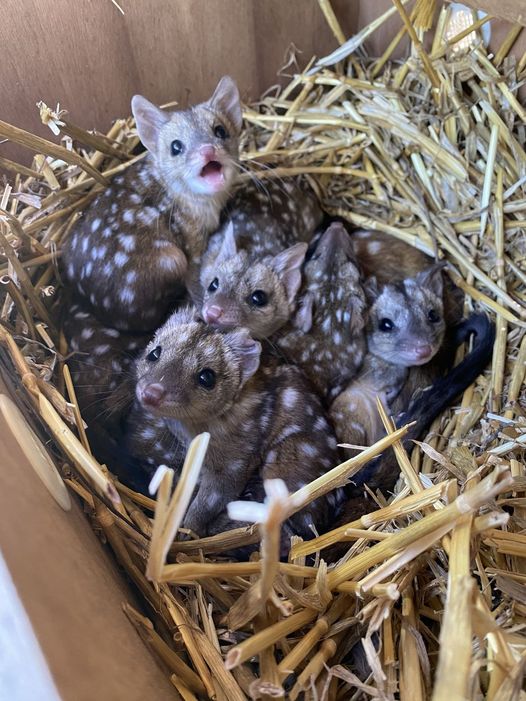
Rare Western Quoll Litter Discovered in Australian Wildlife Sanctuary
A Promising Discovery for Conservation Efforts
A group of researchers in Australia has made a significant discovery that is bringing renewed optimism for the future of the western quoll, a native marsupial species once widespread across the continent.
At the Mt Gibson Wildlife Sanctuary in Western Australia, ecologists recently identified a litter of western quoll pups during routine monitoring. The discovery is considered an encouraging development in ongoing conservation efforts aimed at restoring populations of this species.
The Western Quoll: A Native Species Facing Decline
The western quoll, also known as the chuditch, is a carnivorous marsupial roughly the size of a domestic cat. Historically, the species inhabited large areas of Australia, playing an important role in maintaining ecological balance by controlling populations of small animals such as invertebrates, reptiles, and birds.
However, over time the western quoll experienced a significant population decline. Habitat loss, predation by introduced species such as feral cats and foxes, and environmental changes greatly reduced their numbers.
Today, western quolls are primarily found in limited regions of southwestern Australia, making conservation initiatives essential for their survival.
Mt Gibson Wildlife Sanctuary: A Protected Habitat
Mt Gibson Wildlife Sanctuary has become a key location for efforts to restore the western quoll population. The sanctuary provides a protected environment where researchers can carefully monitor reintroduced animals and support their adaptation to the landscape.
Over the past several months, conservation teams have released quolls into the sanctuary and tracked their progress through field observations and camera monitoring.
The goal of the program is to create conditions where the species can successfully establish stable populations in areas where it previously existed.
Evidence of Successful Adaptation
The recent discovery of a litter of quoll pups suggests that the animals are not only surviving but also successfully reproducing in their new environment.
Georgina Anderson, Senior Field Ecologist at the Australian Wildlife Conservancy (AWC), described the discovery as an encouraging sign for the program.
According to Anderson, regular monitoring has shown that the quolls are adapting well to the sanctuary environment. The identification of pouch young indicates that the animals are becoming established in the area.
One male quoll, nicknamed “Aang,” has become a frequent presence on monitoring cameras placed throughout the sanctuary. Researchers note that he regularly visits several monitoring sites, demonstrating healthy activity within the habitat.
A Broader Conservation Initiative
The reintroduction of the western quoll is part of a wider conservation effort aimed at protecting Australia’s unique biodiversity. Over the past centuries, many native species have experienced population declines due to environmental pressures and introduced predators.
Mt Gibson Wildlife Sanctuary plays an important role in these efforts. Located on the traditional lands of the Badimia and Widi people, the sanctuary provides a safe habitat for several vulnerable species.
In addition to the western quoll, the sanctuary also supports other native animals such as the numbat, a small marsupial known for feeding primarily on termites.
Looking Ahead
While conservation experts emphasize that long-term recovery will require continued monitoring and habitat protection, the discovery of new western quoll pups is a positive step forward.
Researchers remain cautiously optimistic as they continue studying how the animals adapt and reproduce in the sanctuary environment.
The progress at Mt Gibson highlights how careful planning, collaboration, and long-term conservation work can support the recovery of species facing population decline.
A Positive Sign for Wildlife Conservation
The successful breeding of western quolls at Mt Gibson Wildlife Sanctuary represents an encouraging milestone for conservation teams working to protect Australia’s native wildlife.
Although challenges remain, the presence of new quoll pups suggests that these efforts are moving in the right direction. With continued dedication and habitat protection, researchers hope the western quoll population can gradually expand and contribute once again to the ecological balance of the region.