
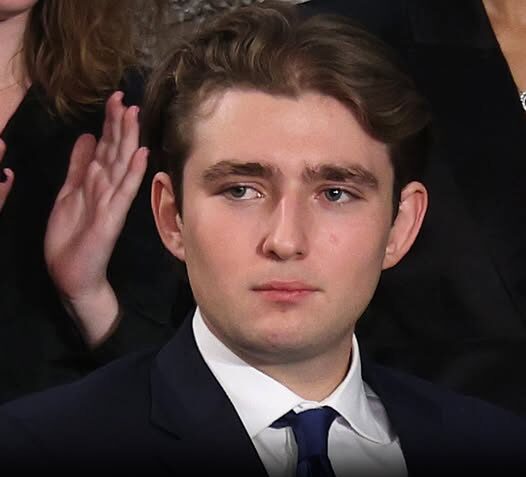
#SendBarron Trends as Online Debate Reflects Frustration Over Military Leadership and Service
A Hashtag Gains Momentum Amid Rising Tensions
As the United States faces escalating conflict in the Middle East, a separate debate has gained traction online.
Instead of focusing on strategy or diplomacy, many social media users have centered their attention on a different question: why isn’t Barron Trump being sent to fight?
Over the weekend, as tensions intensified abroad, the hashtag #SendBarron began trending across multiple platforms.
The surge was not driven by literal expectations of deployment, but by broader frustration among younger Americans.
For many participants in the discussion, the hashtag became a symbolic outlet rather than a concrete proposal.
Perception and Political Accountability
The debate quickly evolved into a conversation about leadership and perceived sacrifice.
Critics argue that President Donald Trump has overseen military escalation without congressional authorization.
They also point to his personal history, noting that he never served in the armed forces.
During the Vietnam War era, he received multiple draft deferments, including one based on a diagnosis of bone spurs.
That history has resurfaced in current online discussions, where it is often cited as an example of privilege and disconnect.
None of his children — Donald Jr., Eric, Ivanka, Tiffany, or Barron — have served in the military.
For critics, this absence of service has become symbolic of a broader divide between political leadership and ordinary service members.
What Social Media Users Are Saying
Several posts reflected frustration over perceived inequality in sacrifice.
“So why not demonstrate what patriotism truly looks like,” one tweet read, “and send Barron to represent the Trump family in harm’s way?”
Another commenter wrote: “If you’re going to start wars, maybe do it standing next to the people making the sacrifices. #SendBarron.”
Some messages were more pointed in tone.
“POTUS is vacationing while young Americans may be drafted. If he won’t serve, maybe his son should.”
These statements illustrate how the conversation has blended political criticism with rhetorical protest.
The Historical Context Behind the Debate
The renewed attention on President Trump’s draft deferments during the 1960s has contributed to the hashtag’s rapid spread.
One deferment was reportedly tied to a bone spurs diagnosis, obtained with the assistance of a physician in Queens.
That episode has long been criticized by some observers as an example of favoritism.
In moments of heightened military tension, historical narratives such as this often reemerge.
The past, in this case, has provided context for contemporary frustration.
What About Draft Eligibility?
Barron Trump turns 20 this year, placing him within the age range required to register with the Selective Service System.
However, the United States does not currently have an active military draft.
Registration with Selective Service does not equate to automatic or immediate military service.
If a draft were reinstated, eligibility would depend on multiple factors.
Health, physical fitness, and policy decisions by Congress and the Selective Service System would all play a role.
Some social media posts have speculated about medical exemptions based on height or physical characteristics.
Military branches do maintain certain physical standards, including height ranges for specific roles.
However, exceeding or falling outside those ranges does not automatically disqualify someone from all forms of service.
Eligibility determinations would involve a more comprehensive assessment.
Beyond One Individual
Despite the personal focus implied by the hashtag, many participants in the discussion emphasize that the issue extends beyond one young man.
For some veterans and military families, the debate reflects a longstanding concern about leaders authorizing military action while remaining personally insulated from its consequences.
The frustration centers on shared accountability rather than literal calls for deployment.
Others argue that targeting a political leader’s child, even rhetorically, risks crossing a line.
They contend that mocking or suggesting service as punishment undermines respect for those who volunteer to serve.
They also note that military service is shaped by complex legal, medical, and social considerations.
A Broader Reflection on Leadership and Service
Comments across social platforms have ranged widely in tone and perspective.
“If you vote for leaders who love war, maybe you or your children should be first in line.”
“This isn’t about Barron — it’s about not asking others to sacrifice while you stay safe.”
“Sending someone’s kid into battle as retribution isn’t a solution. It’s reactionary and cruel.”
These varying viewpoints underscore the emotional intensity surrounding decisions about military engagement.
They also reveal how quickly discussions about policy can become personal in the digital age.
The Symbolism of the Hashtag
The #SendBarron trend highlights how social media can transform complex geopolitical concerns into symbolic debates.
In this case, a single name became shorthand for questions about fairness, accountability, and leadership responsibility.
For some users, the hashtag functions as satire.
For others, it represents genuine frustration with what they perceive as unequal burdens of national decision-making.
Regardless of interpretation, the conversation reflects deeper tensions within American society.
Questions about who bears the cost of military action and how leaders demonstrate solidarity with service members remain powerful topics.
A Conversation About Responsibility
The online discussion continues to evolve as tensions abroad unfold.
Whether viewed as protest rhetoric or misplaced outrage, the trend illustrates how public sentiment can crystallize around symbolic figures.
Ultimately, the debate centers less on one individual and more on broader themes of leadership and responsibility.
As discussions about military policy continue, so too will conversations about accountability and shared sacrifice.
The #SendBarron hashtag serves as a reminder that public perception often shapes political discourse as strongly as policy itself.
In moments of uncertainty, those perceptions can surface in unexpected and highly visible ways.