
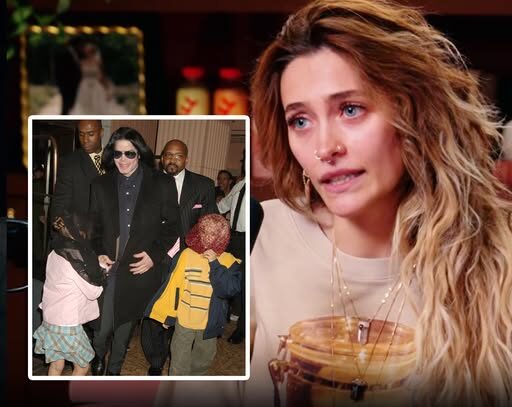
Paris Jackson Reveals What Her Private Childhood With Michael Jackson Was Really Like
Growing Up as Michael Jackson’s Only Daughter
Paris Jackson grew up in circumstances almost impossible for most people to imagine.
As the only daughter of Michael Jackson, she was surrounded by extraordinary public curiosity from the moment she was born.
But while the outside world viewed her father as one of the most famous entertainers alive, Paris experienced him in a much more personal way.
To her, he was simply her dad.
Now 28, Paris has shared rare details about the private childhood Michael created for her and her brothers, Prince and Bigi.
Michael Jackson Tried to Keep His Children Away From Fame
Michael understood better than almost anyone what intense fame could do to a person.
Because of that, he went to unusual lengths to protect his children from the attention surrounding his name.
Paris explained that much of their childhood was tightly controlled.
The rules extended to school, entertainment, travel, and even how they appeared in public.
Those restrictions may have looked unusual from the outside, but Paris now says many of them made sense to her as a child.
Neverland Was Not Simply a Private Playground for the Jackson Children
One of the biggest misconceptions surrounding Paris’s childhood involves Neverland Ranch.
Many people assumed that growing up as Michael Jackson’s daughter meant she and her brothers had unlimited access to the amusement rides, animals, and entertainment located there.
Paris said that was not the reality.
She remembered waking up and going to a designated classroom where she and her brothers completed their schoolwork.
The attractions came only after responsibilities were finished.
School and Chores Came First
According to Paris, the children were expected to complete homework and chores before enjoying the more exciting parts of the property.
If they behaved properly and completed what was expected of them, weekends could include visiting animals, riding attractions, or watching movies.
That structure made it clear that Neverland was not simply designed around their entertainment.
Michael wanted his children to understand responsibility even while living in an environment unlike almost any other home.
The Attractions Had Another Purpose
Paris explained that Michael made it very clear that the rides and entertainment at Neverland did not belong to his children.
They had been created largely for visiting children who were underprivileged or seriously ill and could not easily experience places such as Disneyland.
That distinction mattered to Michael.
He did not want Paris, Prince, and Bigi growing up believing that everything surrounding them automatically belonged to them.
Paris Says She Did Not Spend Her Entire Childhood at Neverland
Despite the property’s close association with Michael Jackson, Paris said she did not actually grow up there for most of her childhood.
She described spending only her earliest years at Neverland.
After that, the family moved frequently.
Paris said she and her brothers often stayed in hotels with their father and rarely remained in one place for more than a year.
That constant movement became another defining feature of her early life.
The Rules Followed Them Wherever They Went
Leaving Neverland did not mean the household became less structured.
Michael continued enforcing strict limits on entertainment.
Paris said the children were generally not allowed to watch television or movies whenever they wanted.
Television could sometimes be used for studying film, often with the sound turned off.
Otherwise, entertainment was usually reserved for weekends after responsibilities had been completed.
The Children Covered Their Faces in Public
One of the most recognizable parts of the Jackson children’s early years was the way they sometimes covered their faces when appearing in public.
To outsiders, the masks and coverings seemed mysterious.
Paris said there was a practical explanation behind them.
Michael wanted his children to be able to go places without immediately being recognized as his children.
Michael Presented It as a Way to Give Them Normal Experiences
Paris recalled her father explaining that covering their faces gave them a chance to go somewhere ordinary without attracting attention.
If nobody knew what they looked like, they could visit places such as Chuck E. Cheese without creating a scene.
For Paris, the logic made sense.
She did not remember thinking of the arrangement as strange.
Instead, it gave the children a level of anonymity that would otherwise have been almost impossible.
Fame Made Ordinary Childhood Experiences Difficult
Michael Jackson’s level of celebrity meant that even routine family outings could attract crowds, photographers, and intense curiosity.
His children inherited that attention without choosing it.
The face coverings were his attempt to separate their identities from his fame.
They could temporarily become anonymous children rather than Michael Jackson’s children.
That distinction gave them access to experiences that fame might otherwise have taken away.
Paris Did Not See Michael the Way the Public Did
To millions of fans, Michael Jackson was a global superstar.
To Paris, he was the person raising her.
She described him as extremely funny and said he was her best friend.
The image of the world-famous performer was very different from the father she experienced privately.
That personal relationship became one of the defining bonds of her childhood.
She Described Herself as Daddy’s Little Princess
Paris has spoken warmly about the closeness she shared with her father.
She described herself as his little princess and said there was a special bond between them that she found difficult to explain.
That relationship made his death especially devastating.
Her world had been structured around him.
Then, when she was only 11 years old, everything changed.
Michael Jackson Died When Paris Was 11
Michael Jackson died in 2009 at the age of 50.
Paris was still a child.
She suddenly lost not only her father but also the person who had created the structure around nearly every part of her life.
The protected environment she had grown up inside changed almost overnight.
She later described the transition as extremely difficult.
She Had to Learn Social Skills Very Quickly
Paris said the years after her father’s death became a crash course in interacting with the outside world.
Because her childhood had been so sheltered, she felt she lacked many of the social skills other children developed naturally through ordinary school and community experiences.
The adjustment was not easy.
She was grieving while also trying to understand a world she had previously experienced only in limited ways.
She Wanted to Grow Up as Quickly as Possible
After Michael’s death, Paris developed a strong desire to experience life intensely.
She described herself as wanting to live fast and grow up quickly.
There was a feeling that she needed to experience as much as possible.
Looking back, she believes that desire contributed to decisions she later regretted.
The Search for Experience Became Dangerous
Paris has openly discussed her past relationship with drugs and alcohol.
She connected some of those struggles to a deeper pattern that began long before adulthood.
She said she had started looking outside herself for ways to manage difficult emotions when she was still very young.
Sometimes that meant seeking comfort through people or food.
At other times, the coping mechanisms became far more harmful.
She Described Self-Harm as a Survival Skill Rather Than a Living Skill
Paris spoke candidly about self-harm and the way destructive behavior can function as an attempt to survive emotional distress.
She drew a distinction between something that helps a person truly live and something that only helps them survive a painful moment.
That pattern of searching for something outside herself eventually extended into substance use.
She also explained that people coping in those ways often become skilled at secrecy.
She Hid Much of What She Was Going Through
For a person who had already grown up behind layers of privacy, secrecy became familiar.
Paris said her addictions developed without everyone around her fully understanding what was happening.
She learned how to conceal parts of her life.
Eventually, however, the situation became impossible to manage.
She reached what she later described as a breaking point.
Paris Reached What She Called Rock Bottom
There came a point when the ways she had been coping no longer worked.
Paris described reaching a personal rock bottom.
Recovery required her to confront the reasons she had been reaching for substances and other destructive coping mechanisms in the first place.
That process was not simply about stopping drugs and alcohol.
It required her to rebuild her relationship with herself.
She Has Been Sober Since Early 2020
Paris has said she has remained sober from drugs and alcohol since the first week of 2020.
The achievement represented a major turning point in her life.
But she has also been clear that sobriety did not instantly solve every problem.
Instead, recovery forced her to begin dealing with emotions she had previously tried to escape.
Recovery Required Learning How to Sit With Discomfort
Paris described recovery as learning how to maintain a healthier relationship with herself.
That often meant allowing uncomfortable emotions to exist rather than immediately trying to make them disappear.
She described the process as gentle but difficult.
For her, discomfort became something that could teach rather than something that always had to be avoided.
Her Childhood Protection Had Both Benefits and Costs
Looking back, Paris can see why her father protected his children so intensely.
Michael knew how aggressive fame could become.
He understood what it felt like to have strangers believe they had a right to every part of your life.
His precautions allowed his children to experience moments of privacy and ordinary childhood fun.
But being heavily sheltered also meant Paris later had to learn certain social skills very quickly.
The Masks Were Never About Embarrassment
For years, images of Michael Jackson’s children covering their faces generated speculation.
Paris’s explanation offers a far simpler interpretation.
Michael was not ashamed of his children.
He wanted them to be anonymous.
If the public did not recognize their faces, they could move through certain environments without attracting the attention attached to the Jackson name.
Michael Wanted Them to Understand Privilege
The rules around Neverland also suggest that Michael did not want his children assuming the extraordinary environment existed solely for them.
Paris remembered being explicitly told that the attractions were intended for children who might otherwise never have access to those experiences.
That lesson placed responsibility alongside privilege.
The Jackson children could enjoy the property, but they were not encouraged to think of everything there as their personal possession.
Her Memories of Her Father Are Surprisingly Ordinary
Some of the most striking parts of Paris’s recollections are not glamorous.
They involve chores.
Homework.
Rules about television.
Rewards for behaving properly.
Those memories reveal a family structure far more ordinary than the outside world might have imagined.
She Lost That Structure at a Critical Age
At 11, Paris was old enough to understand the magnitude of losing her father but still young enough to depend heavily on the environment he had created.
His death removed the central figure around whom her childhood had been organized.
She then had to navigate adolescence while grieving and while facing public attention that had once been carefully controlled.
That combination contributed to an extremely difficult transition.
She Wanted to Experience Everything Her Childhood Had Restricted
Paris’s desire to live fast after her father’s death can also be understood against the strict structure of her early years.
For much of childhood, rules determined when she could watch television, where she could go, and whether she could be recognized publicly.
After that structure disappeared, the freedom could feel overwhelming.
Paris described wanting to experience everything.
Some of those experiences eventually came with serious consequences.
She No Longer Romanticizes the Difficult Years
Paris has not tried to portray her substance use or destructive behavior as glamorous.
Instead, she has described those experiences as attempts to manage emotions she did not know how to handle differently.
That perspective became central to her recovery.
The behavior was not the solution.
It was a symptom of something deeper.
Sobriety Forced Her to Build a New Relationship With Herself
Once substances were removed, Paris had to face the emotions underneath them.
She described recovery as learning to move through discomfort rather than immediately escaping from it.
That process required patience.
It also required treating herself differently.
Rather than responding to pain with punishment or avoidance, she began trying to approach it with more compassion.
Her Father’s Death Still Divides Her Life Into Two Eras
There was the childhood before Michael died.
That period was controlled, private, and structured around him.
Then came everything afterward.
Adolescence brought public exposure, grief, experimentation, addiction, and eventually recovery.
The contrast between those periods remains central to the way Paris explains her life.
Michael’s Protection Makes More Sense to Her in Retrospect
Some childhood rules that may have appeared extreme to outsiders now look different when understood through the reality of Michael Jackson’s fame.
His children could not simply walk into an ordinary family restaurant or amusement center and expect to remain unnoticed.
Protecting their identities gave them something their father rarely possessed himself.
Anonymity.
Paris Still Speaks About Michael Primarily as Her Father
Despite decades of public debate surrounding Michael Jackson, Paris’s memories are rooted in the private relationship they shared.
She remembers humor.
Rules.
Affection.
She remembers being his daughter rather than being connected to an international celebrity.
That difference remains important to the way she talks about him.
She Continues Building an Identity Beyond the Jackson Name
Paris has built her own career as a singer and model while continuing to navigate the enormous legacy attached to her surname.
Being Michael Jackson’s daughter guarantees public curiosity.
But she has increasingly used interviews to explain her experiences in her own words rather than allowing strangers to define them entirely.
That includes speaking honestly about the parts of her story that are uncomfortable.
Her Story Is About More Than Growing Up Famous
Paris’s childhood was extraordinary because of her father’s fame.
But many of the emotions she describes are deeply human.
Grief.
Loneliness.
Wanting freedom.
Searching for ways to cope.
Learning that some of those coping mechanisms eventually create even more pain.
She Has Chosen to Speak About Recovery Without Pretending It Is Easy
Paris does not describe sobriety as the moment when every problem vanished.
She describes it as a process.
Learning to stay present with difficult emotions remains uncomfortable.
But she now sees that discomfort as part of healing rather than proof that something is wrong.
The Childhood Michael Created Was Complicated but Intentional
From classrooms inside private properties to restrictions on television and face coverings during ordinary outings, Michael Jackson’s parenting choices were unusual.
But Paris’s memories suggest those choices followed a consistent purpose.
He was trying to give his children boundaries, privacy, and some understanding of normal life despite circumstances that were anything but normal.
Paris Understands Why Her Father Did It
The masks gave them anonymity.
The chores provided structure.
The restrictions on entertainment created boundaries.
The rules surrounding Neverland reminded them that extraordinary privilege did not mean everything belonged to them.
For Paris, those lessons remain part of the father she remembers.
She Is Still Learning What It Means to Live on Her Own Terms
Paris spent her earliest years inside a world designed to protect her.
Then she was forced to navigate adulthood without the person who built that world.
The journey that followed included painful choices, addiction, and periods when she struggled simply to manage what she was feeling.
But it also eventually led to sobriety and a deeper understanding of herself.
Michael Jackson Was a Superstar to the World but Dad to Paris
Millions of people remember Michael Jackson for his music, performances, and extraordinary fame.
Paris remembers something more private.
She remembers a funny father who gave his children chores, limited their television time, rewarded them with weekend activities, and covered their faces so they could occasionally experience the world without being recognized.
She remembers the man she considered her best friend.
And although losing him at 11 changed the direction of her life forever, the lessons and contradictions of that protected childhood remain deeply woven into the person she has become.