
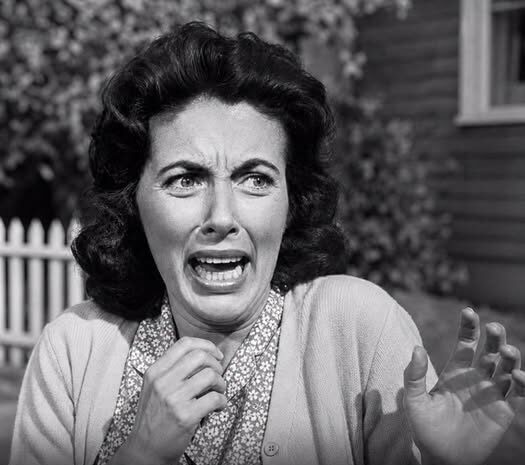
Peggy Webber, Prolific Radio Actress Who Worked With Orson Welles and Alfred Hitchcock, Dies at 100
A remarkable voice from radio’s golden age has fallen silent
Peggy Webber, the veteran actress whose career stretched across radio, film, television and theater for decades, died on August 15, 2026, at the age of 100.
Her death marked the end of an extraordinary career that connected several generations of American entertainment.
Webber worked during radio’s golden age, appeared in films connected with Orson Welles and Alfred Hitchcock, became known to horror fans through The Screaming Skull and later devoted much of her life to preserving radio drama as a living art form.
She died of natural causes at an independent living facility in Napa, California. :contentReference[oaicite:0]{index=0}
Her career began when radio was still at the center of American entertainment
Long before television became dominant, radio was one of the main ways families experienced drama, comedy, mystery and news together.
Webber entered that world at a very young age.
She made her radio debut when she was only 12 years old.
That early experience became the foundation for a career in which her voice would eventually appear across thousands of broadcasts.
Radio demanded a special kind of performance.
Without facial expressions, costumes or physical scenery, actors had to create entire characters through voice alone.
Webber became exceptionally skilled at doing exactly that.
Audiences often knew her work without knowing her name
One of the unusual realities of radio acting was that performers could become extremely familiar to listeners while remaining visually anonymous.
Webber was able to move between different characters, tones and personalities so effectively that audiences might hear her repeatedly without immediately realizing it was the same performer.
Her versatility became one of the defining features of her career.
By the mid-1940s, she had already demonstrated an extraordinary ability to create many different characters for broadcast audiences.
That flexibility allowed her to work constantly during an era when radio drama required large numbers of performers capable of adapting quickly.
She appeared in thousands of radio episodes
Webber’s radio credits extended across a remarkable range of programs.
Her work included appearances on The Adventures of Sherlock Holmes, The Story of Dr. Kildare, The Man Called X and Escape.
She also worked alongside major performers including Basil Rathbone, Nigel Bruce, Lionel Barrymore, Lew Ayres, Herbert Marshall and William Conrad.
At one point, Webber recalled that she could be involved with several soap operas at the same time, reflecting both the intense pace of radio production and the demand for performers capable of switching roles quickly. :contentReference[oaicite:1]{index=1}
She even stepped into one of Hollywood’s most famous roles for radio
In 1944, Webber performed the role of Ilsa in a serialized radio adaptation of Casablanca.
The character had been made famous on screen by Ingrid Bergman.
For Webber, the role offered another example of the unique demands of radio performance.
She had to recreate emotional depth and atmosphere using only her voice and the soundscape surrounding her.
It was the kind of work that helped establish her reputation as an actress capable of moving easily between genres and characters.
Dragnet became one of her most recognizable radio connections
Webber also became closely associated with Dragnet.
She appeared in the original radio version of the series and later portrayed the mother of Jack Webb’s Joe Friday.
Dragnet became one of the defining crime dramas of its era, known for its direct style and realistic presentation.
Webber’s involvement placed her inside one of the most influential radio and television franchises of the period.
Her contribution to the program became one of the roles most frequently mentioned when looking back at her extensive career. :contentReference[oaicite:2]{index=2}
Her talents eventually carried her from radio microphones to film sets
Webber did not remain exclusively in radio.
She also built a substantial career in film and television.
Her ability to adapt made the transition possible at a time when the entertainment industry itself was changing dramatically.
Radio remained important, but television and movies increasingly shaped popular culture.
Webber moved between those worlds rather than abandoning one for another.
She worked with Orson Welles on Macbeth
One of Webber’s notable film appearances came in Orson Welles’ 1948 adaptation of Macbeth.
She portrayed Lady Macduff in the film.
Working with Welles placed her alongside one of the most influential figures in twentieth-century theater, radio and cinema.
Welles himself had famously moved between those same artistic worlds, making Webber’s participation particularly fitting.
The film became another important point in a career already distinguished by its range. :contentReference[oaicite:3]{index=3}
Alfred Hitchcock later brought her into The Wrong Man
Webber also appeared in Alfred Hitchcock’s 1956 film The Wrong Man.
That connection placed her work alongside another director whose films would become permanent fixtures of Hollywood history.
Hitchcock was known for carefully controlled performances and psychological tension.
For Webber, appearing in one of his films became another example of how frequently her career intersected with major figures in entertainment.
Her name may not always have received the same recognition as the stars and directors around her, but her work consistently placed her in significant productions. :contentReference[oaicite:4]{index=4}
Horror fans remember her for The Screaming Skull
In 1958, Webber appeared in The Screaming Skull.
The film later earned her recognition among fans of classic horror and helped establish her as an early example of what would eventually become known as a “scream queen.”
That role gave Webber yet another identity within popular culture.
To radio listeners, she was a remarkably versatile voice performer.
To classic film fans, she was a supporting actress who had worked with major directors.
To horror audiences, she became connected with one of the memorable low-budget fright films of the 1950s. :contentReference[oaicite:5]{index=5}
Her life extended far beyond acting for other people
Webber eventually became increasingly involved in producing, directing and protecting the kind of entertainment she loved.
By the late 1970s, she was working on productions connected with Sears Radio Theatre.
That period was important because traditional radio drama had already lost much of the dominant cultural position it once held.
For Webber, however, that did not mean the format had become irrelevant.
She believed radio drama still had artistic value.
She founded California Artists Radio Theatre in 1984
One of Webber’s most important later accomplishments came in 1984, when she founded California Artists Radio Theatre.
The organization became a vehicle for reviving and producing dramatic works specifically for audio performance.
Rather than treating radio drama as a relic from another era, Webber approached it as something capable of continuing and evolving.
The company presented material connected with writers including Shakespeare, Lewis Carroll, George Bernard Shaw and Oscar Wilde, while also adapting more contemporary works.
Webber produced and directed many of those projects herself. :contentReference[oaicite:6]{index=6}
The company attracted an extraordinary group of performers
California Artists Radio Theatre worked with an impressive collection of actors over the years.
Its repertory players included figures such as Michael York, Samantha Eggar, Roddy McDowall, Ed Asner, William Shatner and David Warner.
That roster demonstrated the respect the medium continued to command among experienced performers.
For Webber, bringing established actors into radio drama helped prove that the format was not simply something belonging to the past.
It could still offer performers a unique creative challenge. :contentReference[oaicite:7]{index=7}
Webber treated radio as a responsibility rather than nostalgia
Her dedication to radio was not based only on sentimentality for her early career.
She spoke about creative opportunities as something entrusted to her care.
That attitude helps explain why she continued working in the medium long after its commercial golden age had ended.
For Webber, maintaining radio drama was a form of stewardship.
She had been given opportunities as a young performer and later felt responsible for preserving that creative tradition for others.
She continued working well into old age
Webber’s commitment did not disappear as she grew older.
She continued being involved with radio drama into her later years, including work when she was approaching and entering her 90s.
Her longevity made her a rare bridge between the earliest years of mass radio entertainment and a much newer generation interested in audio storytelling.
By the time podcasts and modern audio dramas began introducing younger listeners to fictional storytelling through sound, Webber had already spent decades demonstrating what the medium could accomplish.
Her career quietly connected multiple eras of entertainment
Few performers could claim direct professional links to so many distinct chapters of American popular culture.
Webber began in radio when it was still a dominant entertainment medium.
She entered films during Hollywood’s studio era.
She worked with figures such as Orson Welles and Alfred Hitchcock.
She appeared in a horror film that developed a cult following.
Then she spent later decades trying to preserve audio drama long after many people assumed it had disappeared.
Her life also included unexpected chapters away from Hollywood
Webber married Robert Sinskey in 1951.
The following year, the couple moved to Japan while Sinskey worked as a researcher with the Atomic Bomb Casualty Commission.
The marriage ended in divorce in 1967.
Webber later married Irish actor Sean McClory in 1983, and they remained married until his death in 2003. :contentReference[oaicite:8]{index=8}
She also became involved in live performance spaces
Webber’s creative interests were not limited to studios and radio microphones.
She and actor Ted Cassidy, remembered by many viewers for The Addams Family, owned The New Hope Inn in Santa Monica.
The location combined restaurant operations with live performance.
Webber also ran a theater company whose members included Bob Denver, later widely recognized for Gilligan’s Island.
These ventures reflected her ongoing desire to create spaces where performers could work and audiences could experience live entertainment. :contentReference[oaicite:9]{index=9}
She experienced displacement late in life
Even after reaching an extraordinary age, Webber’s final years included significant change.
She had been living in the Los Angeles area before being forced to evacuate during the January 2025 wildfires.
She subsequently moved north to Napa, California.
It was there, at an independent living facility, that she died of natural causes on August 15, 2026. :contentReference[oaicite:10]{index=10}
She reached a milestone few people ever experience
Webber lived to be 100.
The milestone meant she had personally witnessed extraordinary transformations in entertainment technology and culture.
When she began performing, families gathered around radios to experience stories together.
During her lifetime came television, modern cinema, home video, digital entertainment, streaming and the renewed popularity of audio storytelling.
Yet the fundamental skill at the center of her career remained unchanged.
She knew how to make listeners imagine something they could not see.
Her work was often more familiar than her face
Webber’s career also represents an older tradition of professional acting in which recognition was not always the central goal.
Many audiences encountered her performances without learning much about the woman behind them.
She moved between characters and productions while allowing the work itself to remain at the center.
That relative anonymity did not diminish her contribution.
In many ways, it demonstrated the depth of her craft.
Her greatest legacy may be the art form she refused to abandon
Webber could easily have allowed radio drama to remain simply part of her personal history.
Instead, she spent decades helping keep it alive.
Through California Artists Radio Theatre, she gave performers opportunities to continue working in audio drama and introduced classic material to listeners who had never experienced radio’s original golden age.
Her work helped connect the history of broadcasting with its future.
Peggy Webber leaves behind a century of stories
Her career was not built around one enormous starring role or a single iconic celebrity image.
Instead, it accumulated through thousands of performances, countless characters and decades of creative persistence.
She worked in radio, film, television and theater.
She performed for Orson Welles and Alfred Hitchcock.
She became part of Dragnet and The Screaming Skull.
Then she devoted much of her later career to protecting the medium that first gave her a voice.
The microphone is quiet, but the work remains
Peggy Webber’s death at 100 closes an unusually long chapter in American entertainment history.
She belonged to a generation that understood how powerful a voice could be when listeners were asked to create the rest of the world in their imagination.
She carried that belief forward even after technology and audience habits changed around her.
Her legacy is therefore not limited to the performances she left behind.
It also lives in the idea she defended for decades: that audio drama did not need to become a museum piece simply because its first golden age had ended.
The woman behind thousands of voices is gone, but the work she spent a lifetime preserving continues to speak.