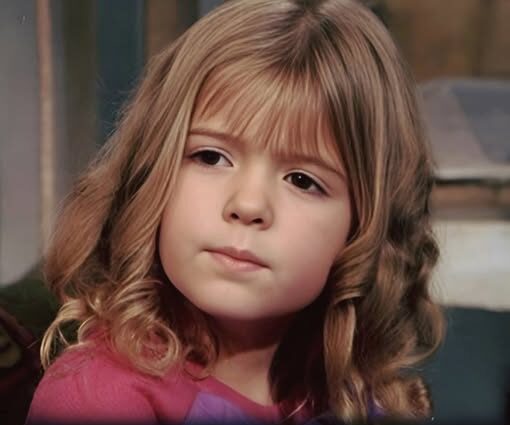
Bridgette Andersen’s Brief Rise in Hollywood and the Legacy She Left Behind
An Early Start Marked by Talent and Confidence
Bridgette Andersen became known to many viewers through her memorable performance in “Savannah Smiles,” a role that introduced her as one of the most recognizable young faces of her time.
Her success at such a young age led many people to believe she was headed for a long and remarkable career in entertainment.
Instead, her life followed a much more difficult path, turning her story into one that continues to resonate for both its promise and its sadness.
Born on July 11, 1975, in Inglewood, California, Andersen spent her childhood in Malibu, where she developed an imaginative and spirited personality.
One of the details that stood out about her early years was a personal superstition connected to her birthday. Because she was born on 7/11, she considered the number lucky.
Whenever she noticed a clock showing 7:11, she would kiss the first two fingers of her right hand and tap the time on the display.
It was a small and personal habit, but it reflected the vivid inner world she carried with her from childhood into the public eye.
A Child Performer Who Stood Out Immediately
Long before she became known through film and television, Andersen was already appearing in front of cameras.
As an infant, she appeared in television commercials for Bank of America and Mervyn’s, drawing attention almost from the beginning of her life.
People around her recognized that she seemed unusually advanced for her age, both in her interests and in the way she communicated.
She began reading at the age of two-and-a-half, a detail that amazed those who knew her.
Her abilities were described as exceptional, and her intellectual curiosity set her apart from many children her age.
By the time she was six, one of her favorite authors was Ernest Hemingway, and she was especially drawn to The Old Man and the Sea.
Her family and neighbors noticed not only that she was bright, but that she expressed herself in a way that felt older than her years.
Children in the neighborhood were reportedly curious about her because she spoke with unusual maturity, making her stand out even in ordinary settings.
That same quality later became one of the features that helped her connect so naturally with audiences on screen.

The Dream That Led Her Into Acting
Andersen’s interest in performing developed very early.
Inspired by programs such as Diff’rent Strokes and Silver Spoons, she began imagining a future in acting while also dreaming of one day producing and directing films of her own.
Her father, Frank, said that her skills in acting, reading, and singing came naturally to her.
He also made clear that these interests were not forced upon her, but rather grew from her own personality and enthusiasm.
That independent spark became part of her identity as a child performer.
In a February 1983 appearance on The Tonight Show with Johnny Carson, Andersen shared a story from when she was two years old.
She recalled trying to climb into the television so she could join Our Gang, also known as “The Little Rascals.”
The moment revealed the charm and confidence that made her appealing to viewers, and it also reflected how naturally acting seemed to belong in her world.
After her father caught her in that moment, she found her direction in entertainment, quickly signed with a talent agent, and began building her career.
Over the next three years, she worked as a fashion model, appeared in commercials, and gained roles in television productions including King’s Crossing and Washington Mistress.
The Breakthrough of “Savannah Smiles”
Her major breakthrough came in 1982, when she was chosen to play Savannah Driscoll in Savannah Smiles.
The role brought her widespread attention and remains the performance for which she is still most remembered.
Writer and co-star Mark Miller had originally written the part for his daughter, Savannah Miller, but she was considered too old for the character at eleven.
That opened the door for a larger casting process that included nearly 150 children.
In the end, Andersen won the part and quickly felt a strong bond with the character she would play.
During her audition, she was asked to tell any bedtime story she knew.
She chose the story of Br’er Rabbit, and her telling of it made such an impression that Miller decided to include it in the film itself.
That moment highlighted more than her acting ability. It showed her instinctive storytelling skills and her ability to hold attention without effort.
Andersen later described how closely she related to the role.
“We’re like twins! We do the same things,” she remarked during a modern interview.
In a 1982 interview, she explained the story of the film by describing the character as a girl who runs away because she feels unloved by her parents.
She explained that the girl ends up in a car with two criminals, who later decide to return her to her parents without involving police so they can collect a reward themselves.
That performance helped establish Andersen as a child actress with emotional depth and natural screen presence.

Other Roles and Growing Recognition
The same year that Savannah Smiles was released, Andersen also took on another notable role.
She played a six-year-old Mae West in the biographical film Mae West, sharing the screen with James Brolin.
To prepare for her portrayal of “Young Mae,” Andersen taught herself to dance by wearing tap shoes constantly for a week and studying Gene Kelly in Singin’ in the Rain (1952).
By the time a professional dance teacher was assigned to work with her, she had already advanced so quickly that she learned the choreography in only a few days.
That level of dedication showed the seriousness with which she approached her work, even as a child.
Her performances continued to attract attention in the years that followed.
For her work in the 1983–84 series The Mississippi, she received a nomination for a Youth in Film Award in the category of “Best Young Actress – Guest in a Television Series.”
She also appeared in the CBS sitcom Gun Shy, where she played Celia, one of two children won in a card game by Barry Van Dyke’s character.
Although she worked in both television and film, Andersen later said that she preferred films because they gave her greater opportunities.
That preference reflected a young performer who had already begun thinking carefully about the kind of work she wanted to do.
At one point, she was even considered for the role of Gertie in Steven Spielberg’s E.T.
That part eventually went to Drew Barrymore, but the fact that Andersen was in consideration showed how seriously she was viewed within the industry.
The Difficult Years That Followed
Like many child performers, Andersen’s early success did not guarantee an easy transition into adolescence and adulthood.
During her teenage years, she faced growing difficulty in securing acting roles.
That change marked a challenging period in her life, as opportunities became harder to find and her career no longer moved with the same momentum it had during childhood.
She also struggled with drug issues during these later years, adding another layer of difficulty to a period already marked by uncertainty.
At the time, she was trying to remain sober while working at Erewhon Health Food Store in Los Angeles, California.
The contrast between her early fame and her later private struggles makes her story especially poignant.
For many child stars, the distance between public image and personal reality can become very wide, and Andersen’s life reflected that painful divide.
Her final acting credit came in 1996, when she played a character named “Drew” in a dream sequence.
The detail carried an unintended irony, given that she had once been considered for the role that had gone to Drew Barrymore years earlier.
By then, her time in the spotlight had largely passed, even though her earlier performances remained vivid in the memories of those who had seen them.
Her Death at the Age of 21
Bridgette Andersen died in Los Angeles on May 18, 1997.
She was only 21 years old.
Her death was caused by a heroin overdose, bringing a tragic end to a life that had begun with so much promise and public admiration.
The news was deeply upsetting to those who remembered her from childhood and to those who had followed her work during the years when she seemed destined for a lasting career.
She was laid to rest at Fir Grove Cemetery in Lane County, Oregon.
Her passing remains one of those stories that continues to trouble people because of how young she was and how much potential had once been visible in her future.
It also stands as a reminder of how fragile life can become when personal struggles unfold away from the public attention that once celebrated success.
A Legacy That Continued Beyond Her Lifetime
Even after her death, Andersen’s memory did not disappear.
Her legacy continued in ways that showed how deeply she had affected those who remembered her work and her life.
In 2015, actress and poet Amber Tamblyn included Andersen in Dark Sparkler, a collection of eulogies and poems dedicated to late actors.
One poem in the book was devoted directly to Andersen.
Another poem, written in honor of adult film actress Shannon Michelle Wilsey, reflected on a connection tied to Savannah Smiles.
Wilsey had used the stage name “Savannah,” inspired by the film that had helped make Andersen famous.
That parallel suggested how Andersen’s brief presence in popular culture continued to echo in unexpected places long after her passing.
Her story remains meaningful not only because of the work she did as a child actress, but because it captures the sharp contrast between early acclaim and personal hardship.
For those who remember Savannah Smiles, Andersen remains the bright and expressive young performer who brought warmth and life to the screen.
For others who learn about her later, she represents the painful side of fame, especially when success arrives at a very young age.
Her life invites reflection on talent, pressure, vulnerability, and the uncertain path that can follow early recognition.
Remembering Bridgette Andersen Today
Bridgette Andersen’s story is not remembered simply because it ended in tragedy.
It is remembered because, from the beginning, she seemed to carry unusual talent, intelligence, and presence.
She was a child who read early, spoke with confidence, and stepped naturally into a demanding profession.
She earned roles that many others wanted, impressed filmmakers during auditions, and brought a rare spark to the performances that defined her brief career.
At the same time, her life reminds people that recognition and promise do not protect anyone from struggle.
The distance between childhood success and adult stability can be difficult to cross, especially under the weight of public expectations and personal challenges.
Today, she is remembered through the performances she left behind, through the people who continue to write and speak about her, and through the emotional response her life still inspires.
Her role in “Savannah Smiles” remains the centerpiece of that memory, but it is only one part of a larger story that includes ambition, discipline, hardship, and loss.
Though her life was brief, Bridgette Andersen left an impression that has endured far beyond her years.
That lasting impression is what keeps her name alive, not only as a former child star, but as a young woman whose life reflected both the brightness and the cost that can sometimes come with fame.