
Rod Stewart’s Utah Concert Scare Highlights the Fragility Behind a Rock Legend’s Endurance
A Sudden Moment That Changed the Mood
Rod Stewart’s appearance in Utah became more than another concert stop when a frightening moment on stage left thousands of fans watching in silence.
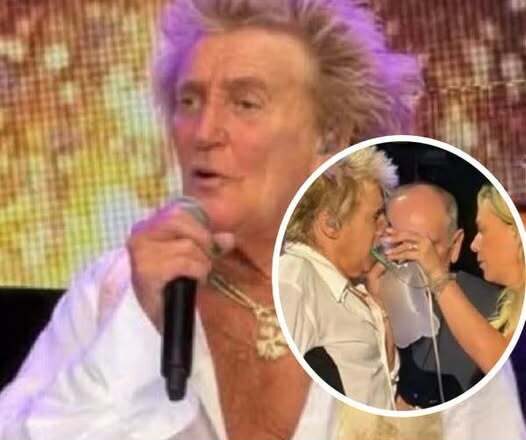
The 81-year-old rock legend, long associated with energy, charisma, and a commanding stage presence, suddenly appeared unsteady beneath the bright Utah lights.
As he stood near the microphone, he swayed and held onto the mic stand, creating an uneasy pause in a performance that had begun with the familiar confidence audiences expect from him.
For fans in the crowd, the shift was immediate. What had been a night of music quickly turned into a moment of concern, as many wondered whether the singer was struggling to continue.
The scene became even more alarming when an oxygen tank was brought onto the stage. The sight of medical support beside a performer known for decades of resilience created a powerful and emotional image.
Whispers spread through the audience, including the fearful question, “is this it?” as people tried to understand whether they were witnessing a passing health scare or something more serious.
An Icon Suddenly Looked Human
For much of his career, Rod Stewart has represented durability in an industry where many artists fade, slow down, or step away from the spotlight.
His voice, style, and stage identity have helped him remain a recognizable figure across generations, and that lasting image made the Utah moment feel especially jarring.
The scare was not defined by spectacle or drama, but by vulnerability. A performer who has spent decades appearing larger than life suddenly looked fragile in front of a crowd that had come to celebrate him.
That contrast gave the moment its emotional weight. Fans were not simply watching a singer pause during a show. They were seeing age, exhaustion, and physical limitation interrupt an image built over a lifetime.
The altitude in Utah appeared to play a role in the intensity of the moment. At 4,300 feet above sea level, the conditions added another challenge for a performer already facing recent health concerns.
As Stewart fought to stay composed, the crowd’s energy changed. The usual excitement of a concert gave way to a quieter, more anxious atmosphere.
Continuing Through the Performance
Despite the visible difficulty, Stewart did not immediately leave the stage. Instead, he tried to push forward, balancing concern with the instincts of a performer determined to finish what he had started.
He joked, sat down, and continued singing, turning a frightening interruption into a deeply human exchange between artist and audience.
The decision to remain on stage carried meaning beyond the music. It showed a performer unwilling to surrender the moment, even when his body appeared to be demanding rest.
As he moved through the performance, the chair became part of the scene. It was not a symbol of defeat, but of adjustment.
Instead of pretending nothing had happened, Stewart allowed the audience to see him continue in a different way. That openness gave the concert a rare intimacy.
Fans were no longer only watching a rock legend deliver familiar songs. They were sharing a moment of uncertainty with someone who had chosen not to hide his struggle.
Concern During “Young Turks”
The scare unfolded while Stewart was powering through “Young Turks,” a song associated with movement, drive, and the restless spirit that has marked much of his career.
The contrast between the song’s energy and the singer’s visible difficulty made the scene even more striking.
One moment, he was performing with the force expected from a veteran entertainer. The next, he appeared to be fighting to remain steady.
For an audience used to seeing him command a stage, the sight of him clinging to the microphone stand created a sharp emotional turn.
The oxygen tank brought on stage confirmed that this was not simply a routine pause. It was a serious enough moment that those around him felt immediate support was necessary.
Yet Stewart’s response showed his instinct to keep the night alive. He did not allow the scare to become the final image of the show.
Weeks of Health Concerns
The Utah incident did not happen in isolation. It followed a period marked by illness, canceled shows, and public discussion about how much Stewart should continue to take on.
For fans and critics alike, the episode added urgency to a larger question about aging performers and the physical demands of touring.
Live performance requires stamina, travel, recovery, and repeated public appearances. For an artist in his eighties, those demands can become especially difficult.
Stewart’s recent cancellations had already raised concern among supporters who want him to protect his health while also respecting his desire to keep performing.
The Utah scare brought that tension into plain view. It showed the emotional conflict between wanting a beloved artist to continue and fearing the cost of that commitment.
Some observers questioned whether he was pushing too hard. Others defended his choice to remain active and live fully while he still can.
The Debate Around Pushing Forward
Public reaction to moments like this is often divided because fans care deeply but see the situation from different angles.
One side sees Stewart’s determination as admirable. To them, continuing to perform is not recklessness, but a sign of purpose and devotion to the people who have supported him for decades.
Another side sees the same determination as concerning. They worry that the pressure to satisfy crowds and preserve a legendary image may come at the expense of personal well-being.
Both reactions come from the same place: the recognition that Stewart is no longer simply an entertainer in motion, but an aging public figure facing real physical limits.
The Utah concert forced that reality into the open. It was not a theoretical debate about age, health, or touring. It was visible on stage in real time.
Because the moment happened in front of thousands, it carried an emotional force that ordinary announcements or canceled dates often do not.
A Tender Connection With the Crowd
What remained most powerful about the incident was not panic, but the strange tenderness that followed.
As the crowd watched Stewart recover enough to continue, the distance between performer and audience seemed to shrink.
Concerts often depend on illusion. Lights, sound, movement, and staging create the feeling that the artist is untouchable.
In Utah, that illusion briefly disappeared. The audience saw not just the legend, but the person inside the legend.
That vulnerability did not erase his stature. In some ways, it made the connection stronger.
By continuing from a chair and allowing the performance to carry on in altered form, Stewart gave fans a different kind of memory.
The Image That Stayed With Fans
The lasting image from the night was not one of scandal. It was the sight of a famous performer confronting a difficult physical moment in front of people who cared about him.
He had not planned for the concert to become a symbol of fragility. Yet that is what made it meaningful.
The oxygen tank, the chair, the silence, and the decision to sing on created a scene that felt both unsettling and moving.
For longtime fans, it was a reminder that the voices that have soundtracked their lives belong to people who age, tire, and struggle.
For newer observers, it showed the cost of continuing to perform at a high level long after most people have stepped away from public life.
The moment was not about failure. It was about endurance under visible strain.
An Aging Star Refusing to Step Away
Rod Stewart’s Utah scare captured the complicated reality of late-career performance.
There is admiration in seeing someone continue to do what they love. There is also discomfort in watching that effort become physically difficult.
Stewart’s choice to finish the show, even while seated, reflected the identity of an artist who has spent his life on stage and does not appear ready to let the curtain fall.
That refusal can be inspiring, but it also raises difficult questions about limits, expectations, and the emotional pressure surrounding legendary performers.
Fans often want their idols to remain unchanged, but moments like this reveal that no amount of fame can stop time.
The Utah concert reminded many that even the loudest and most seemingly indestructible figures are still human.
A Night Remembered for Vulnerability
In the end, the concert was not remembered simply because Rod Stewart struggled. It was remembered because he stayed.
He faced a frightening moment in public, accepted help, adjusted, and continued in the only way he could.
That choice turned a health scare into a shared experience between a performer and the people who had come to hear him sing.
The night left behind concern, debate, and admiration in equal measure.
It also left a clear reminder that age changes even the strongest stage personas, and that vulnerability can become part of a legacy rather than a threat to it.
For Rod Stewart, the Utah lights revealed more than physical strain. They revealed a performer still reaching for the song, still holding the moment, and still refusing to step away before he was ready.