
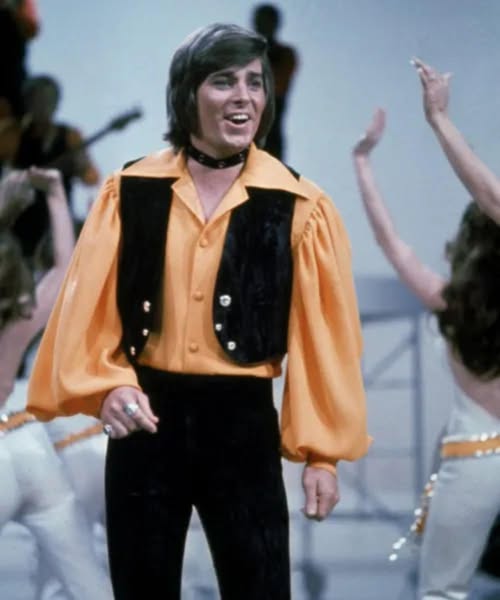
Bobby Sherman’s Life After Fame Became a Story of Service, Family, and Giving Back
The Teen Idol Who Chose a Life of Service
For many teenagers growing up in the 1960s and 1970s, Bobby Sherman was more than a familiar face on television or a voice on the radio. He was one of the defining teen idols of his era, a performer whose music, charm, and screen presence made him a favorite among young fans across the country.
His popularity grew through hit songs such as “Little Woman” and “Easy Come, Easy Go,” both of which helped turn him into a major pop figure. Crowds of devoted fans followed his career closely, and his name became closely connected with the excitement of youth culture during that period.
At the same time, Sherman was also building a strong career as an actor. He appeared in well-known television productions including Here Come the Brides and Getting Together, while also making appearances on shows such as The Monkees and The Partridge Family.
Yet the most surprising part of Sherman’s story came after the height of his entertainment fame. Rather than spending the rest of his life chasing the spotlight, he eventually stepped away from Hollywood and chose a path focused on public service, emergency care, and charity work.
From Teen Idol to Television Favorite
Sherman’s rise in television began before he became a household name. One of his early breakthroughs came when he worked as a house singer on the variety program Shindig!, a role that helped introduce him to a wider audience.
That exposure became an important step in a career that would soon expand beyond music. With his approachable image and growing fan base, Sherman moved naturally into acting, where he found major recognition during one of the most memorable periods of his public career.
From 1968 to 1970, he starred in Here Come the Brides, a television role that significantly increased his visibility. The show helped establish him as more than just a singer, allowing audiences to connect with him as a regular presence on screen.
After that success, he continued his television work through Getting Together, a spin-off connected to The Partridge Family. The role placed him within a television landscape that was closely tied to music, youth culture, and family entertainment.
Throughout the 1970s and into the mid-1980s, Sherman remained active on television. He appeared in a variety of programs, continuing to maintain a presence even as his teen idol era gradually moved into a new chapter.
His last regular television role came in the 1986 series Sanchez of Bel Air. Years later, he made a brief return to the screen by playing himself on Frasier, giving longtime viewers a small reminder of the performer they had followed for decades.

A Career Remembered With Gratitude
Although Sherman eventually left the entertainment business behind, he did not distance himself from that part of his life with bitterness. He has looked back on his years in music and television warmly, describing that period as one of the best times of his life.
For Sherman, the affection of his fans played a central role in making that chapter meaningful. His popularity was not simply built on chart success or acting credits, but on the strong connection he formed with audiences who supported him through the busiest years of his career.
Many performers who rise quickly during youth-focused eras struggle to redefine themselves later. Sherman’s story took a different shape because he eventually found a second purpose that had little to do with applause, cameras, or record sales.
That shift did not erase his earlier success. Instead, it added another layer to his public legacy, showing that his life after fame could be just as meaningful as the years when fans filled venues and followed his every move.
A Surprising Move Into Emergency Service
After stepping away from the center of the entertainment world, Sherman discovered a new interest through a deeply practical concern. He learned CPR because he wanted to be prepared to help his children in case of an emergency.
That decision became a turning point. What began as a way to protect his family grew into a serious commitment to emergency medical care and lifesaving training.
Sherman trained as an EMT and found a strong sense of purpose in the work. The role gave him a chance to help people directly, in urgent moments when knowledge, calm action, and preparation could make a life-changing difference.
In 1989, he launched a nonprofit volunteer EMT program. The program was designed to train police officers in emergency medical care and to provide medical support at public events.
This work marked a major change from the stage and studio environment that had once defined his daily life. Instead of performing for audiences, Sherman focused on teaching skills that could help others respond effectively during emergencies.
His commitment continued to grow. He later became a police officer and served as chief medical training officer for the Los Angeles Police Department.
One of the most notable parts of that chapter was his decision not to take a salary. For Sherman, the value of the work came from helping people and passing on lifesaving knowledge, rather than from financial reward.

Finding Meaning Beyond the Spotlight
Sherman’s transition into public service gave his life a very different rhythm from the one he had known as an entertainer. The public recognition that once followed him everywhere was replaced by quieter work centered on training, response, and care.
That change reflected a broader shift in priorities. Fame had given Sherman a platform, but emergency service gave him a direct way to contribute to the safety and well-being of others.
His work with police officers and public events also showed how his skills could affect many lives indirectly. Each person trained in emergency care had the potential to help someone else in a critical moment.
In that sense, Sherman’s second career was not a retreat from public life as much as a redirection of it. He moved from entertaining crowds to supporting communities in a practical, hands-on way.
The contrast between his earlier image as a teen idol and his later work in emergency services is striking. Yet both parts of his life involved connection with people, whether through music and television or through training and service.
A Brief Return to Music
Although Sherman stepped away from acting, he did not completely close the door on music right away. In the late 1990s, he returned to performing for fans who still remembered the songs and energy of his earlier career.
In 1998, he joined Peter Noone and Davy Jones for a Teen Idol tour. The tour brought together performers whose careers had meant a great deal to audiences during the 1960s and 1970s.
For many longtime fans, those performances carried a sense of nostalgia. Some of the same people who had followed Sherman as teenagers were now attending shows with their own families.
The tour created a bridge between generations. It allowed Sherman to revisit his music while also seeing how deeply his earlier work had remained in the memories of those who supported him.
His final concert took place in 2001. After that, Sherman’s public performing life moved further into the past, while his quieter commitments continued to define his later years.
Family Life and Personal Commitments
Beyond his public career, Sherman’s personal life has also been an important part of his story. He was first married to Patti Carnel, and the couple shares two sons.
His decision to learn CPR was connected to his role as a father. That choice eventually opened the door to the emergency medical work that became one of the most significant parts of his life after entertainment.
In 2011, Sherman married Brigitte Poublon. Their partnership later became connected not only to family life, but also to charitable work aimed at helping children in need.
Together, they founded the Brigitte and Bobby Sherman Children’s Foundation. The organization is based in Ghana and focuses on improving education, healthcare, and overall quality of life for children.
This charitable work extended Sherman’s pattern of service beyond emergency response. It reflected a continued interest in using his time and resources to support people facing difficult circumstances.

Giving Back Through Charity
The Brigitte and Bobby Sherman Children’s Foundation became another major part of Sherman’s later life. Its mission centers on children, with attention to education, health, and basic quality-of-life needs.
For Sherman and Poublon, the foundation represented a shared commitment. It allowed them to focus on long-term support rather than temporary attention or short-lived publicity.
The work in Ghana also showed how Sherman’s life had expanded far beyond the entertainment industry that first made him famous. His public identity had once been built through American television and pop music, but his later impact reached into humanitarian efforts abroad.
That charitable chapter fits with the larger pattern of his post-Hollywood life. Whether through emergency medical training or children’s support, Sherman repeatedly moved toward work that placed other people’s needs at the center.
A Quieter Life With a Lasting Legacy
Today, Bobby Sherman lives far from the level of fame that surrounded him during his teen idol years. The crowds, television roles, and hit records remain an important part of his history, but they no longer define his daily life.
His story stands out because of the way he reshaped his purpose after celebrity. Instead of relying only on memories of past success, he built a meaningful second chapter through public service and charitable work.
For fans who remember his music and television appearances, Sherman remains a symbol of a specific era in pop culture. His songs and roles continue to carry memories of the 1960s and 1970s, when he was one of the most recognizable young stars in entertainment.
For others, his later work may be just as important. His training as an EMT, his volunteer program, his role with the Los Angeles Police Department, and his foundation work all show a life shaped by service as much as fame.
Bobby Sherman’s journey is not simply the story of a teen idol who stepped away from Hollywood. It is the story of a performer who found a different kind of fulfillment by helping others, teaching lifesaving skills, supporting children, and building a legacy beyond the stage.