
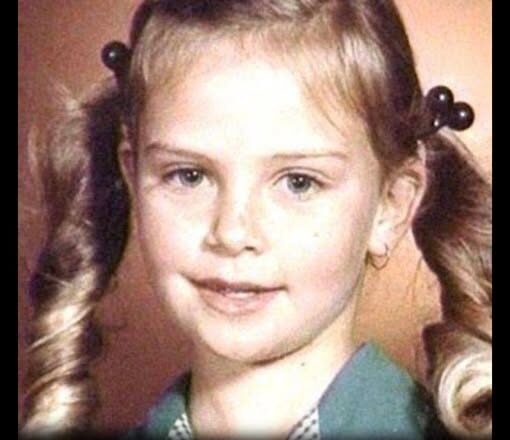
Charlize Theron Overcame a Traumatic Childhood to Become an Academy Award-Winning Hollywood Star
Her Journey From Family Violence in South Africa to International Recognition
Charlize Theron’s rise to the highest levels of Hollywood is a story shaped by extraordinary talent, determination, and survival.
Long before she became an Academy Award-winning actress and successful producer, Theron lived through a traumatic event that permanently changed her family. At only 15 years old, she witnessed her mother fatally shoot her father in self-defense after he threatened them and fired a gun through a bedroom door.
The experience could have overwhelmed her future. Instead, Theron eventually left South Africa, traveled to the United States, and fought to build a career in an industry where she had no established connections.
Her path was never limited to appearance or celebrity. She challenged expectations, pursued demanding roles, transformed herself physically for performances, and became one of Hollywood’s most respected and highly paid stars.
A Childhood Marked by Both Opportunity and Hardship
Charlize Theron was born on August 7, 1975, in Benoni, South Africa. She grew up in a prominent Afrikaner family with ancestry connected to Dutch, French, and German settlers.
Her French ancestors were among the early Huguenots who settled in South Africa. Theron is also related to Danie Theron, a military leader associated with the Second Boer War.
Her parents, Charles Theron and Gerda Maritz, worked in road construction. The family lived on a farm near Johannesburg, where Theron spent much of her early life.
Afrikaans was her first language, although she later became fluent in English. Years before she became internationally famous, her childhood combined elements of relative privilege with painful instability inside the family home.
The farm might have appeared peaceful from the outside, but Theron’s father struggled with alcoholism. His behavior created an atmosphere of fear that affected both Theron and her mother.

She Struggled to Fit In at School
Theron has spoken openly about feeling socially isolated during her childhood. Before she became known for her beauty and commanding screen presence, she was a young girl who often felt overlooked by her classmates.
“I wore really nerdy glasses because I was blind as could be and the boys didn’t like [me],” she revealed in a recent interview with PEOPLE in New York. “I didn’t have any boyfriends, but lots of crushes.”
She wanted to be accepted by the popular students and became particularly fascinated by one well-known girl at school. Her desire to fit in sometimes became emotionally overwhelming.
“I wasn’t in the popular crowd. There was a really popular girl at school and I was obsessed with her. I mean, you would go to jail for that stuff today,” Theron says with a laugh. “I was in tears one day because I couldn’t sit next to her.”
Her glasses, clothing, and hair made her a target for classmates. Instead of feeling admired or included, she frequently experienced what she later described as cruel treatment from other girls.
“I actually got a lot of the mean girl stuff from the ages of 7 to 12. I was pretty much a mess in primary school,” she admits. “But I got that out of my system by the time I got to high school and was more immune to all of that stuff.”
Those experiences taught her how painful exclusion could be. By the time she reached high school, she had developed greater emotional resistance to the opinions of others.
Her Father’s Alcoholism Created Fear at Home
The difficulties Theron encountered at school were only one part of her childhood. At home, her father’s alcoholism created a far more serious and dangerous struggle.
Theron remembered Charles Theron as a physically imposing man who could enjoy humor and life but whose addiction deeply affected the family.
“My dad was a big guy, tall, skinny legs, big belly,” Theron said. “[He] could be very serious but loved to laugh as well, and enjoyed life. He also had a disease. He was an alcoholic.”
She has explained that her father did not physically assault her. However, she described him as emotionally and verbally abusive.
While discussing his behavior, she stated that “he was a verbal abuser.” Living with his alcoholism meant that the family could not always predict his mood or actions.
The repeated fear and instability became a defining part of Theron’s early years. She later said that the broader pattern of living with addiction caused more lasting trauma than a single moment could fully explain.
View this post on Instagram
The Night That Changed Her Life Forever
On June 21, 1991, the danger inside the Theron home reached a devastating point.
Theron was 15 years old when her father returned home in a drunken and violent state. An aunt had warned the family that Charles was agitated, giving Theron and her mother reason to fear what might happen when he arrived.
Theron later described a powerful instinct that something terrible was approaching.
”Nature gives you instinct. And I knew something bad was going to happen,” she said.
Her father began threatening Theron and her mother. His behavior escalated until he armed himself with a gun.
Theron and Gerda went into the teenager’s bedroom and pressed themselves against the door, attempting to prevent him from entering.
”My mom and I were in my bedroom, leaning against the door because he was trying to push through,” Charlize told NPR and continued:
”So both of us were leaning against the door from the inside, trying to stop him from getting through. He took a step back and just shot through the door three times.”
The gunfire could easily have killed Theron or her mother. Remarkably, the bullets missed them both.
”None of the bullets ever hit us, which is just a miracle,” Charlize added.
Her Mother Acted in Self-Defense
After Charles fired through the bedroom door, Gerda responded with her own handgun. She shot and killed her husband in what was determined to be an act of self-defense.
The courts concluded that Gerda had acted to protect herself and her daughter. She was not charged in connection with the shooting.
Although the legal decision recognized the circumstances surrounding the event, it could not erase the emotional impact on Theron.
At 15, she had witnessed the violent death of her father after years of living with the instability created by his alcoholism. The event became one of the most painful parts of her personal history.
Theron did not allow shame to silence her. As an adult, she chose to discuss the experience because she believed other families were living through similar forms of violence and addiction.
Why She Chose to Speak Publicly About the Trauma
Theron has acknowledged that domestic violence is not unique to her family. She sees her experience as part of a larger reality shared by many people who grow up around addiction and abuse.
”This family violence, this kind of violence that happens within the family, is something that I share with a lot of people.”
Her willingness to discuss the event came from a desire to reduce isolation. She believed honest conversations could help people understand that they were not alone.
“I’m not ashamed to talk about it, because I do think that the more we talk about these things, the more we realize we are not alone in any of it,” she continued. ”I think, for me, it’s just always been that this story is about growing up with addicts and what that does to a person.”
Theron has also explained that the shooting itself was not the only source of trauma. The years of fear leading up to it and the emotional aftermath remained deeply significant.
According to Theron’s own reflection, the struggle continued long after the immediate danger had ended.
Survival Became Part of Her Strength
Rather than allowing her past to define her as powerless, Theron eventually transformed survival into a source of strength.
Her experiences gave her an understanding of fear, emotional darkness, and complicated human behavior. Those qualities later became relevant to the challenging characters she portrayed on screen.
”I survived that, and I’m proud of that. I’ve worked hard for that, too,” Theron told The New York Times. ”And I am not scared of that. I am not fearful of the darkness. If anything, I am intrigued by it, because I think it explains human nature and people better.”
Her interest in understanding difficult behavior would become visible throughout her acting career. She repeatedly accepted roles involving damaged, dangerous, or morally complicated people.
Those choices demonstrated that Theron was not interested in protecting a glamorous public image at the expense of meaningful work.
She Arrived in Los Angeles Without Hollywood Connections
At 19, Theron moved to Los Angeles carrying a suitcase and the determination to create a different life.
She did not arrive with powerful professional contacts or an established support system. Her future depended on persistence, opportunity, and her ability to convince others that she belonged in the industry.
A chance encounter helped open her first door. While arguing with a bank teller over a bounced check, Theron attracted the attention of a talent agent who overheard the exchange.
The agent saw something compelling in her confidence and intensity. That unexpected meeting gave Theron access to opportunities in Hollywood, but it did not guarantee success.
She still had to compete for roles and prove that she could offer more than physical beauty. The industry often placed actresses into narrow categories, and Theron resisted being treated as a replaceable decorative presence.
Her Breakthrough Came With The Devil’s Advocate
Theron’s career gained major momentum when she appeared in The Devil’s Advocate in 1997.
Working alongside Al Pacino and Keanu Reeves placed her in a high-profile production and gave her an opportunity to demonstrate her dramatic abilities.
Her performance helped establish that she could hold her own beside internationally recognized actors. Hollywood began viewing her as more than a promising newcomer.
Additional opportunities followed, but Theron continued searching for roles that would allow her to challenge expectations.
She did not want to remain confined to characters built primarily around glamour. Her most dramatic professional transformation came several years later.
Monster Changed the Direction of Her Career
In 2003, Theron took on the role of serial killer Aileen Wuornos in Monster.
The part required her to abandon the polished image associated with many of her earlier appearances. She gained weight and underwent a striking physical transformation to portray Wuornos.
The role was based on a former prostitute who was executed in Florida in 2002 after being convicted of killing six men. Wuornos was never tried for a seventh killing connected to her case.
Theron approached the character as a complicated human being rather than a simple symbol of evil. She wanted to explore the experiences and decisions that had shaped Wuornos.
Her performance shocked audiences and critics who had underestimated the range of her abilities. The transformation was not limited to appearance; Theron changed her movement, voice, posture, and emotional presence.
The performance earned her the Academy Award for Best Actress and confirmed her position as one of Hollywood’s leading dramatic performers.

Her Performance Received Extraordinary Praise
Theron’s work in Monster became one of the defining performances of her career.
Film critic Roger Ebert described it as “one of the greatest performances in the history of cinema.”
The praise reflected the depth of Theron’s transformation and the seriousness with which she treated the character.
Rather than asking audiences to excuse Wuornos’s crimes, the performance encouraged them to consider the circumstances that contributed to her life and behavior.
“People like Aileen Wuornos are often just labeled and pushed aside, with no one wanting to truly understand them,” Theron shared with The New York Times. “No one asks, ‘Why did this happen?’ I’m intrigued by the ‘why.’ Because in many ways, I’m here today because of that very question.”
Theron’s personal history helped explain her interest in examining the causes behind violence and destructive behavior. She had experienced firsthand how addiction, fear, and abuse could transform a family.
She Refused to Limit Herself After Winning an Oscar
Winning an Academy Award could have encouraged Theron to pursue only prestigious dramatic roles. Instead, she continued moving between genres and taking professional risks.
She appeared in action films, dramas, and comedies, demonstrating that her career could not be defined by one performance or one style.
Theron also became increasingly influential behind the camera. As a producer, she participated in shaping projects and supporting stronger opportunities for women.
Her willingness to use her position beyond acting strengthened her reputation as one of Hollywood’s most powerful female figures.
She understood that lasting influence required more than appearing in successful films. It also involved helping decide which stories were produced and how women were represented.
Furiosa Gave Her Another Career-Defining Role
In 2015, at the age of 40, Theron took on the role of Furiosa in Mad Max: Fury Road.
The role arrived at a stage when actresses in Hollywood have often faced declining opportunities. Theron instead reinvented herself as a commanding action star.
Her portrayal of Furiosa combined physical strength, determination, vulnerability, and moral purpose. The character became one of the most celebrated elements of the film.
Theron’s performance once again showed her ability to disappear into a demanding role. She did not rely on traditional glamour and instead embraced the character’s harsh appearance and intense physical requirements.
Furiosa strengthened her legacy as an actress willing to take risks and challenge industry expectations.
Her Career Reflects an Interest in Human Darkness
Theron has portrayed several killers and emotionally damaged characters throughout her career.
Given her childhood history, some observers might consider those choices surprising. However, Theron has explained that she is drawn to understanding the reasons behind human behavior.
Her performances often examine individuals who have been dismissed as monsters without consideration of the experiences that shaped them.
This interest does not remove personal responsibility from the characters she portrays. Instead, it allows her to explore how violence, addiction, trauma, and social rejection can influence a person’s development.
Theron’s ability to confront darkness without appearing afraid of it has become one of her strongest qualities as a performer.
From a Painful Past to Hollywood’s Highest Honor
Charlize Theron’s life cannot be reduced to the tragedy she witnessed as a teenager.
Her childhood included bullying, isolation, verbal abuse, alcoholism, domestic violence, and the loss of her father during a terrifying confrontation.
Yet her story also includes survival, ambition, reinvention, and artistic achievement.
She arrived in Los Angeles without the advantages normally associated with Hollywood success. An unexpected encounter with a talent agent created an opportunity, but Theron’s discipline and determination allowed her to turn that opening into a career.
She refused to be treated as merely a glamorous presence. Through roles in The Devil’s Advocate, Monster, Mad Max: Fury Road, and many other productions, she established herself as a serious and versatile performer.
Her Academy Award, Golden Globe, and recognition as one of the world’s most influential people reflected decades of professional achievement.
A Legacy Built on Courage and Transformation
Theron’s journey demonstrates how a person can carry deep trauma without allowing it to control every part of the future.
She has never denied the darkness of her childhood. Instead, she has discussed it openly and used her experiences to better understand the complicated people she brings to the screen.
Her mother’s act of self-defense saved their lives on the night her father fired through the bedroom door. The emotional consequences remained, but Theron eventually built a future that would have seemed impossible during those frightening years in Benoni.
From a bullied schoolgirl wearing thick glasses to an internationally celebrated actress and producer, her transformation was neither simple nor immediate.
It required resilience, professional courage, and a willingness to reject the narrow role Hollywood initially seemed prepared to offer her.
Charlize Theron emerged not only as a star but as an artist capable of examining human strength and darkness with unusual honesty. Her career stands as evidence that survival can become the beginning of a remarkable new story rather than the end of one.