
Randy Kraft and the California Murder Case That Shocked Investigators
An Ordinary Childhood Before a Notorious Criminal Case
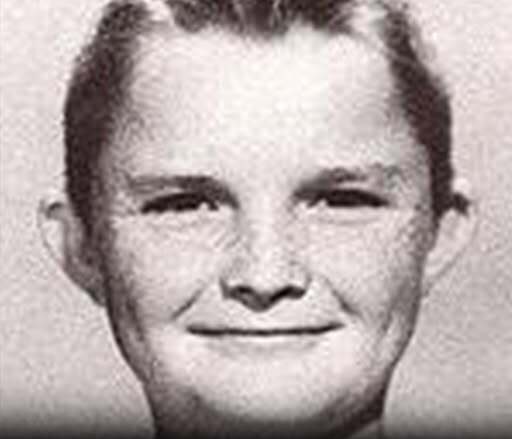
Long before Randy Steven Kraft became associated with one of California’s most disturbing murder investigations, he appeared to be an ordinary child growing up in a working-class household.
Kraft was born on March 19, 1945, in Long Beach, California. He was the only son in a family that had relocated from Wyoming in search of greater stability and new opportunities on the West Coast.
From the outside, his early home life appeared conventional. His father, Harold, worked long hours in a factory, while his mother, Opal, was closely involved in raising him.
People who knew Kraft during his childhood remembered him as intelligent, quiet, and unusually organized. His belongings were carefully arranged, and he appeared to value structure and control from an early age.
Teachers viewed him as a capable and obedient student. He showed an interest in puzzles, mathematics, and subjects that required careful attention to detail.
A Successful and Politically Active Student
After the family moved to Westminster in Orange County, Kraft continued to perform well academically. Classmates described him as clean-cut, reserved, and highly intelligent.
He participated in student government and joined the debate team. His strong academic performance and active involvement in school created the impression that he was preparing for a stable professional future.
Following his high school graduation in 1963, Kraft enrolled at Claremont Men’s College and studied economics. During his college years, he also became deeply interested in political activity.
He initially supported conservative causes, campaigned for Barry Goldwater, and expressed support for the Vietnam War. His political opinions later changed, and he began participating in anti-war events.
Kraft also served as a trainee in the Air Force Reserve. By 1969, he had openly acknowledged that he was gay, and his military service ended shortly afterward under a medical classification.
The change marked a significant period in his life. His appearance, political views, and social environment had shifted considerably from the image he presented during high school.
Work, Nightlife, and Increasing Instability
After leaving the service, Kraft remained in Southern California and held several different jobs. He worked as a bartender, waiter, and computer programmer.
Acquaintances generally viewed him as articulate, courteous, and well dressed. He was considered intelligent, with an IQ reported in the original case narrative as 129, and he could appear calm and sociable in everyday settings.
However, people around him also began noticing troubling changes. He used alcohol and drugs, including amphetamines, barbiturates, sedatives, and prescription medication.
Friends observed periods of isolation, unexplained absences, unpredictable anger, and increasingly erratic behavior. These warning signs existed behind an outward appearance that remained controlled and respectable.
Kraft spent time in the coastal nightlife communities of Long Beach and Sunset Beach. He worked at a bar called The Stables, where he regularly interacted with customers and developed connections within the local social scene.
At the time, few people around him understood the seriousness of the conduct that investigators would later connect to his movements and activities.
An Early Case That Raised Serious Concerns
In March 1970, a 13-year-old runaway named Joseph Fancher entered a Long Beach bar in a frightened and disoriented condition. Authorities determined that he had been drugged and assaulted after accepting an offer of shelter from an older man.
Investigators eventually identified Kraft as a suspect. During a search of his apartment, officers found the teenager’s shoes and a supply of sedatives and prescription pills.
The search had been conducted without a valid warrant, preventing the evidence from being used in court. Kraft was therefore not successfully prosecuted in connection with the incident.
In retrospect, the case became an important missed opportunity. It occurred before investigators recognized the broader pattern that would later emerge across Southern California.
A Pattern Develops Across Southern California
During the 1970s and early 1980s, young men began disappearing in several Southern California counties. Many were teenagers or young adults, including Marines and people traveling by hitchhiking.
Their remains were later discovered near highways, open fields, ravines, and other isolated locations. The geographic spread of the cases made it difficult for individual law enforcement agencies to immediately see how they might be connected.
Investigators in Orange County, Los Angeles County, and San Bernardino County gradually noticed similarities. The victims had often been approached while traveling or socializing and were believed to have been given alcohol or sedative substances.
The crimes showed signs of careful planning and repeated methods. Investigators came to believe that one person could be responsible for multiple deaths along California’s freeway system.
By 1975, authorities had connected several cases, but they still lacked a confirmed suspect. Kraft continued living in Long Beach and working as a computer programmer while maintaining an outwardly ordinary life.
Between 1971 and 1983, he was later convicted of killing sixteen men and boys. Investigators suspected that the actual number of victims could be considerably higher, with the original case account citing beliefs that dozens of deaths might be connected to him.
A Traffic Stop Leads to an Arrest
The investigation changed dramatically during the early hours of May 1983. Two California Highway Patrol officers stopped a Toyota Celica on the 405 Freeway near Mission Viejo at approximately 1:00 a.m.
The driver appeared to be intoxicated, and a partially consumed beer bottle was visible inside the vehicle. When an officer examined the passenger area, he discovered the body of a young Marine named Terry Gambrel.
The driver was identified as Randy Kraft. What initially appeared to be an impaired-driving stop quickly became the beginning of a major murder investigation.
Officers found alcohol, drugs, and a notebook inside a briefcase in the car. Searches connected to Kraft’s arrest later uncovered photographs, personal items belonging to victims, and other evidence that investigators believed linked him to crimes committed over many years.
The notebook contained more than sixty brief and coded entries. The phrases appeared confusing at first, but detectives began comparing them with known victims, locations, occupations, and circumstances.
The List That Earned Kraft a Notorious Nickname
Investigators concluded that the coded list might have functioned as a record of victims. Entries included terms such as “Stable,” “Marine Drum,” “Iowa,” and “Parking Lot.”
Some phrases appeared to correspond with places connected to Kraft’s life or locations where victims had been discovered. One entry seemed to refer to The Stables, the bar where he had worked.
Another entry was linked to an area near an airfield where a victim had been found. Detectives believed each phrase represented a specific encounter or crime.
The discovery led the media to call Kraft the “Scorecard Killer.” The nickname reflected the investigators’ belief that he had recorded the cases in an organized and impersonal manner.
The list became one of the most important and unsettling pieces of evidence associated with the investigation. Even so, not every entry could be conclusively matched with an identified victim.
Authorities continued examining unsolved cases from California and Oregon, searching for similarities that might connect additional deaths to Kraft’s movements.
Evidence Reveals a Carefully Hidden Double Life
Investigators described Kraft’s victims as young white men, generally in their late teens or early twenties. Some were members of the military, while others were travelers or young people encountered in social settings.
Authorities believed he frequently approached victims in his vehicle and offered them transportation, alcohol, or companionship. Sedatives were then used to make them vulnerable.
To keep public descriptions suitable for general audiences, the most disturbing evidence does not need to be repeated in detail. Court proceedings established that the victims experienced serious violence before their deaths.
Photographs and personal belongings recovered during the investigation helped authorities connect Kraft to several individuals. These materials also revealed the extent to which he had concealed his activities from friends, relatives, and coworkers.
Many people who knew him struggled to understand how the polite and intelligent man they remembered could be accused of such serious crimes. He had maintained employment, friendships, and family relationships while avoiding detection for years.
His arrest demonstrated that a person responsible for repeated violence may not match the dramatic or easily recognizable image commonly associated with dangerous offenders.
A Lengthy Trial Ends With Multiple Convictions
Kraft’s trial became one of the longest and most expensive criminal proceedings in Orange County history. Prosecutors presented a large collection of physical evidence, photographs, witness testimony, and information connected to the coded list.
In 1989, Kraft was convicted of sixteen murders. He was also convicted on additional charges involving abuse and torture.
Kraft maintained that he had not committed the killings. Before sentencing, he stated, “I have not murdered anyone. I believe any reasonable review of the record will show that,” and continued to deny responsibility.
The court sentenced him to death. He showed little visible reaction as the sentence was announced and was later transferred to California’s death row.
For the families of the victims, the verdict brought a measure of legal resolution after years of uncertainty and grief. However, many relatives said that a conviction could not erase the emotional consequences of what had happened.
Kraft’s own family also faced intense public attention following his arrest. They had lived privately before suddenly becoming connected to one of California’s most widely discussed criminal cases.
Decades of Denials and Unanswered Questions
Kraft spent more than four decades in custody without admitting to any of the murders. Detectives continued hoping that he might eventually provide information about victims whose cases remained unresolved.
In 2012, retired homicide detective Dan Salcedo met Kraft at San Quentin. The detective hoped the conversation might produce a confession or a useful clue about the coded entries.
The meeting did not result in new admissions. Kraft remained unwilling to accept responsibility or help investigators identify other possible victims.
Salcedo later emphasized how ordinary Kraft appeared. That unremarkable appearance was one of the most troubling aspects of the case because it showed how successfully he had blended into daily life.
He had been a student, political volunteer, military trainee, bartender, programmer, neighbor, coworker, and friend. None of those roles prevented him from becoming the central figure in a decades-long investigation.
Unsolved Cases Continue to Be Reviewed
Investigators have continued revisiting unsolved murders that may correspond with entries in Kraft’s notebook. Advances in DNA testing have helped authorities reexamine evidence that was collected many years ago.
Some families have received long-awaited answers through modern identification methods. Others still do not know whether their missing relatives were connected to Kraft or another offender.
The coded list remains central to those unanswered questions. With more than sixty entries and only sixteen murder convictions, detectives have long suspected that many possible cases were never fully resolved.
Kraft’s conviction and death sentence were upheld by the California Supreme Court on August 9, 2000. As of 2025, the provided case account stated that he remained on death row at the California Institution for Men in San Bernardino County.
He continued denying involvement in both the murders for which he was convicted and the additional deaths investigators suspected he may have committed.
A Case Remembered for Its Hidden Warning Signs
The Randy Kraft case remains one of California’s most disturbing examples of a long-running criminal investigation involving multiple jurisdictions and years of unidentified connections.
His early life offered few obvious indications of the notoriety that would follow. He was remembered as bright, organized, politically active, and capable of functioning successfully in school and professional environments.
At the same time, later events revealed increasing substance use, unstable behavior, and an early encounter with law enforcement that did not lead to prosecution.
His eventual arrest resulted not from a carefully planned operation but from a routine traffic stop. The discovery inside his car gave authorities the evidence needed to begin uncovering a much larger pattern.
The investigation, trial, and coded notebook left a lasting impact on law enforcement and the victims’ families. Although Kraft was convicted of sixteen murders, the full extent of the case may never be known.
For families still awaiting answers, the unresolved entries represent more than investigative puzzles. They represent individuals whose lives ended without complete explanations and loved ones who continue seeking certainty decades later.