
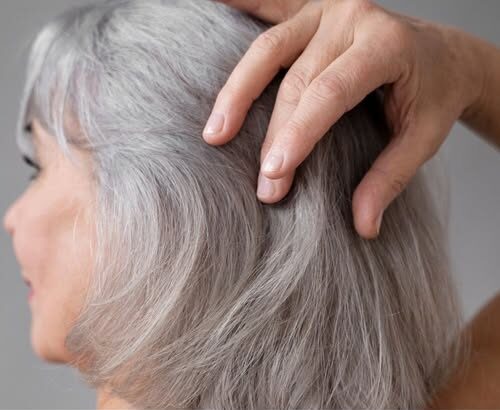
The Quiet Decision Behind Going Gray
A Change That Starts Within
The first gray hair often passes with little more than a glance. It is not the strand itself that carries weight, but the moment that follows—the decision of what to do about it.
For many, that decision marks a turning point. What appears to be a simple personal choice can quickly become something far more visible, drawing attention from others in ways that feel unexpected.
Friends notice. Strangers comment. Loved ones hesitate, sometimes asking, “Are you sure?” In those reactions, something deeper begins to surface.
More Than Appearance
Hair has long been tied to identity, presentation, and perception. Changing it, especially in a way that signals aging, can disrupt expectations that have quietly shaped behavior for years.
Choosing to stop covering gray hair is rarely just about style. It reflects a shift in priorities, where external approval becomes less central than internal alignment.
What once felt like routine maintenance begins to look different. The time, effort, and cost involved in preserving a younger appearance come into sharper focus, raising questions that were previously easy to ignore.
The Weight of Expectations
Society places a strong emphasis on youth, often linking it to vitality, relevance, and worth. This association can create pressure to maintain a certain image, even when it no longer feels authentic.
For many people, especially women, this pressure is reinforced over time. Subtle messages accumulate, shaping beliefs about what is acceptable and what is not.
Against that backdrop, allowing hair to go gray can feel like stepping outside an unspoken agreement. It challenges the idea that aging should be hidden or softened at all costs.
A Visible Choice
Unlike many personal decisions, this one is immediately visible. It cannot be explained quietly or adjusted without notice. It becomes part of how a person is seen every day.
This visibility can make the decision feel larger than it is. What begins as a private realization becomes something others interpret, question, or even judge.
Yet within that exposure lies a form of clarity. It reveals how much meaning people attach to appearance and how quickly assumptions can form based on it.
Opting Out of the Cycle
Letting hair go gray often represents a deliberate step away from ongoing effort. It is not a sign of neglect but a refusal to continue a process that no longer feels necessary.
This choice can bring a sense of relief. The routine of maintaining a consistent look, once automatic, is replaced by something simpler and more grounded.
There is also a shift in how time is experienced. Without the constant need to manage appearance in the same way, attention can move elsewhere, toward priorities that feel more meaningful.
Reframing the Narrative
Gray hair carries different meanings depending on perspective. For some, it is seen as a loss of youth. For others, it becomes a marker of experience and continuity.
The decision to embrace it challenges narrow definitions of beauty. It introduces the idea that appearance does not need to conform to a single standard to be valid.
This reframing is subtle but significant. It changes the conversation from one of correction to one of acceptance.
Reactions From Others
Responses to gray hair can vary widely. Some people offer support and admiration, while others express concern or confusion.
These reactions often say as much about the observer as they do about the person making the choice. They reflect individual beliefs about aging, control, and change.
In this way, the decision becomes a mirror. It highlights differing comfort levels with natural transitions that are part of every life.
The Role of Control
Appearance is one of the areas where people feel a sense of control. Altering it can create the impression of managing time or slowing its visible effects.
Letting go of that control can feel uncertain at first. It requires trust in a process that cannot be reversed in the same way as a cosmetic change.
Over time, however, that uncertainty can give way to a different kind of confidence. It is rooted not in managing perception, but in accepting reality as it unfolds.
Identity and Authenticity
Personal identity evolves over time. The way people present themselves often reflects where they are in that process.
Allowing hair to turn gray can align external appearance more closely with internal experience. It reduces the gap between how someone feels and how they appear to others.
This alignment can create a sense of coherence. It removes the need to maintain a version of oneself that no longer feels accurate.
A Shift in Priorities
As priorities change, so do the choices that support them. What once felt essential may lose its urgency, making space for new values to take hold.
In this context, going gray becomes less about what is being left behind and more about what is being gained.
There is a movement toward simplicity, toward reducing effort where it no longer serves a purpose.
Challenging Perfectionism
Perfectionism often operates quietly, influencing decisions in ways that are not always obvious. It can shape how people view themselves and how they believe they should be seen.
Choosing to stop hiding gray hair interrupts that pattern. It introduces imperfection in a way that is visible and undeniable.
This interruption can be freeing. It allows for a broader understanding of what is acceptable, both personally and socially.
Redefining Beauty
Beauty standards are not fixed. They change over time, influenced by culture, media, and collective attitudes.
When individuals make choices that differ from prevailing norms, they contribute to that evolution. They expand what is considered normal and acceptable.
Gray hair, in this sense, becomes part of a larger conversation. It represents diversity in appearance and the idea that beauty can take many forms.
Living Without Performance
Maintaining a specific image can sometimes feel like a performance. It requires consistency, attention, and a degree of detachment from natural changes.
Stepping away from that performance can bring a sense of ease. It reduces the need to meet expectations that may no longer feel relevant.
This shift is not about rejecting appearance entirely, but about engaging with it in a different way—one that feels more authentic.
Confidence Without Permission
Confidence is often associated with external validation. Approval from others can reinforce a sense of worth, but it can also create dependency.
Embracing gray hair shifts that dynamic. It places the source of confidence within the individual rather than outside it.
This internal grounding can be steady and lasting. It does not rely on changing opinions or shifting standards.
The Meaning of Time
Gray hair is a visible marker of time. It reflects years lived, experiences accumulated, and changes that have occurred along the way.
Rather than concealing that passage, some choose to acknowledge it openly. This acknowledgment can bring a different perspective on aging.
It becomes less about loss and more about continuity. Each stage builds on the one before it, creating a complete and evolving picture.
A Personal Decision With Broader Impact
While the choice to go gray is personal, its effects can extend beyond the individual. It influences how others think about similar decisions in their own lives.
Seeing someone embrace change can make it easier for others to consider doing the same. It normalizes what might otherwise feel unfamiliar or uncomfortable.
In this way, a single decision contributes to a wider cultural shift, even if that was never the intention.
Returning to Neutrality
At its core, letting hair go gray is about returning to a neutral state. It removes the layers of modification that have been added over time.
This neutrality does not diminish value or presence. Instead, it creates space for a more direct expression of self.
It is a quiet but meaningful shift, one that prioritizes authenticity over expectation.
A Different Kind of Beauty
There is a distinct kind of beauty that comes from self-trust. It does not depend on trends or external approval.
It is steady, grounded, and reflective of a deeper understanding of oneself. This form of beauty can be subtle, but it carries a lasting impact.
In choosing to embrace gray hair, individuals are not asking to be admired. They are simply choosing to be seen as they are.
Closing Perspective
The decision to stop hiding gray hair may seem small, but it often carries significant meaning. It touches on identity, perception, and the ways people relate to time and change.
By stepping away from the pressure to maintain a certain image, individuals open the door to a different experience—one defined by acceptance rather than resistance.
In that space, appearance becomes less about performance and more about presence, offering a perspective that is both simple and profound.