
Trump Faces Renewed Questions Over Age and Mental Fitness After Private Remark Surfaces
Private Conversation Sparks New Public Debate
A brief private exchange involving Donald Trump has triggered another wave of discussion surrounding his age, mental sharpness, and fitness for public office.
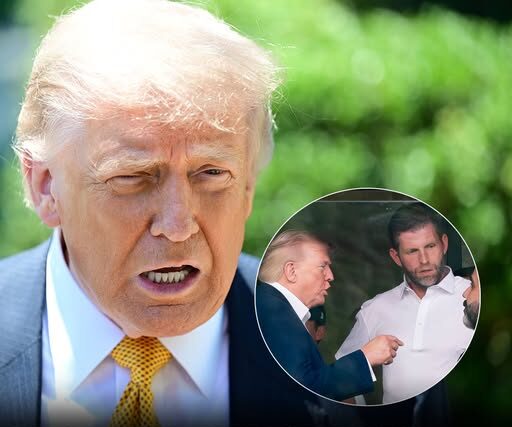
The moment reportedly occurred during a golf tournament appearance where Trump was positioned behind protective glass while speaking with his son, Eric Trump. Although the conversation appeared casual, attention quickly shifted after a lip reader claimed to have identified a revealing comment.
According to the interpretation of the exchange, Eric reminded his father that he would soon be turning 80. Trump allegedly responded by admitting the milestone made him “feel old” before adding the familiar phrase, “You’re only as old as you feel.”
For many observers, the remark stood out because Trump has long projected an image of strength, stamina, and confidence, frequently dismissing criticism about his age or health.
Questions About Cognitive Health Continue to Grow
The conversation has resurfaced broader concerns that have followed Trump throughout recent years, particularly regarding his cognitive condition and public behavior.
Critics have pointed to a series of controversial speeches, aggressive public statements, and increasingly personal attacks as evidence that his conduct has become more erratic.
Some former allies and political figures have also publicly raised alarms about what they describe as troubling behavioral patterns.
Former White House lawyer Ty Cobb has been among the most outspoken voices. He has argued that Trump displays signs consistent with frontal lobe decline and “possible dementia,” suggesting that some of the former president’s behavior reflects diminished impulse control.
Cobb connected Trump’s repeated threats, fixation on political enemies, and emotional outbursts to what he described as a personality increasingly driven by anger and revenge.
Political Critics Intensify Warnings
Concerns have not been limited to former insiders. Political opponents have also escalated their criticism in recent months.
Congressman Jamie Raskin has publicly argued that Trump’s rhetoric has crossed into dangerous territory. He referenced statements involving political retaliation, extreme language, and hostile remarks that critics believe raise serious concerns about judgment and stability.
Raskin suggested the issue should no longer be viewed as routine political conflict but rather as a matter tied to national security and leadership responsibility.
The discussion has also revived occasional references to the 25th Amendment, which outlines procedures related to presidential incapacity. While no formal action exists, the topic continues to surface whenever concerns about a president’s health or mental condition become part of the national conversation.
Trump Continues to Reject Criticism
Despite the renewed scrutiny, Trump has consistently rejected claims questioning his cognitive health.
He has frequently highlighted past cognitive exams, insisting that he performed exceptionally well and portraying himself as mentally sharper than many of his critics.
During campaign appearances and interviews, Trump has repeatedly described himself as energetic and capable, often contrasting his stamina with political rivals.
Supporters argue that his unscripted speaking style and confrontational personality are being unfairly interpreted as evidence of decline.
They maintain that his remarks are part of the blunt political persona that helped build his popularity with many voters.
The Symbolism of Turning 80
Even so, the reported golf-course exchange has drawn attention because of its unusually personal tone.
For years, Trump has carefully cultivated an image centered on dominance, confidence, and resilience. Public acknowledgments of aging have been rare.
That is why the reported comment about feeling old resonated with many observers. The statement appeared to reveal a more vulnerable side that contrasts sharply with the public image Trump typically presents.
Age has become an increasingly significant issue in American politics as several prominent national leaders continue serving deep into their later years.
Questions surrounding physical endurance, cognitive sharpness, and decision-making capacity have become central themes in political debates and media coverage.
Public Reactions Remain Divided
Reaction to the incident has been sharply divided across political lines.
Critics viewed the moment as confirmation that Trump may privately recognize limitations he refuses to acknowledge publicly.
Others argued that the exchange was simply a natural comment from someone approaching a major milestone birthday and should not be treated as evidence of mental decline.
Supporters also accused opponents of exaggerating ordinary signs of aging for political purposes.
At the same time, critics countered that concerns extend far beyond age alone, focusing instead on patterns of speech, emotional volatility, and increasingly extreme rhetoric.
The Broader Debate Around Leadership and Fitness
The controversy reflects a broader national discussion about leadership, aging, and the intense pressure placed on high-profile political figures.
Modern presidential campaigns demand constant travel, lengthy public appearances, rapid decision-making, and relentless media scrutiny.
As political leaders remain active later in life, public attention toward health and mental fitness has intensified dramatically.
In Trump’s case, those concerns are amplified by his highly visible communication style and frequent public confrontations.
Every speech, interview, and unscripted moment now faces intense analysis from both supporters and opponents searching for signs that reinforce their existing views.
A Carefully Managed Public Image Faces New Scrutiny
Throughout his political career, Trump has relied heavily on projecting strength and confidence.
His rallies, interviews, and public statements often emphasize energy, toughness, and personal endurance.
That image has become central to his political identity and public appeal.
The golf-course exchange attracted attention precisely because it appeared to momentarily lower that carefully maintained shield.
Even though the remark itself was brief and relatively ordinary, it carried symbolic weight because it touched on an issue Trump rarely discusses openly.
Debate Likely to Continue
As the political climate grows more intense, discussions surrounding Trump’s age and mental fitness are unlikely to fade.
Opponents continue highlighting controversial statements and behavior as evidence of instability, while supporters dismiss those claims as politically motivated attacks.
The reported conversation with Eric Trump has now become part of that larger narrative, adding another highly discussed moment to an already polarized debate.
Whether viewed as a harmless acknowledgment of aging or a revealing crack in a carefully crafted image, the exchange has once again placed Trump’s health and judgment under the national spotlight.
With public scrutiny continuing to intensify, even small moments behind closed doors—or behind protective glass—can quickly become major political flashpoints.