
The Small Seat Belt Detail Most Drivers Overlook
For many drivers, fastening a seat belt is an automatic action.
You sit down, reach across your shoulder, click the latch into place, and begin your drive without giving the mechanism a second thought.
Yet hidden within that routine is a small feature that quietly makes the entire process smoother.

source: BRIGHT SIDE
A Tiny Detail With a Purpose
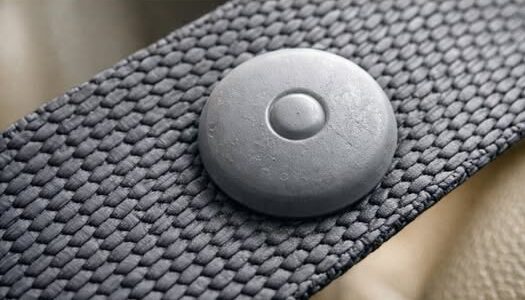
Along the length of most seat belts, just above the metal latch plate, there is a small round plastic button.
It may look decorative or even unnecessary at first glance.
Some people have likely noticed it and wondered, “What in the world is that for? Decoration?”
Despite its modest appearance, that small component serves an important function.
The piece is known as a stopper.
Its primary role is to prevent the latch plate—the metal tongue that clicks into the buckle—from sliding all the way down the belt when it is not in use.

Preventing Everyday Frustration
Without the stopper, gravity would pull the latch plate toward the lowest point of the belt.
In many vehicles, that lowest point sits near the floor beside the seat.
This would mean drivers and passengers would need to reach down between the seat and center console each time they entered the car.
That small inconvenience might not seem significant at first.
However, over time, repeatedly searching for the latch plate would become frustrating.
The stopper eliminates that problem entirely.
It keeps the latch plate positioned within easy reach, allowing drivers to grab it quickly and buckle up without hesitation.
 source: Pexels
When the Button Is Missing
The importance of this feature often becomes clear only when it fails.
In older vehicles, especially those manufactured before the 2000s, the stopper can wear out or break off.
When that happens, the latch plate slides freely down the belt.
Drivers then find themselves reaching awkwardly under the seat to retrieve it.
The task can feel like rummaging through a cluttered drawer in a hurry.
It is a small disruption, yet one that repeats every single time the vehicle is used.
This experience highlights how even minor design elements can have a noticeable impact on everyday convenience.
As the saying goes, “you don’t know what you’ve got until it’s gone”.

How the Mechanism Works
Seat belts are built with a retracting system inside the pillar of the vehicle.
When the belt is released, this mechanism pulls the strap back smoothly.
The retraction keeps the belt tidy and prevents it from dangling loosely.
With a stopper in place, the latch plate cannot slide past a certain point.
As the belt retracts, the stopper holds the latch at a convenient height.
The result is simple and efficient.
There is no digging, twisting, or searching required.
The latch remains ready for immediate use.
This design reflects thoughtful engineering focused on ease of use.

Encouraging Consistent Seat Belt Use
Although the stopper does not directly enhance crash protection, it plays an indirect role in safety.
Convenience influences behavior.
If a seat belt is easy to grab and fasten, drivers are more likely to secure it promptly.
If it is difficult to reach or tangled, there is a greater chance of delay.
Seat belts are widely recognized as one of the most effective safety features in vehicles.
They reduce injuries and save lives in collisions.
Anything that makes buckling up simpler contributes to safer habits.
In that sense, the small stopper quietly supports responsible driving behavior.
A Simple Fix If It Breaks
Over time, plastic components can wear down.
If the stopper detaches, the difference becomes noticeable immediately.
The latch plate will slide downward each time the belt retracts.
Fortunately, repairing the issue is straightforward.
Replacement seat belt buttons are inexpensive and widely available.
They can be installed without specialized tools.
A few careful taps are usually enough to secure a new stopper in place.
Within minutes, the seat belt returns to its convenient design.

Thoughtful Design in Everyday Objects
Modern vehicles contain countless small features that drivers rarely notice.
Many of these details are designed to prevent inconvenience rather than draw attention.
The seat belt stopper is one example of this philosophy.
It is not flashy.
It does not add style or visible appeal.
Yet its presence improves the daily driving experience.
Designers and engineers often focus on subtle refinements that go unnoticed until they are absent.
Small features like this one help ensure smooth, predictable interactions with a vehicle.
They eliminate friction in routine actions.
They save time in moments when drivers are rushing to work, school, or appointments.
The Psychology of Convenience
Human behavior is shaped by ease and habit.
When a task feels simple, people are more likely to perform it consistently.
When it feels inconvenient, they may hesitate.
By keeping the latch plate accessible, the stopper reduces a minor but recurring annoyance.
Over months and years of daily use, that reduction in friction adds up.
Drivers may not consciously recognize the feature’s role.
However, it quietly reinforces the routine of buckling up without delay.
This illustrates how thoughtful design can influence behavior in subtle ways.
Why Small Components Matter
Automobiles are complex machines composed of thousands of parts.
Some components are large and obvious, such as engines and braking systems.
Others are tiny and easily overlooked.
Yet even the smallest part can contribute to overall functionality.
The seat belt stopper does not change how the belt protects occupants in a collision.
However, it ensures that the belt remains accessible and ready for use.
That readiness supports consistent safety practices.
It is a reminder that thoughtful design often lies in the details.

Appreciating Everyday Engineering
It is easy to overlook the engineering behind familiar objects.
When something works smoothly, it fades into the background of daily life.
Only when it stops working do we realize how much it mattered.
The stopper may appear to be “just a button,” but it serves a clear and practical purpose.
It prevents unnecessary inconvenience.
It simplifies a critical safety habit.
It ensures that the seat belt remains easy to use every time someone enters the vehicle.
A New Perspective on a Familiar Routine
The next time you reach for your seat belt, take a moment to notice that small round piece holding the latch in place.
It is not decorative.
It is not accidental.
It is a deliberate feature designed to make a simple action easier.
Good design often operates quietly in the background.
It does not demand attention.
It simply works.
In the case of the seat belt stopper, that quiet efficiency ensures drivers can buckle up quickly and move forward with confidence.
Such small details may seem insignificant, yet they demonstrate how even minor components can create meaningful improvements in everyday life.
In a world filled with complex systems and advanced technology, sometimes it is the simplest solutions that make the biggest difference.