
Why Some Avocados Have Strings Inside: What They Are and Whether They’re Safe to Eat
A Common Discovery When Cutting an Avocado
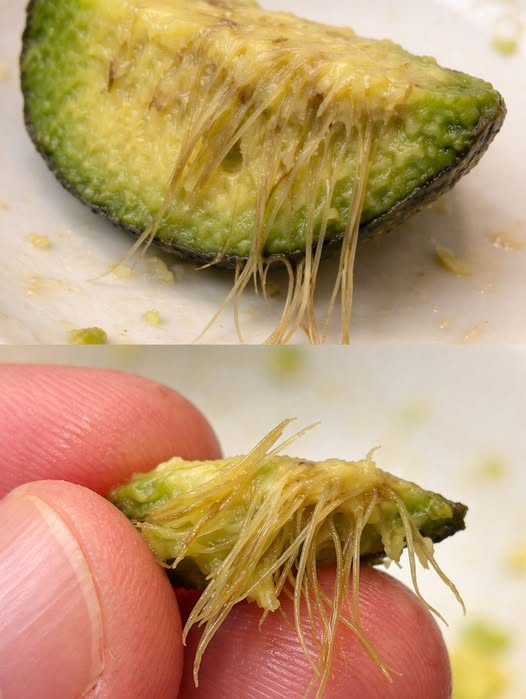
If you’ve ever sliced open a ripe avocado and noticed thin brown or white strands running through the green flesh, you may have wondered whether something is wrong with the fruit.
These string-like fibers can look unusual, especially if you are used to perfectly smooth avocados. However, in most cases they are completely natural and not a sign that the fruit has gone bad.
Understanding what these strands are—and why they appear—can help remove the uncertainty the next time you prepare an avocado.
What the Strings Inside an Avocado Actually Are
The thin strands sometimes found inside avocados are known as vascular bundles. These bundles are part of the fruit’s natural structure and function as a transport system while the avocado grows on the tree.
Similar to veins in leaves or stems, vascular bundles carry water and nutrients from the tree into the developing fruit. During the growth process, these internal fibers help support the fruit’s development.
In some avocados, these bundles remain visible after the fruit ripens, appearing as thin strings within the flesh.
Although they may look unusual, they are a normal part of the avocado’s anatomy.
Why Some Avocados Have More Fibers Than Others
Not every avocado contains noticeable strings. Several factors can influence how visible these fibers are.
1. Harvest Timing
Avocados harvested earlier in their development may show more pronounced vascular bundles once they ripen.
2. Avocado Variety
Different avocado varieties have slightly different textures. For example, Hass avocados, which are smaller with dark, pebbly skin, tend to have smoother flesh. Larger green-skin varieties sometimes contain more visible fibers.
3. Growing Conditions
Environmental factors such as soil quality, water availability, and temperature can affect how fruit develops, which may influence the appearance of internal fibers.
4. Fruit Size
Larger avocados occasionally have more noticeable vascular bundles simply because the internal structure is more developed.
Are These Strings Safe to Eat?
Yes. In most cases, the fibrous strands inside an avocado are completely safe to eat.
The only difference you may notice is a slightly firmer or chewier texture compared to the surrounding creamy flesh.
If the texture is noticeable, there are simple ways to prepare the avocado so the fibers are less noticeable.
Simple Ways to Use Avocados with Fibers
If the strings bother you, a few preparation methods can make them practically disappear:
- Mashing: When making guacamole, the fibers blend into the mixture and become barely noticeable.
- Blending: Smoothies and sauces easily break down the fibers.
- Slicing carefully: If using avocado for salads or toast, you can simply slice around the strands.
In most recipes, the natural fibers won’t affect the taste or overall texture.
When an Avocado Might Actually Be Spoiled
While fibrous strands are normal, there are other signs that may indicate an avocado is no longer fresh.
Watch for the following:
- A sour or unpleasant smell
- Extensive black or mushy flesh throughout the fruit
- Visible mold, often appearing as fuzzy white or green patches
A small amount of browning near the pit is common and usually caused by natural oxidation. In many cases, this portion can simply be removed.
The Bottom Line
The string-like fibers found in some avocados are simply part of the fruit’s natural structure. They help transport nutrients during growth and may remain visible when the fruit ripens.
Although they may look unusual at first, they are harmless and safe to eat.
So if you notice a few strands the next time you slice an avocado, there’s no need to worry. The fruit can still be enjoyed in salads, spreads, smoothies, or any of your favorite recipes.
Nature doesn’t always produce perfectly smooth fruit—and that’s perfectly normal.