
What Your Nails Might Be Telling You About Your Health
A Subtle Record Hidden in Plain Sight
Nails are often overlooked in daily life, seen mainly as something to trim or maintain for appearance. However, they hold more information than most people realize.
Made from keratin, the same protein found in hair and skin, nails grow slowly from the base of the nail bed. This gradual growth allows them to reflect changes happening within the body over time.
Unlike skin, which renews itself quickly, nails can preserve signs of past conditions. Because of this, they can act as a quiet record of certain health events that occurred weeks or even months earlier.
Why Nail Changes Matter
Small variations in nails are usually harmless and often linked to everyday factors such as grooming habits or environmental exposure. However, some changes may point to deeper issues.
Medical professionals sometimes examine nails as part of a broader health assessment. They understand that subtle shifts in color, shape, or texture can provide clues about what is happening internally.
This does not mean every minor change should cause concern. Instead, awareness is key—knowing when a change is temporary and when it persists long enough to deserve attention.
Pale Nails and Circulation Clues
Healthy nails typically have a soft pink tone due to the blood vessels beneath them. When this color fades and nails appear pale or white, it may indicate reduced blood flow or lower red blood cell levels.
This condition is often associated with anemia, which can result from issues such as iron deficiency, vitamin shortages, or other underlying health concerns.
In some situations, pale nails may also be linked to broader circulation problems or conditions affecting the liver. However, temporary changes can also occur due to cold weather or minor pressure on the fingers.
What makes this sign meaningful is not the color change alone but whether it persists and appears alongside symptoms like fatigue or dizziness.
Yellow Nails and Their Many Causes
Yellowing of the nails is commonly connected to fungal infections, especially in toenails where moisture creates an ideal environment for growth.
Infections can gradually alter the nail’s appearance, making it thicker, brittle, and uneven. Over time, the color may deepen and the texture may change noticeably.
However, yellow nails are not always caused by fungi. They can also be linked to broader conditions affecting the body, including metabolic or respiratory issues.
External factors such as frequent nail polish use, smoking, or exposure to certain chemicals may also contribute to discoloration.
Because there are multiple possible causes, yellowing should be evaluated based on how long it lasts, how it progresses, and whether other symptoms appear.
Changes in Nail Shape
The shape of nails can offer important insights into overall health. One example is spoon-shaped nails, where the surface curves inward.
This condition is often associated with iron deficiency, particularly when it has been present for a long time. Since iron plays a role in oxygen transport, a deficiency can affect multiple parts of the body, including nails.
Another noticeable change is nail clubbing, where fingertips become enlarged and nails curve downward. This tends to develop gradually and may be linked to long-term issues with oxygen levels in the blood.
Because these changes often occur slowly, they may go unnoticed until they become more pronounced.
Brittle and Splitting Nails
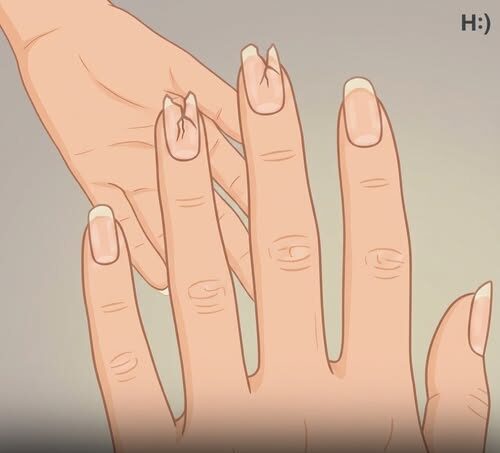
Many people experience brittle or splitting nails at some point, often due to everyday factors such as frequent handwashing or exposure to harsh cleaning products.
Dry environments and repeated contact with water can weaken the nail structure, making it more prone to breaking.
However, when brittleness persists despite proper care, it may suggest an internal imbalance. Nutritional deficiencies or hormonal changes can sometimes affect nail strength over time.
In these cases, the issue may not be external but related to how the body processes essential nutrients.
Texture Changes and Growth Interruptions
Nails can also reveal past stress through changes in texture. Horizontal lines, known as growth interruptions, may appear when the body has experienced significant strain.
These lines can form after illness, high fever, surgery, or other stressful events. As nails continue to grow, the lines move upward, offering a timeline of when the event occurred.
Even though a single line may not be serious, multiple lines across several nails could indicate recurring stress or ongoing health challenges.
Other surface changes, such as ridges or uneven textures, may result from aging or temporary imbalances. While often harmless, persistent patterns should not be ignored.
Understanding Patterns, Not Isolated Signs
One of the most important things to remember is that nail changes rarely provide answers on their own. The body usually communicates through a combination of signals rather than a single isolated sign.
A color change may become more meaningful when paired with fatigue. A structural change may matter more when it continues over time.
This is why context is essential. Observing patterns rather than focusing on one detail can provide a clearer picture of overall health.
When to Pay Attention
Most nail changes are temporary and harmless, often caused by lifestyle habits or minor environmental factors.
However, when a change persists, worsens, or appears alongside other symptoms, it may be worth seeking professional advice.
Paying attention does not mean expecting the worst. It simply means recognizing when something unusual remains consistent over time.
A Small but Meaningful Indicator
Nails are only one part of the body’s larger system, but they can offer valuable insights when observed carefully.
They reflect both external influences and internal processes, making them a unique point of connection between appearance and health.
Understanding what nails can reveal is less about diagnosing conditions and more about staying aware of subtle changes.
In many cases, these small signs are simply reminders of how the body adapts and responds to daily life.
The Value of Awareness
By paying attention to nails, individuals can develop a better sense of how their bodies communicate over time.
This awareness encourages a balanced approach—neither ignoring changes nor reacting with unnecessary concern.
Most importantly, it highlights how even the smallest parts of the body can offer meaningful insights when given attention.
Nails may seem simple, but they quietly reflect the ongoing story of overall health.