
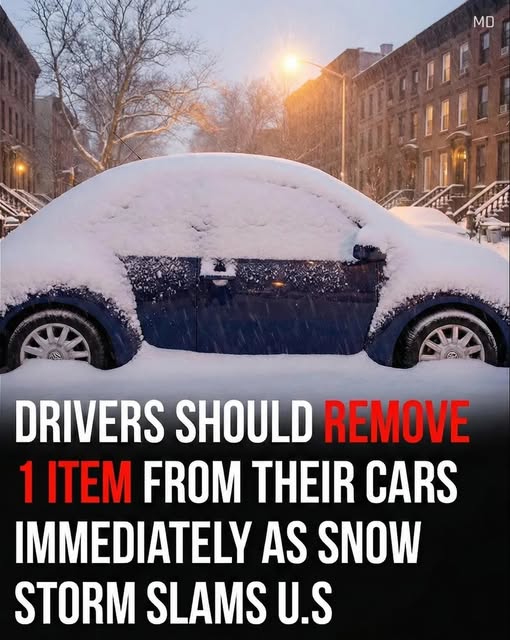
Winter Safety Alert: Experts Urge Drivers to Remove Common Electronic Items as Major Storm Hits Northeast
Blizzard Conditions Grip the Region
A powerful winter storm has swept across the Northeast, forcing millions of residents to remain indoors as blizzard warnings and travel restrictions continue.
Heavy snowfall combined with strong winds has created dangerous whiteout conditions, sharply reducing visibility and making travel extremely hazardous.
Roadways across multiple states are buried under deep snow, and plow crews are working continuously to clear primary highways and emergency routes.
Public officials are urging residents to avoid nonessential travel and remain home until weather conditions show sustained improvement.
The combination of blowing snow and low visibility has made driving particularly risky, even for experienced motorists.
Visibility Drops to Dangerous Levels
The National Weather Service reported that visibility in certain communities has fallen to near zero at times.
These conditions have created life-threatening situations for drivers who attempt to navigate snow-covered roads during peak storm intensity.
Sudden gusts of wind have intensified snowfall rates, further complicating travel and emergency response efforts.
Local authorities continue to monitor road safety and are prepared to extend travel advisories if necessary.
Airports Record Significant Snowfall Totals
By early Monday morning, airports in parts of Long Island and New Jersey had recorded nearly 20 inches of accumulated snow.
Runways required constant clearing operations as crews worked to manage ongoing precipitation and drifting snow.
The storm’s intensity caused widespread disruptions to commercial air travel.
Thousands of scheduled departures and arrivals were either canceled or delayed as airport operations slowed.
More Than 5,000 Flights Canceled Nationwide
Flight-tracking data showed that more than 5,000 flights across the United States were canceled within a single day.
Major transportation hubs in New York, New Jersey, and Boston experienced the most severe interruptions.
Airlines struggled to reposition aircraft and crews as weather conditions made safe operations difficult.
The impact extended well beyond the Northeast, affecting travelers in other parts of the country as flight schedules were disrupted nationwide.
Passengers encountered extended delays, rebooking challenges, and limited seat availability on remaining flights.
Power Outage Concerns Grow
In addition to transportation difficulties, the winter storm has created concerns regarding electricity service.
Hundreds of thousands of customers experienced temporary power outages as heavy snow and strong winds placed stress on utility infrastructure.
Snow accumulation on power lines, combined with gusting winds, increased the risk of service interruptions.
Utility crews have been deployed to restore power as quickly as possible while navigating hazardous weather conditions.
Officials continue to advise residents to prepare for potential outages by keeping emergency supplies accessible.
Heating Safety Remains a Priority
Emergency management agencies are emphasizing the importance of safe heating practices during prolonged cold weather events.
Improper use of generators or space heaters can present serious safety risks inside homes.
Residents are reminded to operate heating equipment according to manufacturer guidelines and maintain proper ventilation.
Simple precautions, including checking smoke detectors and carbon monoxide alarms, can significantly reduce household risks during extreme winter weather.
Community members are also encouraged to check on elderly neighbors and vulnerable individuals who may require assistance.
Drivers Face Hidden Cold-Weather Hazards
Beyond the visible dangers of icy roads and reduced visibility, experts are warning motorists about a less obvious threat inside their own vehicles.
Freezing temperatures can negatively affect electronic devices that are left in parked cars for extended periods.
Battery-powered items are particularly susceptible to extreme cold.
Vaping devices and other similar electronics can experience performance issues when exposed to prolonged freezing conditions.
How Extreme Cold Impacts Batteries
When batteries are subjected to freezing temperatures, their internal components can be compromised.
If a frozen battery is recharged before it has fully warmed, the device may malfunction.
In some cases, improper warming and charging can lead to overheating.
This creates potential safety concerns that many drivers may not immediately consider during winter storms.
Cold exposure can also reduce battery efficiency and overall device reliability.
Risk of Internal Liquid Damage
Freezing conditions may also affect liquids contained inside certain electronic devices.
Extreme cold can cause these liquids to thicken or leak.
Leaks inside a vehicle may damage upholstery, surfaces, or interior components.
Such damage may not be immediately visible but can become apparent once temperatures rise.
Preventive action can help reduce the likelihood of costly repairs or safety incidents.
Safety Recommendations for Vehicle Owners
Specialists recommend removing vaping devices and other battery-powered electronics from vehicles during severe winter weather.
Bringing these items indoors helps protect them from freezing temperatures and reduces the risk of malfunction.
If removal is not possible, storing devices in insulated areas within the vehicle may provide some protection.
Allowing electronic items to gradually return to room temperature before charging or use is also advised.
This gradual warming process helps minimize stress on internal components.
Preventive Steps During Severe Weather
Preparation remains one of the most effective strategies during major winter events.
Keeping emergency kits stocked with essential supplies can provide reassurance during extended storms.
Items such as flashlights, batteries, blankets, and nonperishable food are commonly recommended.
Monitoring weather updates and official advisories allows residents to make informed decisions about travel and safety.
Limiting road travel during peak storm activity significantly reduces the risk of accidents.
Community Awareness and Ongoing Caution
As the blizzard continues to affect large portions of the Northeast, officials stress the importance of caution and preparedness.
Storm conditions can change quickly, especially when strong winds accompany heavy snowfall.
Remaining indoors whenever possible and postponing unnecessary travel can help emergency crews focus on critical response operations.
Small preventive actions, including protecting electronic devices from extreme cold, contribute to overall safety during severe winter weather.
With continued vigilance and careful planning, families can reduce risks while waiting for conditions to improve.
Authorities expect that cleanup and recovery efforts will continue even after snowfall subsides.
Residents are encouraged to remain patient as transportation systems and power services gradually return to normal operations.
The combination of heavy snow, strong winds, and freezing temperatures underscores the need for caution both on the road and at home.
By following safety guidance and taking simple protective measures, communities can navigate the challenges posed by this significant winter storm.