
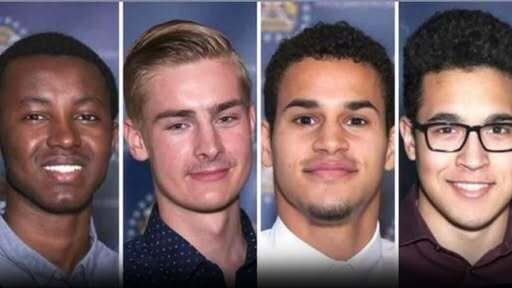
Teen Skateboarders Honored for Bravery After Protecting Vulnerable Woman on Calgary Street
A Night That Could Have Turned Dangerous
What began as an ordinary night on a dark Calgary street could have ended in fear, violence, and lasting harm.
A woman was alone, vulnerable, and intoxicated when a drunk and aggressive man began moving toward her in a way that alarmed four teenage skateboarders nearby.
The situation unfolded quickly. The teens saw enough to understand that something was wrong, and they were faced with a choice that many people encounter in tense public moments: keep moving, stay silent, or step in.
They chose to intervene.
Without knowing the woman’s name or the full story behind what was happening, the four teenagers recognized that she needed help. Their decision to act placed them directly between a vulnerable person and a man whose behavior had become threatening.
Four Teens Refused to Look Away
The skateboarders were not police officers, security guards, or trained crisis responders. They were teenagers out with their boards, witnessing a situation that appeared to be escalating in the darkness.
The man was drunk and aggressive. The woman was intoxicated and alone. The teens watched as he tried to guide her toward a shadowed alley, a detail that made the situation even more alarming.
In that moment, the teenagers understood that distance and silence could leave the woman exposed to serious danger. Instead of rolling past or pretending not to notice, they moved toward the scene.
Their response was direct. They skated toward the danger and created a physical barrier between the man and the woman.
Using their skateboards and their own bodies, the teens formed a line of protection. Their presence interrupted the man’s attempt to steer the woman away from the street and toward the alley.
The act was simple in appearance but serious in risk. Confronting an aggressive intoxicated man could have turned violent. The teens did not know how he might react, and they had no certainty that he would back down.
A Barrier Between Danger and a Vulnerable Woman
The teenagers’ intervention changed the direction of the night.
By stepping between the man and the woman, they forced space into a situation where the woman appeared unable to protect herself. Their actions disrupted the man’s control over the moment and gave the woman a chance to remain away from the alley.
The teens did not need a long conversation or a formal plan. They understood the immediate danger and acted together.
Their skateboards became more than something used for movement. In that moment, the boards became part of a barrier, helping the teenagers hold their ground as they kept the man away from the woman.
Their bodies completed the line. They stood together, refusing to let the man continue moving her toward the darker area.
Their decision showed awareness, courage, and unity. None of the boys acted alone. Together, they made it harder for the man to ignore them or continue pressing forward.
Eventually, the man backed off and ran.
Staying Until Police Arrived
The teenagers did not leave after the man fled.
Once the immediate threat had moved away, they turned their attention to the woman. She was intoxicated, vulnerable, and in need of support after the frightening encounter.
The teens stayed with her and worked to calm her. They remained nearby, making sure she was not left alone again on the street.
Their actions did not end with the confrontation. Their responsibility continued until police arrived.
That decision matters. In moments like this, intervention is not only about stopping the first danger. It is also about ensuring that the person at risk is safe afterward.
The four skateboarders remained with the woman until authorities reached the scene. Their presence gave her protection and reassurance during the critical minutes after the man ran away.
They had already taken a risk by confronting him. Staying afterward showed that their concern was not about attention, excitement, or proving themselves. It was about making sure someone who needed help was not abandoned.
Courage in an Ordinary Setting
The story stands out because it did not begin in a dramatic place or under extraordinary circumstances.
It happened on a Calgary street, where four teenagers happened to see a vulnerable woman in trouble. The threat was immediate, but the setting was familiar: a public space where people often pass by, each focused on their own night.
That ordinary setting makes the teenagers’ choice more powerful.
They were not expecting to become protectors. They were not looking for recognition. They were simply present at the moment when another person needed help.
Many people tell themselves that someone else will step in. Some fear making the situation worse. Others worry about their own safety or convince themselves that what they are seeing may not be as serious as it looks.
The teenagers did not allow hesitation to decide the outcome. They trusted what they saw and moved quickly.
Their response serves as a reminder that courage is not always loud or planned. Sometimes it is a fast decision made by ordinary people who recognize that doing nothing could leave someone else in danger.
A Dangerous Choice Made Together
The decision to confront the man carried real risk.
The man was already described as drunk and aggressive. Alcohol, anger, and confrontation can create unpredictable situations. The teenagers could not know whether he would shout, attack, or attempt to push through them.
Yet they understood that the woman’s situation required immediate action.
The strength of their response came from moving together. One teenager alone might have been easier to intimidate. Four teenagers standing side by side created a stronger barrier and sent a clear message that the man could not continue unchecked.
Their unity helped change the balance of the situation. The man no longer had an isolated woman in front of him. He was faced with a group that had chosen to protect her.
That shift mattered. It interrupted the direction of the encounter and prevented the woman from being taken farther into danger.
The teenagers’ choice was not reckless grandstanding. It was a protective response to a visible threat. They recognized the danger, acted together, and stayed focused on keeping the woman safe.
The Chief’s Award for Bravery
A year after the incident, the four teenage skateboarders received the Chief’s Award for Bravery.
The honor recognized the seriousness of what they had done that night. It also placed their actions in the category of bravery usually associated with life-or-death situations.
When the teens stood to receive the award, they were no longer dressed for a night of skating in hoodies. They appeared in dress clothes, a sharp contrast to the casual image of teenagers on skateboards that shaped the original story.
That contrast highlighted the larger meaning of the recognition.
The award was not only about a single confrontation. It was about the values behind it: awareness, courage, responsibility, and the refusal to ignore a person in danger.
The Chief’s Award for Bravery acknowledged that their actions had protected a vulnerable woman during a moment when she could not safely protect herself.
It also showed that heroism can come from unexpected places. In this case, it came from four teenagers with skateboards who made a serious decision on a dark street.
A Reminder About Public Responsibility
The incident carries a message beyond the actions of the four teens.
It raises a difficult question about what people do when they witness danger unfolding in public. Many harmful situations depend on silence, confusion, or hesitation. When bystanders look away, a vulnerable person can become even more isolated.
The skateboarders’ response challenged that pattern.
They did not know the woman personally. They did not need to. Her vulnerability was enough for them to act.
They also did not wait until the situation became worse. The moment they saw the man trying to steer her toward a shadowed alley, they recognized that waiting could carry consequences.
Their actions show that public responsibility does not always require force or authority. Sometimes it begins with presence: standing close enough to interrupt, making it clear that a person is not alone, and refusing to let a dangerous situation continue unnoticed.
The teens’ intervention gave the woman space, safety, and time. Those three things can be critical when someone is intoxicated, vulnerable, and facing an aggressive person.
Why Their Actions Mattered
The teenagers’ bravery was not only in confronting the man. It was also in recognizing the woman’s vulnerability and treating it seriously.
An intoxicated person may not be able to assess risk clearly, resist pressure, or ask for help in a direct way. That can make them especially vulnerable when someone aggressive attempts to isolate them.
The teens saw that imbalance and responded.
They did not blame the woman for her condition. They did not dismiss the scene as someone else’s problem. They understood that her safety mattered in that moment.
By forming a barrier, they did more than block a path. They sent a message that the man’s behavior was being seen and challenged.
That visibility helped stop the situation from continuing in private, away from the street and away from witnesses.
After the man ran, the teens continued doing the right thing. They stayed with the woman, calmed her, and waited for police. Their care after the confrontation was as important as their courage during it.
Ordinary People, Extraordinary Choice
The story of the four Calgary skateboarders is powerful because it shows bravery without ceremony.
At the beginning, there were no uniforms, no plans, and no public attention. There was only a troubling scene, a vulnerable woman, an aggressive man, and four teenagers who had to decide what kind of witnesses they would be.
They chose not to be passive witnesses.
They moved toward the danger, created space, forced the man back, and stayed until help arrived. Their actions turned a frightening moment into an example of courage and public responsibility.
A year later, the Chief’s Award for Bravery gave formal recognition to what they had done. But the importance of their decision was clear long before the ceremony.
That night, their courage was measured in seconds: the seconds it took to notice, to decide, and to skate toward someone who needed help.
Their story remains a quiet but powerful reminder that bravery does not always arrive in expected forms. Sometimes it arrives on skateboards, in the middle of a dark street, when four teenagers refuse to look away.